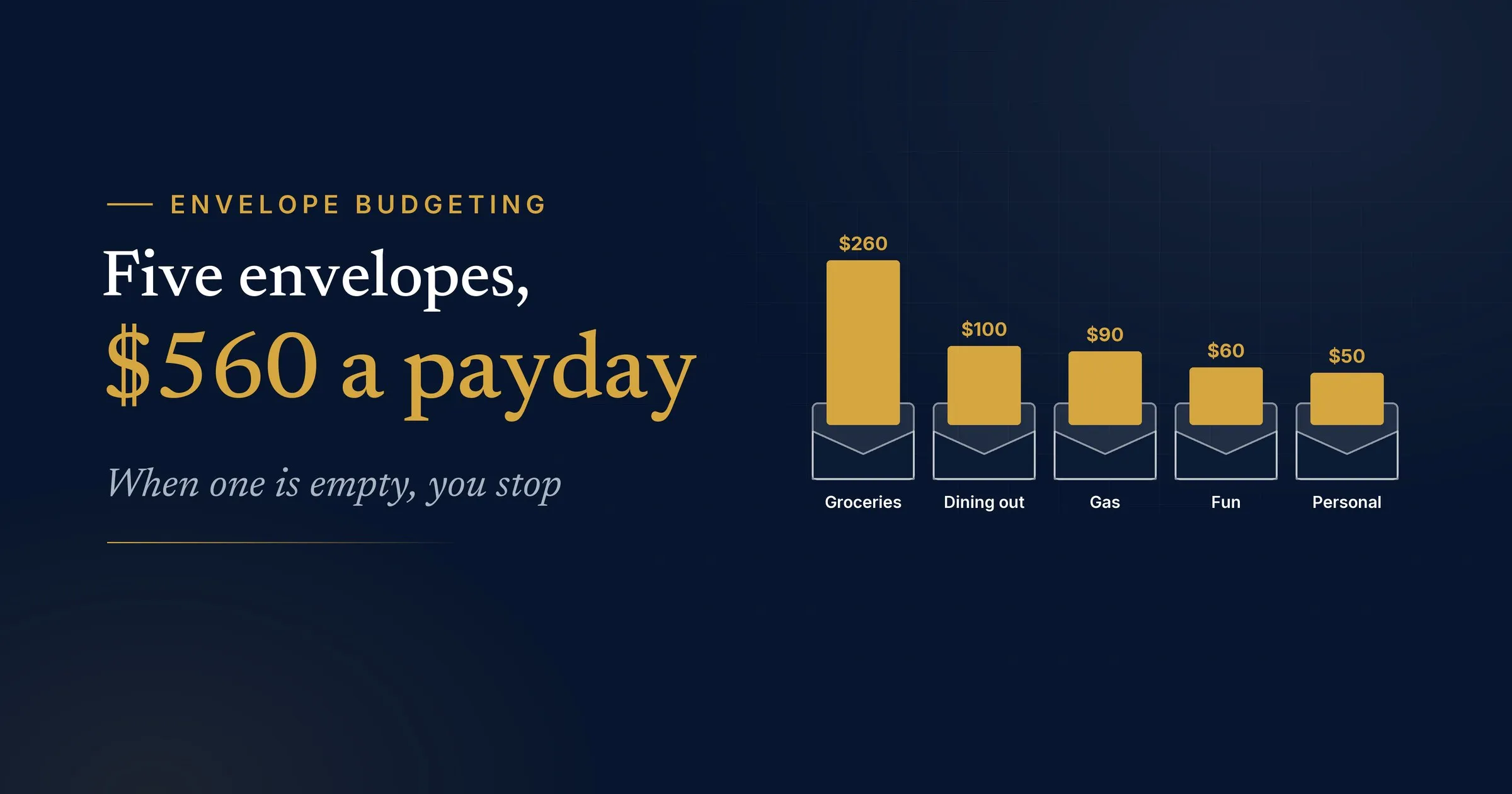
Envelope budgeting is one of the oldest budgeting methods, and one of the simplest. You split your spending money into envelopes, one for each category, such as groceries, gas and dining out. You spend each category only from its envelope, and when an envelope is empty, you stop spending in that category until the next refill.
It works because it puts a hard limit on the spending that’s easiest to let slip. If you know you’re prone to impulse spending, the CFPB suggests creating a plan that’s doable to help you limit it,Source 1 and envelopes are exactly that kind of plan. This guide shows how to set them up, works through two weeks of envelopes, and compares cash with digital versions.
How envelope budgeting works
- Start with a budget. List your income and bills, so you know how much is left for flexible spending. Our guide to making a budget walks through it.
- Pick your envelope categories. Choose the flexible spending you pay for in person: groceries, gas, dining out, entertainment and personal spending. Leave rent, utilities and loan payments on automatic payments instead.
- Set an amount for each. Base it on what you actually spent in the last month or two, then trim where you want to cut back.
- Fill the envelopes on payday. Withdraw the total in cash and divide it up, or move it into separate accounts if you use digital envelopes.
- Spend only from the envelope. When it’s empty, stop. If something truly can’t wait, move money from another envelope on purpose and write it down.
- Decide what happens to leftovers. Roll them into next time, or move them to savings.
A two-week example
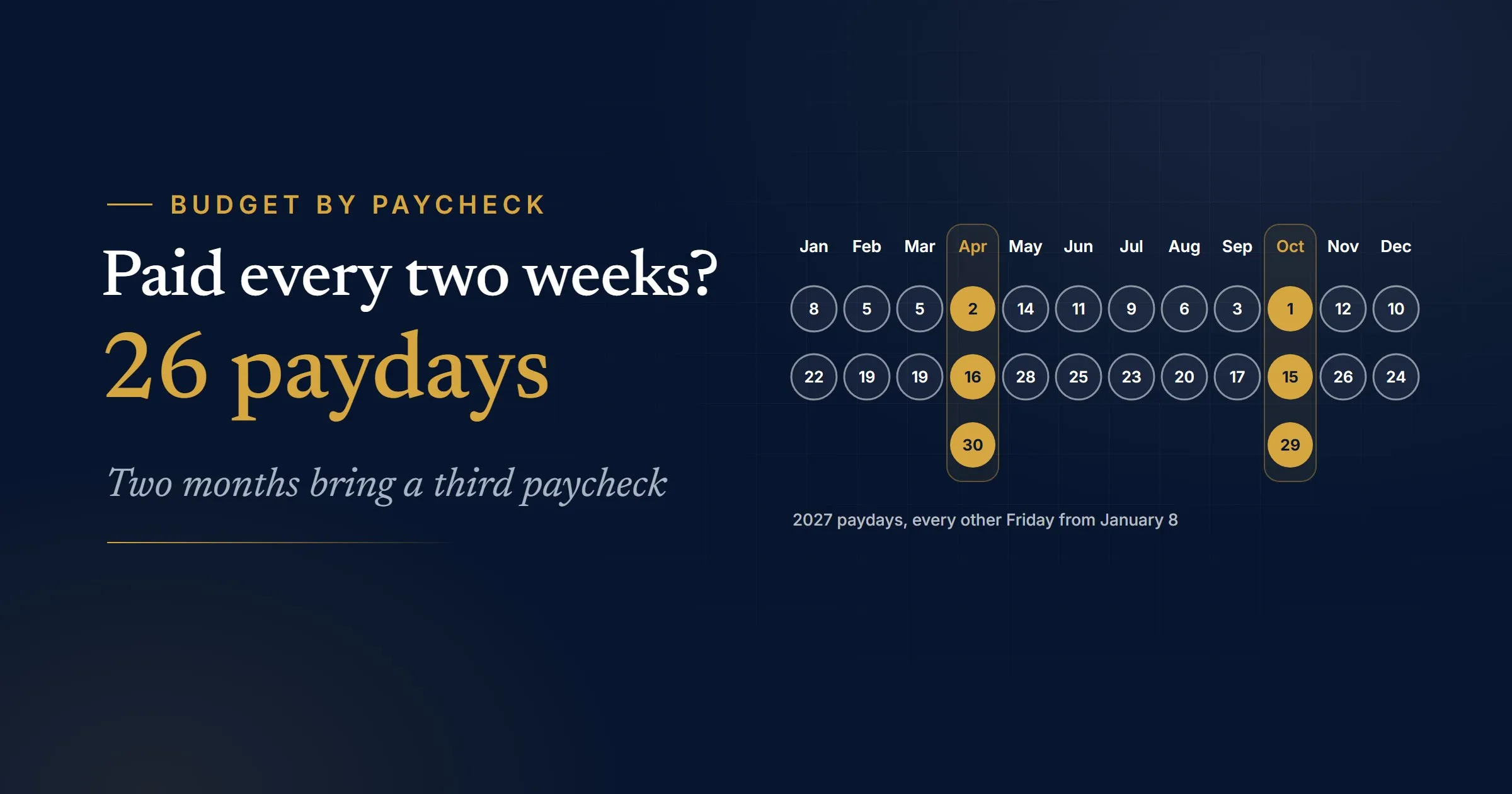
Here’s someone paid every other Friday who fills five envelopes each payday, $560 in all, or about $1,213.33 a month on average. Their bills are paid automatically, as in our budget by paycheck guide. Two weeks later, here’s where the envelopes stand:
| Envelope | Filled | Spent | Moved | Left |
|---|---|---|---|---|
| Groceries | $260 | $238 | – | $22 |
| Gas | $90 | $96 | +$6 | $0 |
| Dining out | $100 | $64 | −$6 | $30 |
| Fun | $60 | $45 | – | $15 |
| Personal | $50 | $50 | – | $0 |
| Total | $560 | $493 | $67 |
Filled on payday; what's left at the end of the two weeks, before the next payday.
The gas envelope ran $6 short, so they moved $6 from dining out, the envelope with the most left, instead of reaching for a card. On the next payday, $67 is left across the envelopes. They can roll it into the next round, or move it to savings and fill every envelope back to its full amount.
Which categories to put in envelopes
Envelopes work best for spending that changes from week to week and is easy to overdo:
- Good fits: groceries, gas, dining out and takeout, entertainment, personal care, clothing, gifts and household items.
- Poor fits: rent, utilities, insurance and loan payments. These are fixed or paid online, so automatic payments work better.
Start with the two or three categories that run over most often. You can add more once the habit sticks.
Cash envelopes vs. digital envelopes
Cash isn’t going away. In the Federal Reserve’s 2026 Diary of Consumer Payment Choice, consumers made an average of 47 payments a month: 16 by credit card, 15 by debit card and 6 with cash.Source 2 Plenty of people still use cash for at least some of their spending, which is what the classic envelope system relies on.
| Cash envelopes | Digital envelopes | |
|---|---|---|
| How it works | Real envelopes with cash inside | Separate accounts, labeled savings goals or a budgeting app |
| Strength | You can see and feel the money leaving | Works for online shopping and card payments |
| Watch out for | Loss, theft, and stores or bills that don't take cash | It's easier to overspend when the money isn't physical |
| Safety | Cash isn't a deposit, so it isn't insured | Insured if the money is in a deposit account at an insured bank |
If you keep envelope cash at home, keep the amounts small. FDIC insurance only covers deposits at FDIC-insured banks,Source 3 so cash in a drawer isn’t protected if it’s lost or stolen. In the Fed’s diary, 45% of consumers kept cash somewhere other than their wallet for savings or emergencies, an average of $364.Source 2
For digital envelopes, keep an eye on your balance. Sign up for low-balance alerts, and know when automatic payments will come out, so spending from an envelope account doesn’t cause an overdraft.Source 4
Envelope budgeting with credit cards
You can use envelopes even if you pay with a card for rewards or convenience. Each time you use the card, take the same amount out of that category’s envelope and put it in a card payment envelope, or note it on the envelope. When the bill comes, the money is already set aside. If your card has a grace period, paying the full balance by the due date each month means no interest on purchases.Source 5
The risk is that a card doesn’t stop you when an envelope is empty, so this only works if you track every purchase.
Envelope budgeting vs. other methods
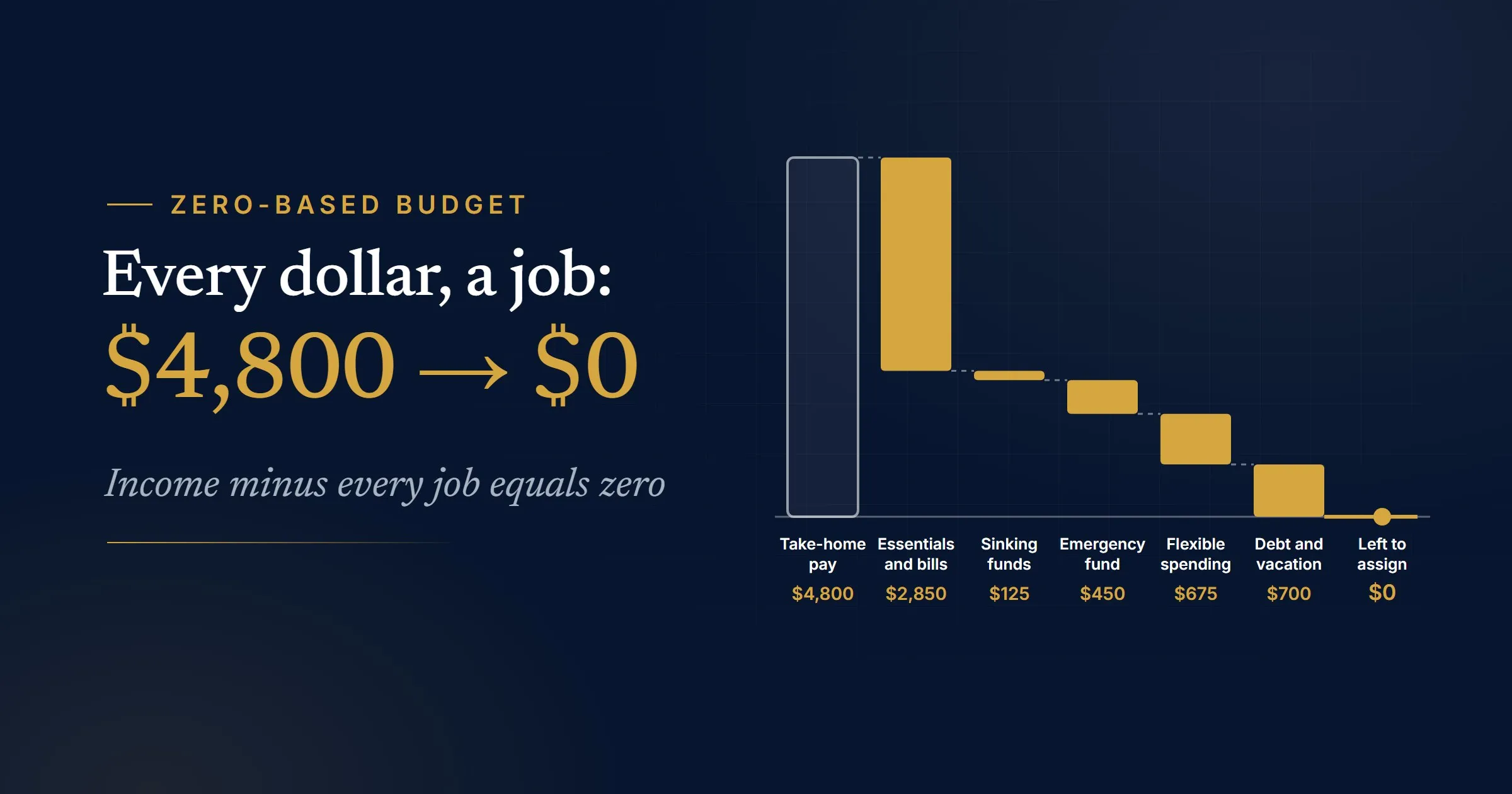
- Zero-based budgeting gives every dollar of income a job until nothing is left to assign. Envelopes add a limit on the categories you choose. They work well together: plan every dollar with a zero-based budget, then use envelopes for the flexible categories.
- Tracking your spending records what you spent after the fact; the CFPB’s free toolkit includes a spending tracker.Source 6 Envelopes stop the spending before it happens, which suits people who find it hard to stop once they’re over.
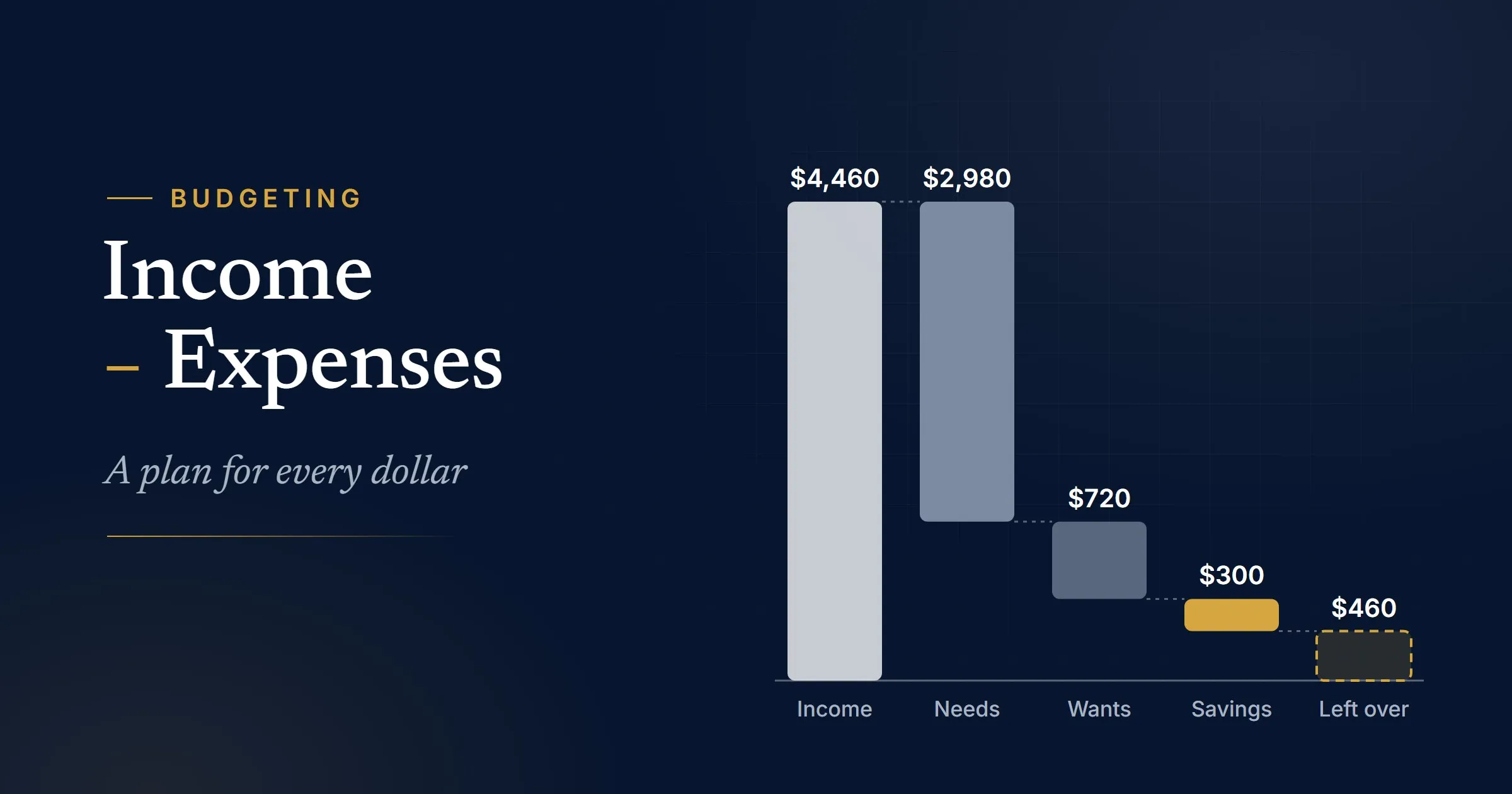
- The 50/30/20 rule sets broad targets for needs, wants and savings. Envelopes can hold your wants, so you stay within the 30%. Our 50/30/20 guide explains the targets.
Pros and cons
Pros:
- Clear limits: when the envelope is empty, you’re done.
- No surprise overspending in the categories that usually run over.
- Simple to start, with no software needed.
Cons:
- Carrying and storing cash has risks.
- It takes a few minutes every payday to fill the envelopes.
- It doesn’t fit bills paid online, so you still need a plan for those.
Common questions
What is the envelope budgeting method?
A way to budget by splitting spending money into envelopes, one per category, and spending each category only from its envelope.
What categories should I use for cash envelopes?
Flexible, in-person spending, such as groceries, gas, dining out, entertainment and personal spending. Keep fixed bills on automatic payments.
What happens to the money left in an envelope?
Roll it into the next period, or move it to savings. Either way, decide on purpose rather than spending it because it’s there.
Is envelope budgeting the same as zero-based budgeting?
No. Zero-based budgeting plans all of your income. The envelope method limits spending in the categories you choose. Many people use both.
Can I do envelope budgeting without cash?
Yes. Use separate accounts or labeled savings goals at your bank, or a budgeting app, as digital envelopes.
Run your own numbers
See where your take-home pay goes each month.
Open the calculator
Sources
Numbers in the text link to these sources. We check them whenever we update this page.
- 1
Budgeting: How to create a budget and stick with it(external site)
Consumer Financial Protection Bureau (archived blog post) · Published June 5, 2019 · Accessed November 18, 2026 · Back to text for source 1
- 2
2026 Diary of Consumer Payment Choice(external site)
Federal Reserve Financial Services · Accessed November 19, 2026 · Back to text for source 2
- 3
Understanding Deposit Insurance(external site)
Federal Deposit Insurance Corporation · Updated April 1, 2024 · Accessed November 18, 2026 · Back to text for source 3
- 4
Know your overdraft options(external site)
Consumer Financial Protection Bureau · Updated June 4, 2025 · Accessed November 18, 2026 · Back to text for source 4
- 5
What is a grace period for a credit card?(external site)
Consumer Financial Protection Bureau · Last reviewed September 23, 2024 · Accessed November 18, 2026 · Back to text for source 5
- 6
Your Money, Your Goals toolkit(external site)
Consumer Financial Protection Bureau · Updated April 24, 2026 · Accessed November 18, 2026 · Back to text for source 6
About the author
Wealthistry Editorial Team
Research, writing and editing
The team that researches, writes, fact-checks and updates Wealthistry's guides and calculators, following our published editorial standards.
Author profileEditorial policyHow we researchReport an error