A zero-based budget gives every dollar of your take-home pay a job before the month begins. Rent, groceries, savings, an extra debt payment, next year’s holiday gifts: you keep assigning money until your income minus everything you’ve planned comes to exactly zero.
The zero is the amount left to assign, not the balance in your bank account. Money you move to savings still has a job; its job is to stay put. This guide shows how to make a zero-based budget step by step, with a full monthly example, what to do when real life doesn’t match the plan, and how the method compares with other ways to budget.
The zero-based budget formula
Take-home pay minus everything you assign equals zero dollars.
- take-home pay is what reaches your account each month, after taxes and other deductions
- everything you assign covers bills, spending, savings, sinking funds and extra debt payments
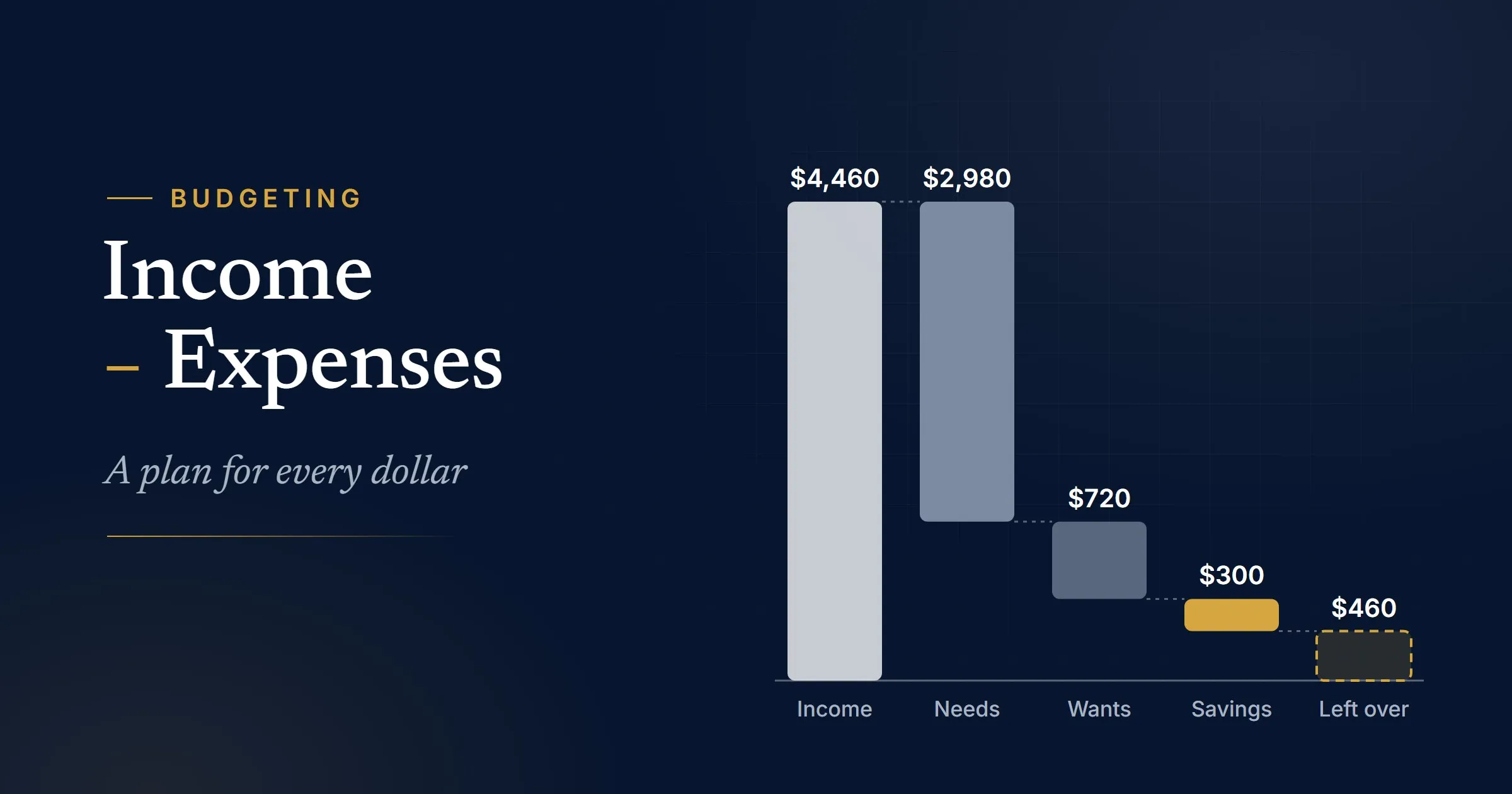
A traditional budget checks that your income minus your bills and expenses is more than zero.Source 1 A zero-based budget takes one more step and gives that difference a job too, until nothing is left unassigned.
How to make a zero-based budget
- Start with your take-home pay. Use what actually reaches your account in a month, not your salary. If you’re paid every week or every two weeks, convert your pay to a monthly amount; our Monthly Budget Calculator does it for you, and our guide to budgeting by paycheck shows how to plan each payday.
- Cover essentials and bills. Housing, utilities, groceries, transportation, insurance and the minimum payment on every debt come first.
- Plan for costs that don’t come every month. Give car repairs, annual bills and the holidays a monthly amount in a sinking fund, so no single month takes the whole hit.
- Fund your savings goals. For most people, an emergency fund comes first. Recurring transfers from checking to savings are one of the easiest ways to save consistently.Source 2
- Plan flexible spending. Dining out, entertainment, shopping and a small miscellaneous line for the things you forget.
- Give what’s left a job. If money is still unassigned, put it toward a goal, such as an extra debt payment or more savings, until left to assign reaches $0. If you’ve assigned more than you make, you’re planning to spend more than you earn,Source 1 so trim flexible spending first until the plan balances.
- Track your spending and adjust. Pick a way to track that’s easy for you, such as a daily journal or a folder of receipts you review each week.Source 3 When a category runs over, move money from another one.
- Start fresh next month. At the end of the month, see whether you spent what you planned, and use what you learn to plan the next month.Source 1
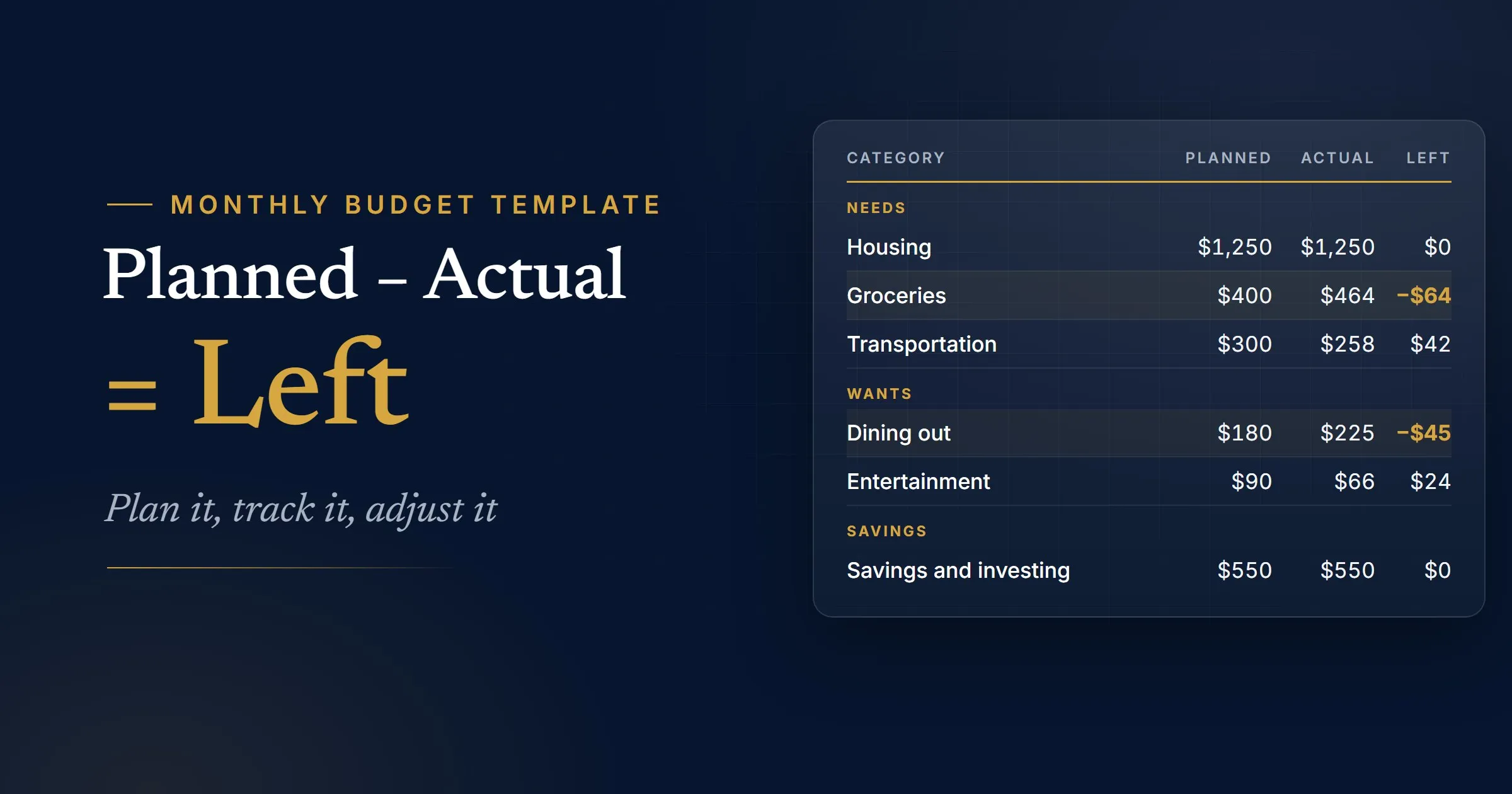
Our free budget template has a Left to assign line built in, and the CFPB’s free Your Money, Your Goals toolkit includes a spending tracker and a bill calendar.Source 4
A zero-based budget example
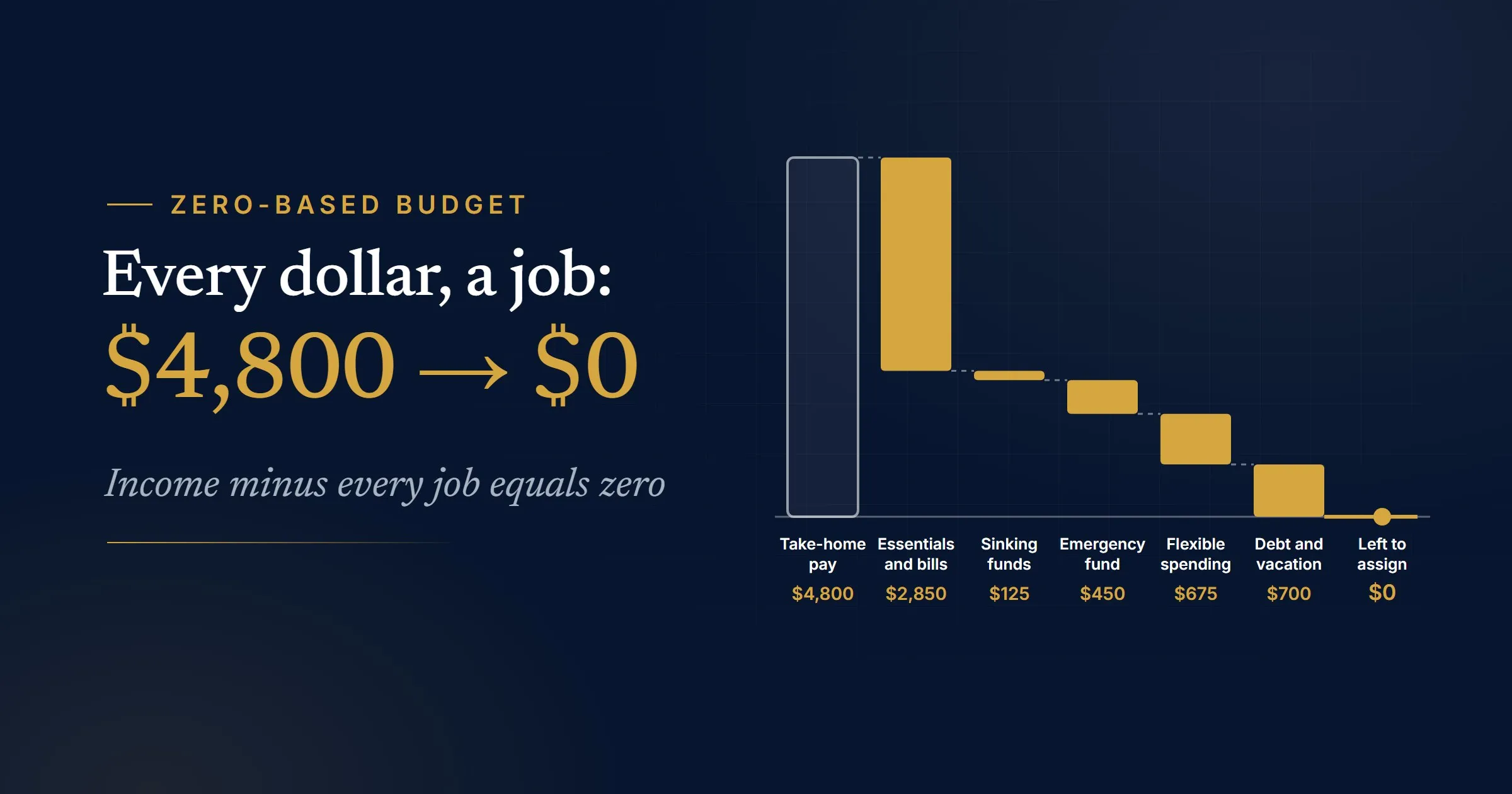
Here’s one month for someone who takes home $4,800 a month, assigning money in the order above. The last column shows what’s still unassigned after each job gets its money:
| Job | Amount | Left to assign |
|---|---|---|
| Take-home pay | $4,800 | |
| Rent | $1,400 | $3,400 |
| Utilities and phone | $230 | $3,170 |
| Groceries | $480 | $2,690 |
| Transportation | $320 | $2,370 |
| Insurance and health care | $260 | $2,110 |
| Minimum debt payments | $160 | $1,950 |
| Car repair fund | $75 | $1,875 |
| Holiday gift fund | $50 | $1,825 |
| Emergency fund | $450 | $1,375 |
| Dining out | $260 | $1,115 |
| Entertainment and subscriptions | $125 | $990 |
| Shopping and personal | $230 | $760 |
| Miscellaneous | $60 | $700 |
| Extra credit card payment | $550 | $150 |
| Vacation fund | $150 | $0 |
| Total | $4,800 | $0 |
Monthly amounts. The car repair and holiday gift funds are sinking funds for costs that don't come every month.
Essentials and bills take $2,850, the two sinking funds $125, the emergency fund $450 and flexible spending $675. After that first pass, $700 is still unassigned. Left alone, it would sit in checking with no plan.
So it gets a job. Here, $550 goes to an extra credit card payment, because, as the SEC’s Investor.gov puts it, no investment strategy pays off as well as, or with less risk than, eliminating high-interest debt.Source 5 The last $150 starts a vacation fund. Now left to assign is $0, and every dollar has a job.
Checking it against 50/30/20
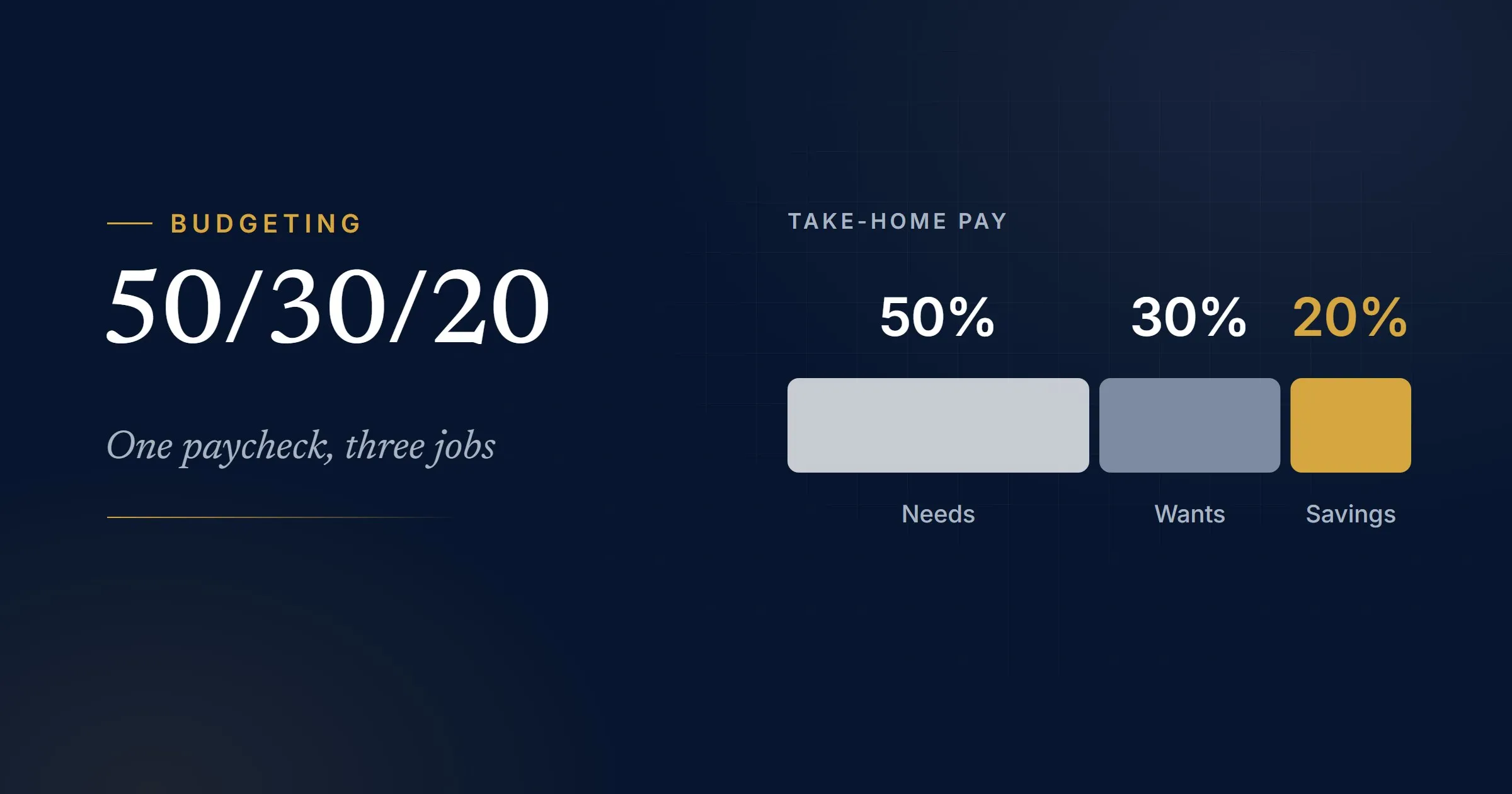
A zero-based budget doesn’t set targets for needs, wants and savings, but you can still check the result against the 50/30/20 rule of thumb. This plan splits 61/18/21. Savings and extra debt payments come to 21%, just above the 20% target. Needs take 61%, with rent the biggest part; our 50/30/20 guide covers what to do when needs run high.
When a category runs over
Moving money mid-month
- Halfway through the month, groceries are running $60 over the plan.
- Instead of letting the total grow, move $60 from dining out. Groceries rise to $540 and dining out drops to $200.
- The total hasn’t changed, so left to assign is still $0.
The rule is simple: when you add money to one job, take it from another. If the same category runs over every month, the plan was too low, so raise it next month and lower something else.
Zero in your budget, not in your bank account
Zero-based budgeting doesn’t mean spending everything. Savings, sinking funds and extra debt payments are jobs too, and the money in your savings stays yours.
It doesn’t mean running your checking account down to $0 either. Deposits and withdrawals don’t always update your balance right away or in the order you expect, and many people overdraw their accounts even when they keep close track. Leave a cushion in checking, and know when automatic payments such as rent and utilities will come out and how much they’ll be.Source 6
What to do with money left at the end of the month
Plans rarely land exactly. In 2025, 41% of adults said they always or often had money left over at the end of the month.Source 7 In a zero-based budget, that money doesn’t drift into next month’s spending. Move it to savings,Source 1 or add it to next month’s income and give it a job when you plan.
Money in sinking funds is different. It’s meant to carry over from month to month and build up until the bill arrives.
Zero-based budgeting vs. other methods
| Method | How it works | Good fit if you |
|---|---|---|
| Zero-based budget | Every dollar of take-home pay gets a job until nothing is left to assign | Want full control and don't mind planning each month |
| Traditional budget | Income minus bills and expenses should be more than zero; what's left is a cushion | Have steady bills and already save automatically |
| 50/30/20 rule | Three broad groups, each with a target share of take-home pay | Want a simple check without tracking every category |
| Envelope method | Cash or a separate account for each category; when it's empty, you stop | Overspend in a few categories, such as dining out |
| Pay yourself first | Savings move out on payday, and you spend what's left | Want saving on autopilot |
They aren’t either-or. The envelope method pairs naturally with a zero-based plan: assign every dollar, then put the categories you tend to overspend on, such as dining out, into envelopes. You can also use 50/30/20 shares as targets when you decide how much each group gets.
Copying last month’s plan and changing a few numbers, sometimes called incremental budgeting, is quicker. A zero-based budget starts each month from your actual income and the bills coming up, so every amount gets a fresh look.
Pros and cons of zero-based budgeting
Advantages
- You decide in advance. Every dollar has a plan before the month starts, so you’re not left wondering where it went.
- Goals get paid like bills. Savings and extra debt payments get set amounts instead of whatever happens to be left.
- Trade-offs are visible. More for one category means less for another, so you choose on purpose.
- It works at any income, because it’s about assigning what you have, not hitting set percentages.
Disadvantages
- It takes time. You plan every month and track your spending as you go.
- Irregular income makes it harder. If your pay changes from month to month, build the plan around a lower, safer amount and assign extra money when it arrives. Our irregular income guide shows how.
- A tight plan leaves little room for surprises. A miscellaneous line, an emergency fund and a cushion in checking all help.
Where the name comes from
Zero-based budgeting started as a way for organizations to plan their spending. In February 1977, President Jimmy Carter directed federal agencies to use what he called zero-base budgeting for the fiscal year 1979 budget, citing the system Georgia had adopted while he was governor. It called for justifying budget requests by evaluating the importance of each operation.Source 8 The personal version borrows the same idea: nothing in the plan is automatic, and every dollar needs a reason.
Common questions
What is a zero-based budget?
A monthly plan that gives every dollar of your take-home pay a job, so your income minus everything you assign equals zero.
Does zero-based budgeting mean spending all your money?
No. Savings, sinking funds and extra debt payments are jobs too. Zero means nothing is left unassigned, not that your accounts are empty.
Is zero-based budgeting better than the 50/30/20 rule?
Neither is better for everyone. The 50/30/20 rule sets target shares for needs, wants and savings; a zero-based budget assigns every dollar to a specific job. Many people use both: they plan each month with a zero-based budget and check the split against 50/30/20.
What’s the difference between zero-based budgeting and the envelope method?
The envelope method limits spending in a category with cash or a separate account. Zero-based budgeting plans all of your income. They work well together.
Can you do a zero-based budget with irregular income?
Yes. Plan around a lower, safer monthly amount, and give extra money a job when it comes in. Our irregular income guide walks through it.
Is there a zero-based budget template?
Any budget with a Left to assign line works: your income minus everything you’ve planned. Our free printable budget template has one built in.
Is zero-based budgeting good for beginners?
It can be, if you’re willing to plan each month. Use last month’s bank and card statements to set realistic amounts, and expect to adjust over the first few months.
Run your own numbers
See where your take-home pay goes each month.
Open the calculator
Sources
Numbers in the text link to these sources. We check them whenever we update this page.
- 1
Making a Budget(external site)
Federal Trade Commission, consumer.gov · Accessed November 18, 2026 · Back to text for source 1
- 2
An essential guide to building an emergency fund(external site)
Consumer Financial Protection Bureau · Updated October 29, 2025 · Accessed November 18, 2026 · Back to text for source 2
- 3
Budgeting: How to create a budget and stick with it(external site)
Consumer Financial Protection Bureau (archived blog post) · Published June 5, 2019 · Accessed November 18, 2026 · Back to text for source 3
- 4
Your Money, Your Goals toolkit(external site)
Consumer Financial Protection Bureau · Updated April 24, 2026 · Accessed November 18, 2026 · Back to text for source 4
- 5
Pay Off Credit Cards or Other High Interest Debt(external site)
Investor.gov, U.S. Securities and Exchange Commission · Accessed November 18, 2026 · Back to text for source 5
- 6
Know your overdraft options(external site)
Consumer Financial Protection Bureau · Updated June 4, 2025 · Accessed November 18, 2026 · Back to text for source 6
- 7
Board of Governors of the Federal Reserve System · Accessed November 18, 2026 · Back to text for source 7
- 8
Jimmy Carter, via The American Presidency Project, UC Santa Barbara · Published February 14, 1977 · Accessed November 19, 2026 · Back to text for source 8
About the author
Wealthistry Editorial Team
Research, writing and editing
The team that researches, writes, fact-checks and updates Wealthistry's guides and calculators, following our published editorial standards.
Author profileEditorial policyHow we researchReport an error