Some big expenses aren’t emergencies at all. You know they’re coming; you just don’t pay them every month. Car insurance billed twice a year, holiday gifts, a vacation, the down payment on your next car. A sinking fund turns each one into a small monthly amount, so the money is already there when the bill arrives.
The name comes from finance, where companies and governments set money aside on a schedule to repay a bond. In personal finance, it’s the same idea on a smaller scale. This guide explains how sinking funds work, how they differ from an emergency fund, and how to set them up, with a worked example.
Sinking fund vs. emergency fund
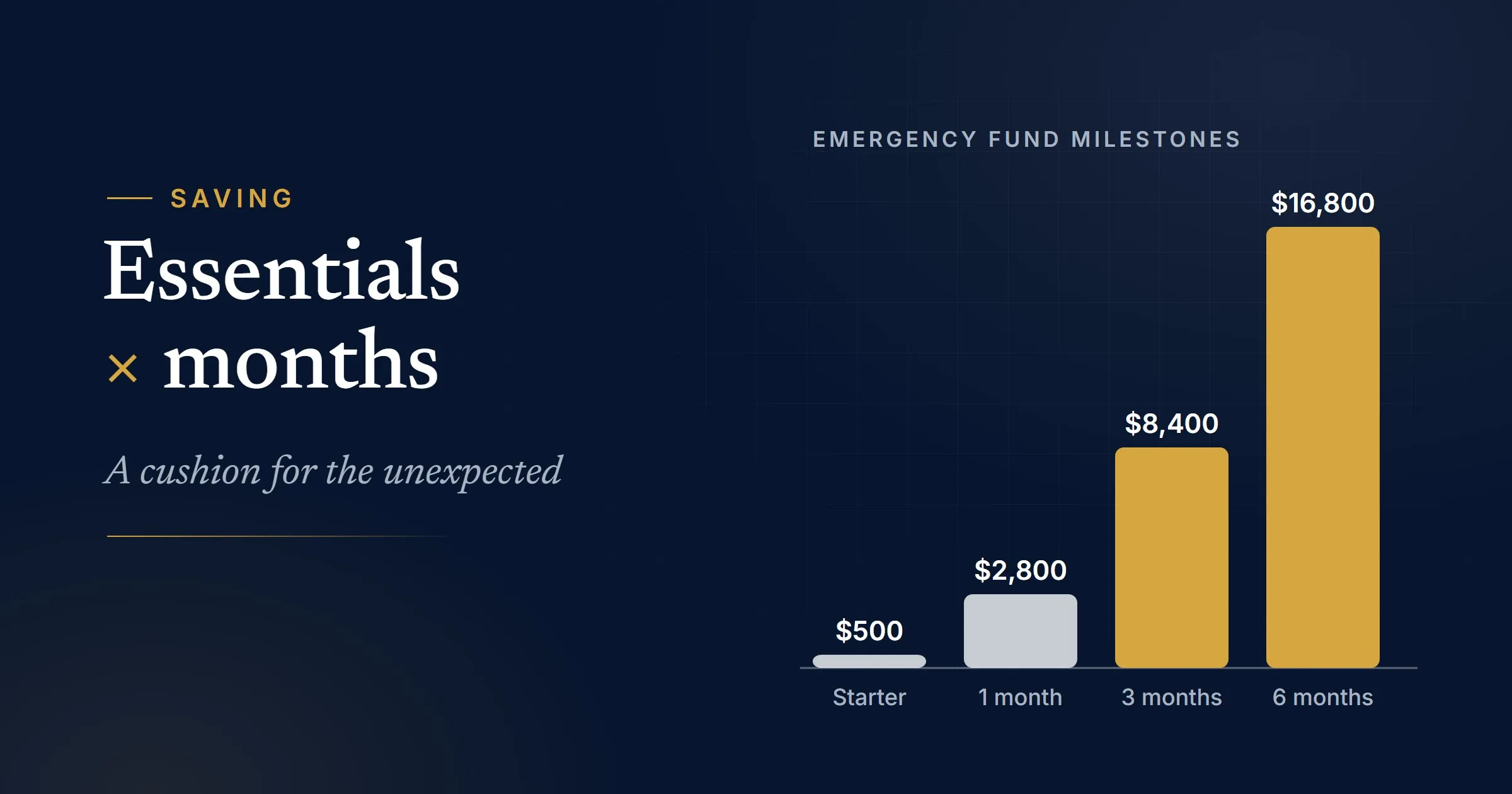
An emergency fund is a cash reserve set aside for unplanned expenses or financial emergencies, such as car repairs, home repairs, medical bills or a loss of income.Source 1 A sinking fund is for expenses you can plan for. You need both, and keeping them apart means a planned expense never drains the money you’ve set aside for surprises.
| Feature | Sinking fund | Emergency fund |
|---|---|---|
| Pays for | Expenses you know are coming | Surprises |
| How much | The cost of each planned expense | Several months of essential expenses |
| When it's spent | On a schedule, when each bill is due | Only when something goes wrong |
| Example | A car insurance premium | A car repair after an accident |
A sinking fund isn’t a type of account. Your savings account is where the money lives; the sinking fund is what it’s for.
Sinking fund ideas
Look for costs that come once or a few times a year, or big purchases you’ll make eventually:
- Car: insurance premiums, registration, maintenance and tires, and your next car
- Home: renters or homeowners insurance, property taxes not included in your mortgage payment, repairs and appliances, furniture
- Family and life: holidays and gifts, birthdays, back-to-school costs, pet care, medical and dental costs
- Fun and big plans: vacations, weddings and other celebrations
- Tech and subscriptions: yearly memberships, a new phone or laptop
How to set up a sinking fund
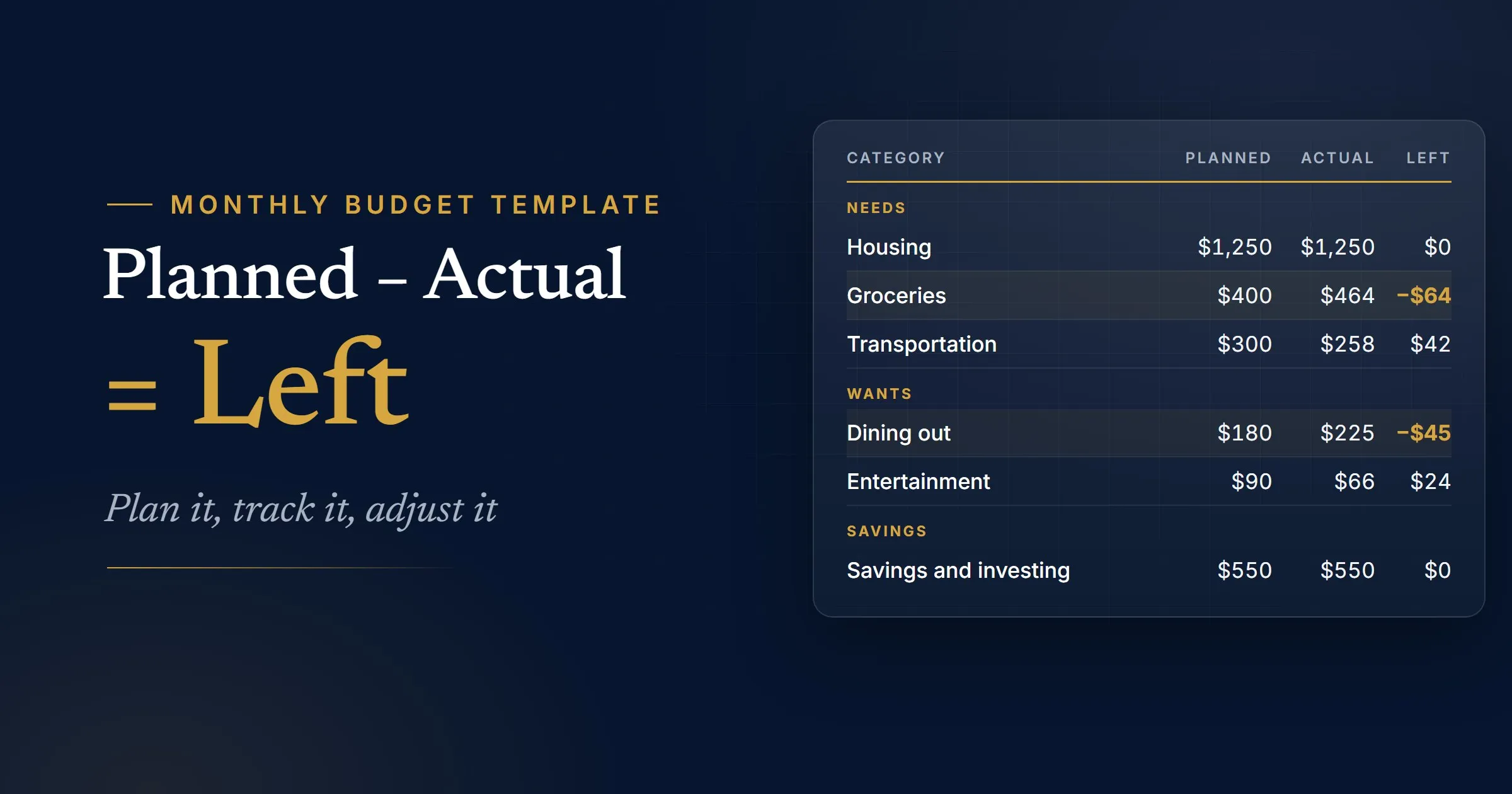
- List what’s coming. Write down each expense you expect over the next year or so, with its cost and when it’s due. Last year’s bank and card statements are a good place to look. The second page of our free budget template is built for this list, and the CFPB’s toolkit has a worksheet for planning for life events and large purchases.Source 2
- Work out a monthly amount for each one with the formula below.
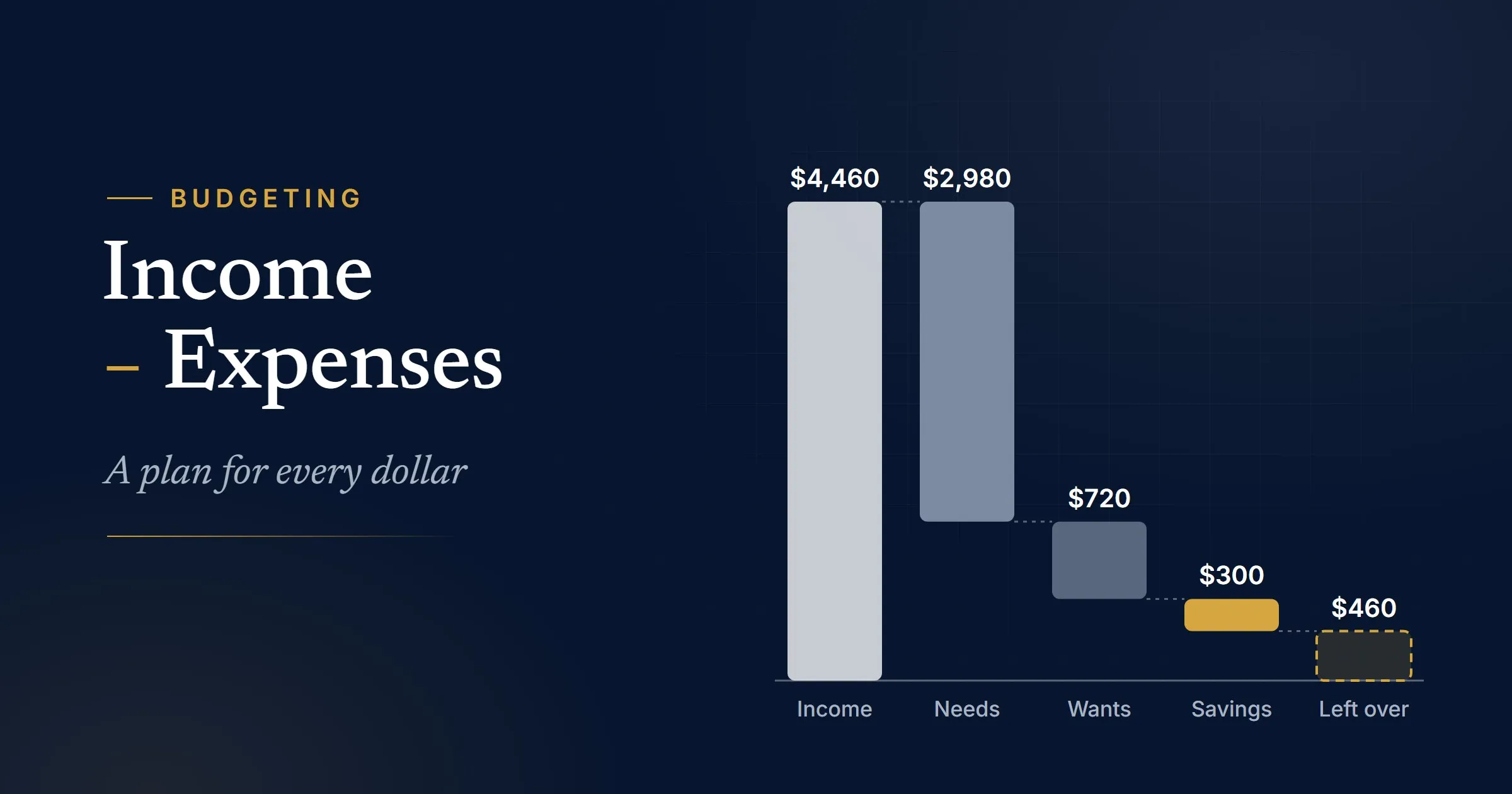
- Add the total to your budget as its own line, or add each amount to the category it belongs to.
- Keep the money separate. Your savings should be safe, easy to get to and somewhere you won’t be tempted to spend it on other things.Source 1
- Make it automatic. Recurring transfers from checking to savings are one of the easiest ways to save consistently.Source 1
- Spend it when the bill comes, then start saving for the next one.
Monthly amount equals goal minus already saved, divided by months until it's due.
- goal is what the expense will cost
- already saved is what’s in the fund now
- months until it’s due is how many monthly deposits you’ll make before you need the money
A worked example
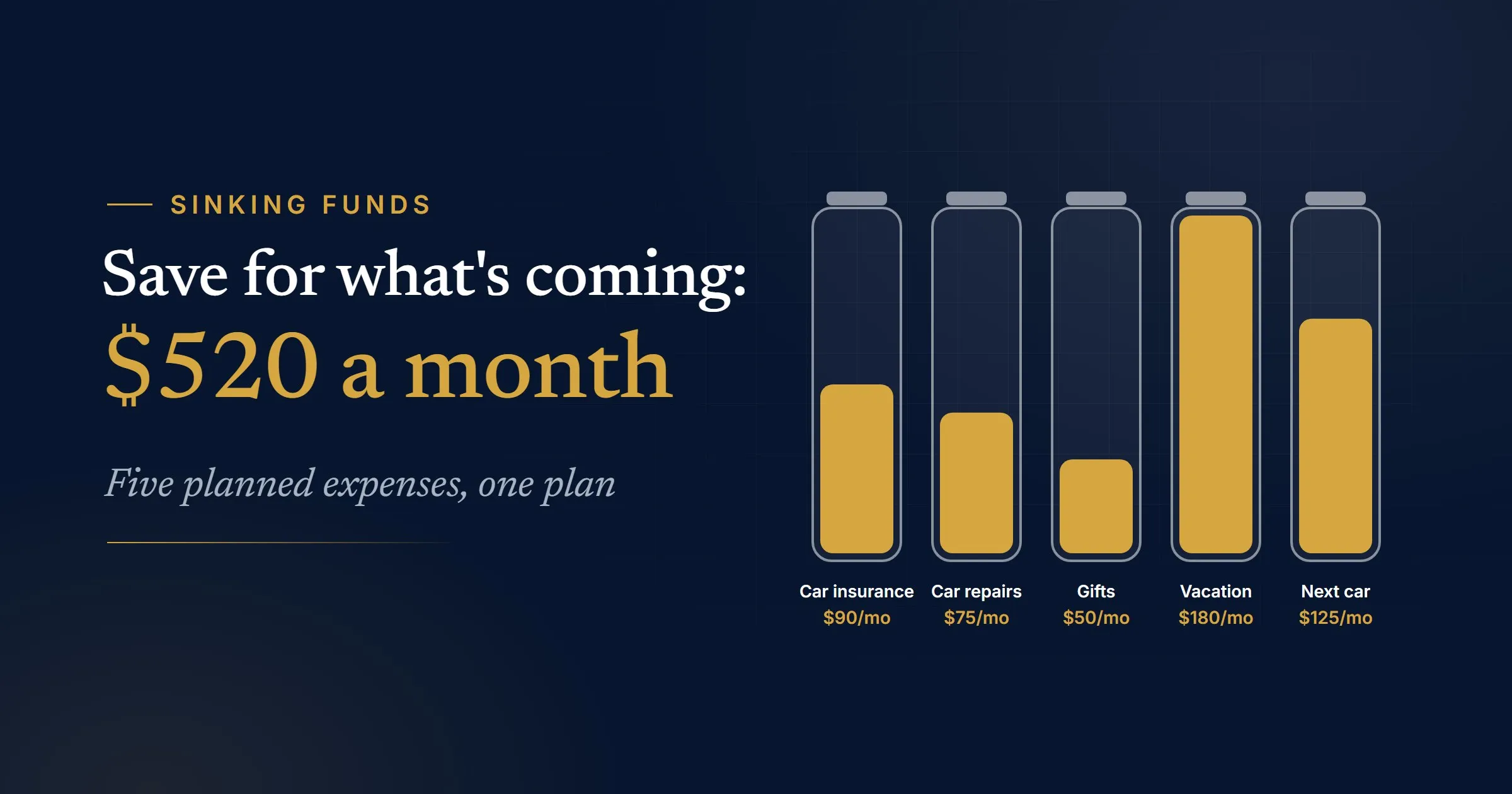
Here are five sinking funds for one household, each starting from zero:
| Sinking fund | Goal | Due in | Each month |
|---|---|---|---|
| Car insurance, paid every six months | $540 | 6 months | $90 |
| Car repairs and maintenance | $900 | 12 months | $75 |
| Holiday gifts | $600 | 12 months | $50 |
| Vacation | $1,800 | 10 months | $180 |
| Down payment on the next car | $6,000 | 48 months | $125 |
| Total | $520 |
Each fund gets one deposit right away and one each month after, with no interest.
Together, they take $520 a month. That’s a real amount, but it’s money the household would spend anyway, just in lumps that would otherwise land on a credit card.
A few things change the monthly amount:
- Starting late costs more. With only 4 months to go before the holidays, the $600 gift fund would need $150 a month instead of $50.
- Money already saved lowers it. With $300 already set aside for the vacation, the fund needs $150 a month instead of $180.
- Interest helps on long goals. At a 4% APY, the $6,000 car fund needs $115.27 a month instead of $125, because the savings earn about $467 along the way. Our Savings Goal Calculator works this out for any goal.
Where to keep your sinking funds
A savings account at a bank or credit union works well. One account can hold several funds if you track each balance, for example in a spreadsheet or on the second page of our budget template. If your bank lets you open more than one savings account, or label separate goals inside one, giving each fund its own space makes it easier to see what’s there.
Make sure the account is insured. At an FDIC-insured bank, deposits are insured up to at least $250,000 per depositor, per ownership category,Source 3 and at a federally insured credit union, the NCUA insures individual accounts up to $250,000.Source 4 Our FDIC insurance guide explains how those limits work, and our checking vs. savings guide explains how to set up the two accounts together.
How many sinking funds should you have?
As many as you’ll actually keep track of. Start with the two or three expenses that cause the most stress when they arrive, often car costs and the holidays, and add more once the habit sticks. Bills that come once or twice a year are a good place to start; our budgeting guide shows how to turn them into monthly amounts.
Common questions
What is a sinking fund?
Money you save a little at a time for a specific expense you know is coming, so you can pay for it in full when it’s due.
What’s the difference between a sinking fund and a savings account?
A savings account is where you keep the money. A sinking fund is a purpose for some of that money, such as next year’s car insurance.
What’s the difference between a sinking fund and an emergency fund?
An emergency fund is for unplanned expenses or financial emergencies.Source 1 A sinking fund is for planned expenses. Keep both, and keep them separate, so a planned cost never eats into your emergency money.
How do I calculate a sinking fund?
Subtract what you’ve already saved from the goal, then divide by the number of months until it’s due. A $1,800 vacation in 10 months, starting from zero, takes $180 a month.
Should sinking funds be part of my budget?
Yes. Treat the monthly amount like a bill: give it its own line in your budget, and move it to savings when you’re paid. In a zero-based budget, each fund is one of the jobs you give your money.
Run your own numbers
Work out how much to save, and by when.
Open the calculator
Sources
Numbers in the text link to these sources. We check them whenever we update this page.
- 1
An essential guide to building an emergency fund(external site)
Consumer Financial Protection Bureau · Updated October 29, 2025 · Accessed November 18, 2026 · Back to text for source 1
- 2
Your Money, Your Goals toolkit(external site)
Consumer Financial Protection Bureau · Updated April 24, 2026 · Accessed November 18, 2026 · Back to text for source 2
- 3
Understanding Deposit Insurance(external site)
Federal Deposit Insurance Corporation · Updated April 1, 2024 · Accessed November 18, 2026 · Back to text for source 3
- 4
Share Insurance Coverage(external site)
National Credit Union Administration · Updated November 18, 2026 · Accessed November 18, 2026 · Back to text for source 4
About the author
Wealthistry Editorial Team
Research, writing and editing
The team that researches, writes, fact-checks and updates Wealthistry's guides and calculators, following our published editorial standards.
Author profileEditorial policyHow we researchReport an error