An emergency fund is a cash reserve set aside for unplanned expenses or financial emergencies, such as car repairs, home repairs, medical bills or a loss of income.Source 1 Without one, even a small financial upset can turn into long-term debt.Source 2
Many households are one surprise away from that. In the Federal Reserve’s survey of household finances, 63% of adults said they would cover a hypothetical $400 emergency expense entirely with cash or its equivalent: cash, savings or a credit card paid off at the next statement. Among the rest, the most common fallback was putting it on a credit card and carrying a balance, and 12% of all adults said they couldn’t pay a $400 expense by any means.Source 3
This guide breaks building an emergency fund into steps, with milestones and timelines worked out using the same math as our Emergency Fund Calculator.
How much should you have in an emergency fund?
There’s no single right amount. It depends on your situation, and a good starting point is to think about the unexpected expenses you’ve had before and what they cost.Source 1 A common savings goal is 3 to 6 months of living expenses.Source 2 In 2025, 55% of adults said they had set aside enough to cover three months of expenses in an emergency or rainy day fund.Source 3
Aim toward the higher end if your income is irregular or commission-based, your household relies on one income, you support children or other relatives, or your work would take a long time to replace. If you have two steady incomes and few dependents, the lower end may be enough. Our guide to budgeting on an irregular income covers saving when your pay changes from month to month.
Six months of expenses can feel out of reach, so don’t start there. Build the fund in milestones instead.
Step 1: Add up your essential monthly expenses
Base your target on essentials: the bills you’d still have to pay if your income stopped, such as housing, utilities, groceries, insurance, transportation, child care and the minimum payments on your debts. Leave out wants such as dining out and travel, which you’d cut back in an emergency.
If you haven’t listed your expenses before, our step-by-step budgeting guide shows how. In the examples below, essential expenses come to $2,800 a month.
Step 2: Set milestones
Each milestone is a goal you can actually see yourself reaching, and each one makes you a little safer than the last.
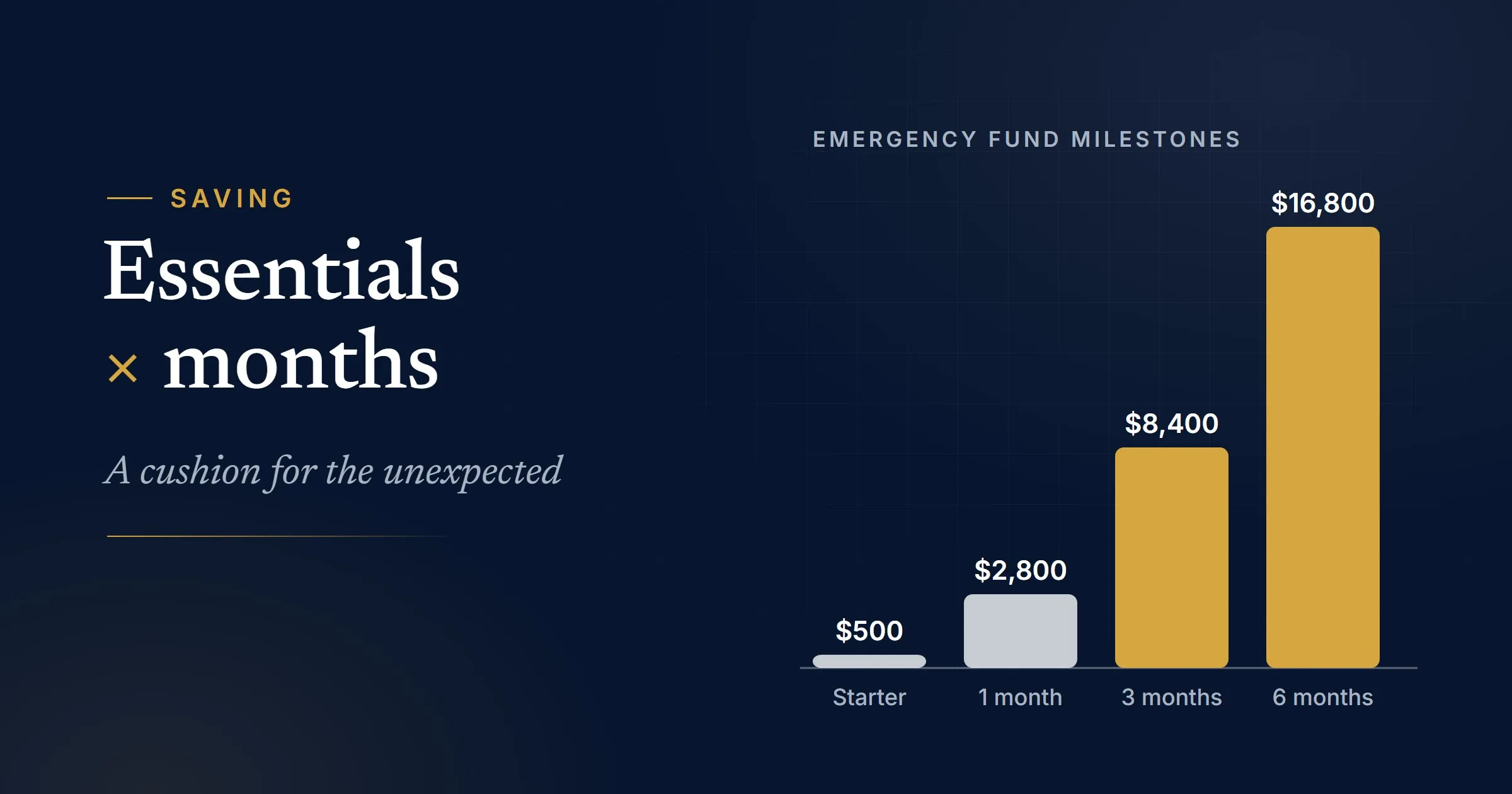
Milestones for $2,800 a month of essentials
- A $500 starter fund. Enough for a small surprise, such as a car repair or a medical copay, without reaching for a credit card.
- One month of essentials: $2,800. A cushion for a bigger bill or a short gap between paychecks.
- Three months: $8,400. Time to handle a job loss without borrowing.
- Six months: $16,800. For irregular income or a household that relies on one paycheck.
The starter fund matters more than its size suggests. In the same Federal Reserve survey, 70% of adults said they could pay an expense of at least $500 using only their savings, so reaching $500 puts you ahead of many households.Source 3
Step 3: Find the money to save
Savings come from spending less than you earn, and it shows: 86% of adults who said they always had money left over at the end of the month had savings to cover three months of expenses, compared with 13% of those who never had money left over.Source 3
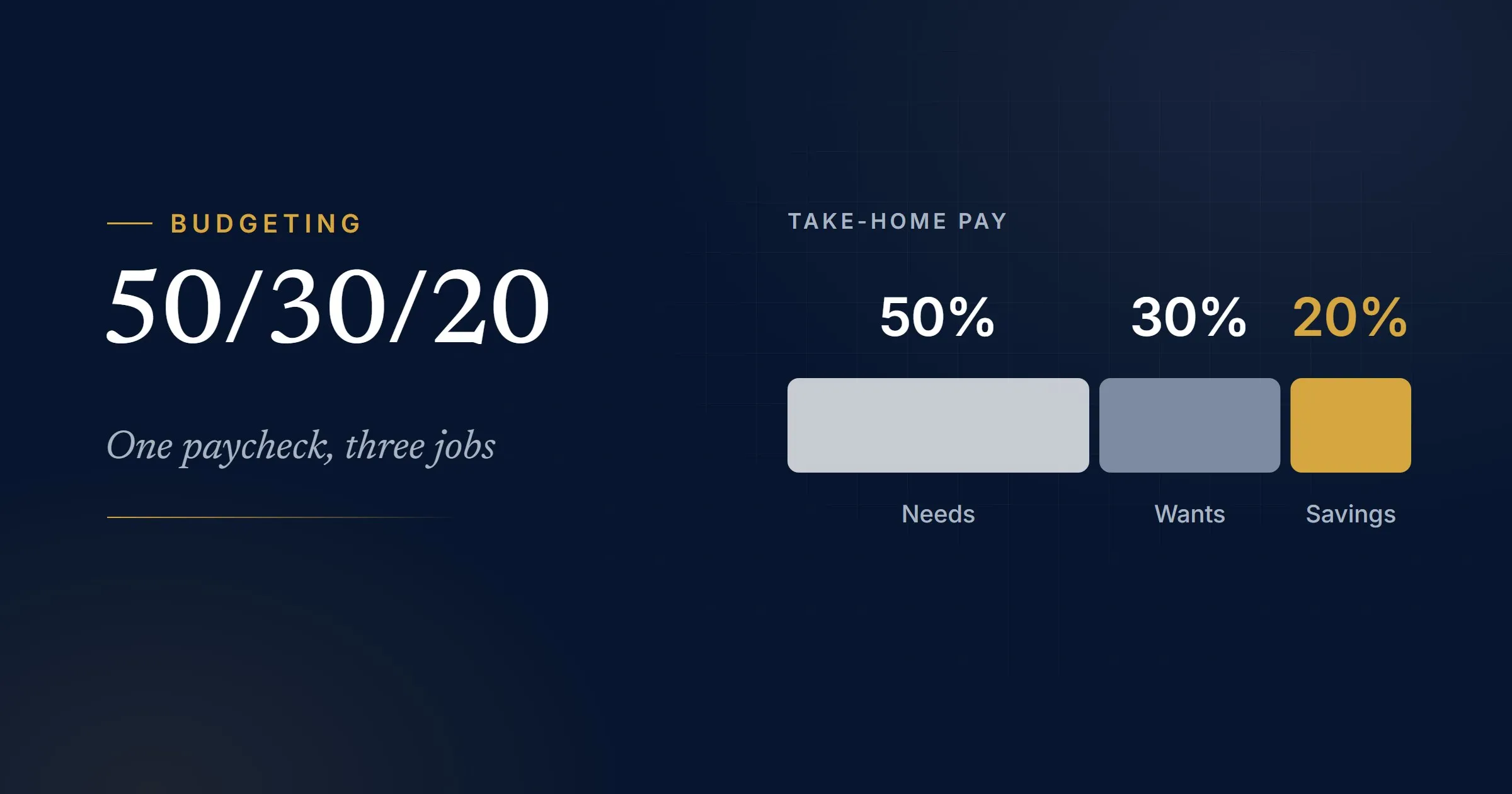
- Give your leftover money a job. If your budget leaves money unassigned at the end of the month, move it to savings. Our guide to the 50/30/20 rule suggests putting about 20% of take-home pay toward savings and extra debt payments.
- Save one-time money. A tax refund or gift money can jump-start the fund.Source 2 For many Americans, a tax refund can be one of the largest checks they get all year.Source 1
- Use the timing of your pay. In weeks when you have more money available, move a little extra into savings.Source 1
- Start small if you have to. If you’re living paycheck to paycheck, putting money aside can feel hard, but even a small amount can provide some financial security.Source 1
- Make it a challenge. The 52-week savings challenge starts at $1 and adds a dollar each week, so your savings grow along with the habit.
- Cut a few costs. Our guide to saving money shows how three small changes can free up hundreds of dollars a month.
Step 4: Make it automatic
Saving automatically is one of the easiest ways to save consistently: set up recurring transfers from checking to savings, and choose how much and how often.Source 1 If you’re paid by direct deposit, ask your employer whether you can split your paycheck between checking and savings, so part of it never lands in your spending account.Source 1 Keep an eye on your checking balance so an automatic transfer doesn’t cause an overdraft fee.Source 1
How long it takes depends mostly on how much you save. Saving $300 a month toward the milestones above:
Saving $300 a month, starting from zero
- The $500 starter fund takes 2 months.
- One month of essentials, $2,800, takes 10 months.
- Three months, $8,400, takes 2 years and 4 months.
- Six months, $16,800, takes 4 years and 8 months.
And here’s how the monthly amount changes the time to reach three months of essentials:
| Saving each month | Time to reach $8,400 |
|---|---|
| $100 | 7 years |
| $150 | 4 years and 8 months |
| $200 | 3 years and 6 months |
| $300 | 2 years and 4 months |
| $400 | 1 year and 9 months |
| $500 | 1 year and 5 months |
| $750 | 1 year |
Starting from zero, with interest left out. Rounded up to whole months.
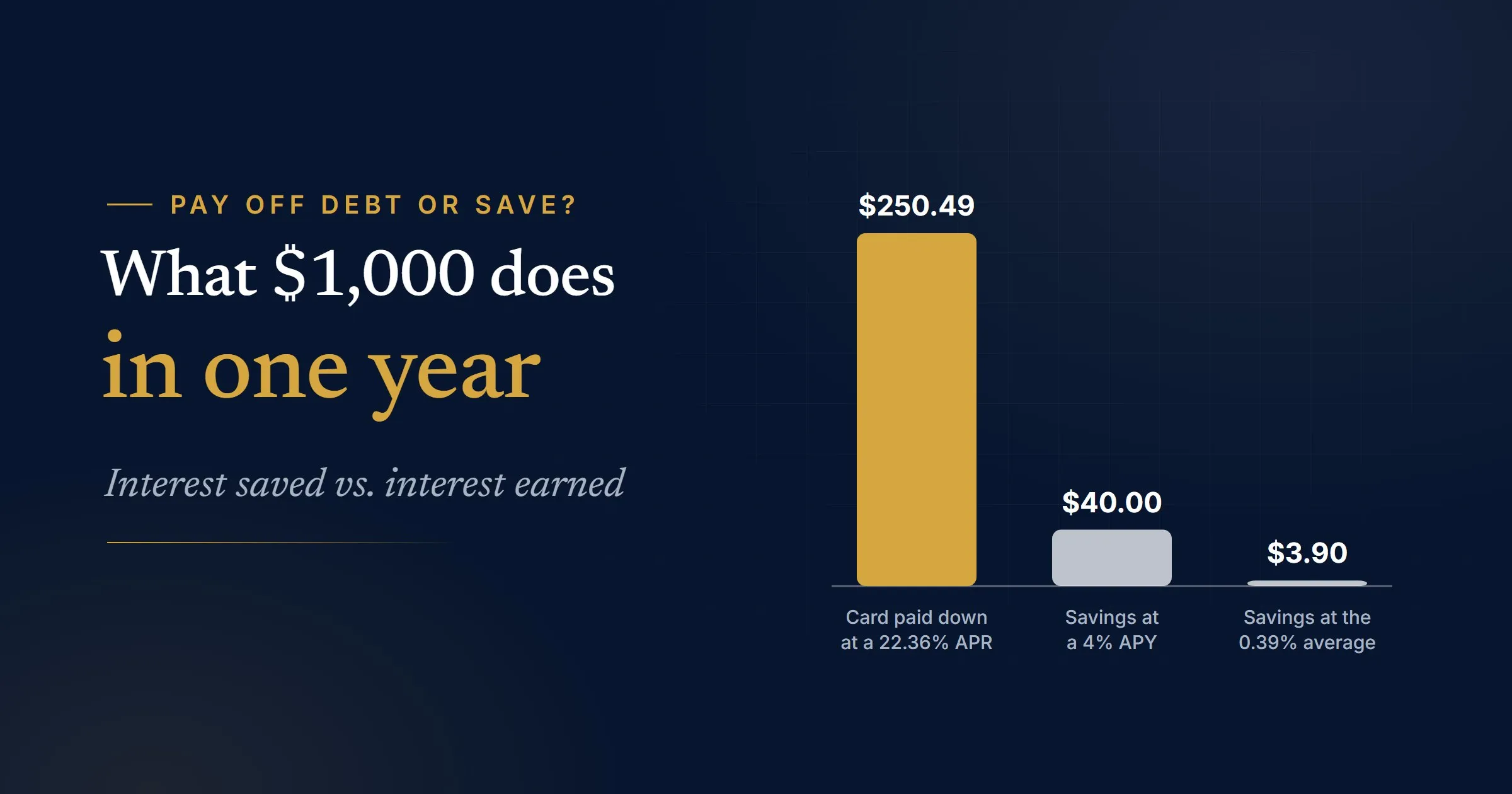
Interest helps less than you might expect. The FDIC’s national average rate for savings accounts was 0.39% in November 2026.Source 4 At that rate, saving $300 a month still takes 2 years and 4 months to reach three months of essentials. Even at a 4% APY, it takes 2 years and 3 months. A higher rate is worth having, but the amount you save each month does most of the work.
Step 5: Keep it safe, separate and easy to reach
Your emergency fund should be safe and easy to get to, and kept where you won’t be tempted to spend it on things that aren’t emergencies.Source 1 Investor.gov describes it as rainy-day money you keep in a bank or credit union.Source 2
- A savings account at a bank or credit union is generally considered one of the safest places for your money, and a dedicated account keeps the fund apart from everyday spending.Source 1 At an FDIC-insured bank, deposits are insured up to at least $250,000 per depositor, per ownership category.Source 5 At a federally insured credit union, the NCUA insures individual accounts up to $250,000.Source 6 Our FDIC insurance guide explains how coverage works, and our high-yield savings guide covers accounts that pay more interest.
- A prepaid card isn’t connected to a bank account, and you can spend only what’s loaded on it.Source 1
- Cash at home is quick to reach, but it can be stolen, lost or destroyed.Source 1
Avoid putting your emergency fund in stocks or other investments. All investments involve some degree of risk, and products differ in how readily you can get your money when you need it and how safe it will be.Source 7 An emergency is the worst time to sell something that has dropped in value.
When to use it, and when not to
Set some guidelines in advance for what counts as an emergency, and try to stay consistent. Not every unexpected expense is a dire emergency, but a medical bill your insurance didn’t cover may still be the kind of cost the fund is for.Source 1
- Good reasons to use it: a lost job or a drop in income, a car repair you need to get to work, medical or dental bills, an essential home repair, or urgent travel for a family emergency.
- Better paid for another way: costs you can see coming, such as holidays, annual bills and car registration. Set money aside for those separately each month in sinking funds, as our budgeting guide shows.
When a real emergency comes, use the fund. Putting the cost on a credit card or taking out a loan can make a one-time expense much larger than the original bill, because of interest and fees.Source 1
Rebuild it after you use it
Using your emergency fund means it worked. If you spend it down, just work to build it back up again.Source 1
Refilling after a $1,200 car repair
You pay a $1,200 repair bill from the fund. Saving $300 a month, you’ll have it back in 4 months.
To refill it faster, pause some wants for a few months, put windfalls such as a tax refund straight into the fund, or temporarily move money from extra debt payments back into savings.
Emergency fund or debt payoff first?
You don’t have to choose one or the other. A common approach is to build the $500 starter fund first, so the next surprise doesn’t land on a credit card, then put most of your extra money toward high-interest debt while still adding a little to savings, and finish the fund once the expensive debt is gone. Our guide to paying off debt or saving first works through the math, our Debt Payoff Calculator shows how long your debts will take, and our snowball vs. avalanche guide helps you choose which debt to pay first.
An emergency fund also protects your retirement savings. In the prior 12 months, 14% of adults who weren’t retired had borrowed from, cashed out or cut back contributions to their retirement accounts, and those who’d had a major unexpected expense were more likely to have tapped those accounts.Source 3
Common questions
How much should I have in my emergency fund?
A common goal is 3 to 6 months of living expenses,Source 2 but the right amount depends on your situation. Multiply your essential monthly expenses by the number of months you want to cover. The Emergency Fund Calculator does this and shows how long it would take to get there.
Where should I keep my emergency fund?
In an insured savings account at a bank or credit union, separate from your everyday checking account. That keeps it safe, easy to reach and out of sight.Source 1 Our checking vs. savings guide explains how the two accounts differ and how to set them up together.
Should I invest my emergency fund?
Generally not. All investments involve some degree of risk,Source 7 and the fund’s job is to be there, in full, when you need it.
Can a credit card be my emergency fund?
It’s better not to rely on one. A card can cover a cost in the moment, but if you can’t pay the balance in full, interest and fees can make the expense much larger than the original bill.Source 1
Does an emergency fund count toward the 20% in the 50/30/20 rule?
Yes. Money you put into your emergency fund is part of the 20% for savings and extra debt payments.
Run your own numbers
Find a savings target based on your essential expenses.
Open the calculator
Sources
Numbers in the text link to these sources. We check them whenever we update this page.
- 1
An essential guide to building an emergency fund(external site)
Consumer Financial Protection Bureau · Updated October 29, 2025 · Accessed November 18, 2026 · Back to text for source 1
- 2
Investor Resilience – World Investor Week 2022: Investor Bulletin(external site)
Investor.gov, U.S. Securities and Exchange Commission · Published October 3, 2022 · Accessed November 18, 2026 · Back to text for source 2
- 3
Board of Governors of the Federal Reserve System · Accessed November 18, 2026 · Back to text for source 3
- 4
National Rates and Rate Caps – November 2026(external site)
Federal Deposit Insurance Corporation · Updated November 16, 2026 · Accessed November 18, 2026 · Back to text for source 4
- 5
Understanding Deposit Insurance(external site)
Federal Deposit Insurance Corporation · Updated April 1, 2024 · Accessed November 18, 2026 · Back to text for source 5
- 6
Share Insurance Coverage(external site)
National Credit Union Administration · Updated November 18, 2026 · Accessed November 18, 2026 · Back to text for source 6
- 7
Investor.gov, U.S. Securities and Exchange Commission · Accessed November 18, 2026 · Back to text for source 7
About the author
Wealthistry Editorial Team
Research, writing and editing
The team that researches, writes, fact-checks and updates Wealthistry's guides and calculators, following our published editorial standards.
Author profileEditorial policyHow we researchReport an error