Credit card interest is what you pay to borrow on your card, and it’s expensive. In the third quarter of 2026, the average APR on credit card accounts that were charged interest was 22.36%.Source 1 Much of it is avoidable, though: if your card has a grace period, you can avoid paying interest on purchases by paying off your balance in full by the due date each month.Source 2
This guide shows how card issuers turn your APR into a daily rate, how they use your balance on each day of the billing cycle, and why the timing of your payments matters. Every example uses that 22.36% APR and is worked out step by step, so you can check the math.
APR: the yearly rate on your card
A card’s interest rate is usually stated as a yearly rate, the annual percentage rate or APR.Source 3 One card can have several: card companies often charge one rate for purchases and different rates for cash you get with the card or checks you write on the account. Your statement must show each balance that has a different APR and how much is in each.Source 2
Most APRs are either fixed or variable. A variable APR changes with an index interest rate, such as the prime rate published in The Wall Street Journal, while a fixed APR doesn’t move with an index. A fixed rate can still change, but the issuer generally must notify you first, and in most cases can apply the higher rate only to purchases and other transactions you make after the notice. Your cardholder agreement says how your card’s APR can change.Source 4
The Federal Reserve tracks two averages from the banks that report to it. Across all their credit card accounts, the average APR was 21.19% in the third quarter of 2026. On accounts that were charged interest, it was 22.36%, measured as the finance charges those accounts paid compared with their average daily balances.Source 1
Step 1: Your APR becomes a daily rate
Some card issuers calculate interest with a daily periodic rate, which you can work out from the APR:Source 3
Daily rate equals APR divided by 365.
- APR is your card’s annual percentage rate
- 365 is the days in a year; some issuers divide by 360 instead
At a 22.36% APR, the daily rate is 0.06126%, or 0.06211% for an issuer that divides by 360. On a $3,000 balance, one day’s interest comes to $1.84.
Step 2: Interest is charged on your average daily balance
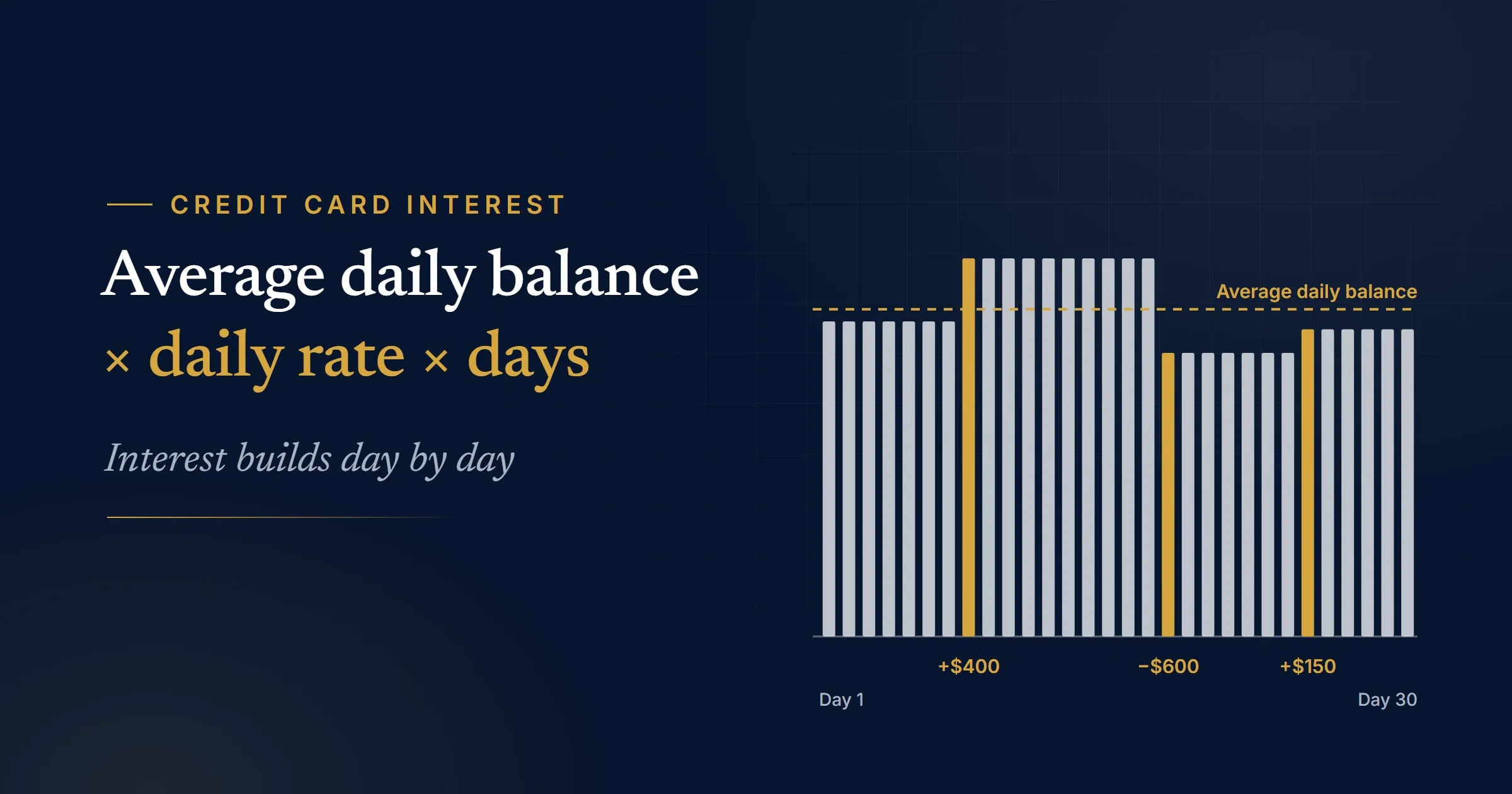
Many card issuers calculate the interest you owe daily, based on your average daily balance.Source 2 The daily rate is generally multiplied by the amount you owe at the end of each day, and that interest is added to the balance, so it compounds daily.Source 3 Over a billing cycle, that works out to:
Interest equals average daily balance, times daily rate, times days in the cycle.
- average daily balance is the balance at the end of each day, added up and divided by the days in the cycle
- daily rate is the APR divided by 365 (or 360)
- days in the cycle is the length of the billing cycle, often about 30 days
Here’s a 30-day billing cycle on a card that carried a $2,000 balance from last month. Because the balance wasn’t paid in full, new purchases are charged interest from the day they’re made:
| Days | What happened | Balance |
|---|---|---|
| 1–7 (7 days) | Carried from last month | $2,000 |
| 8–17 (10 days) | +$400 purchase | $2,400 |
| 18–24 (7 days) | −$600 payment | $1,800 |
| 25–30 (6 days) | +$150 purchase | $1,950 |
The balance at the end of each day, after that day's purchase or payment.
Working out the interest for this cycle
- Add up the balance for each day. $2,000 × 7 days, plus $2,400 × 10, $1,800 × 7 and $1,950 × 6, comes to $62,300.
- Divide by the days in the cycle: $62,300 ÷ 30 = $2,076.67, the average daily balance.
- Multiply by the daily rate and the days: $2,076.67 × 0.06126% × 30 = $38.17 in interest.
If the issuer adds each day’s interest to the balance, the charge comes to $38.51, 34 cents more. Over a single month, daily compounding makes little difference.
Here’s what a month of interest costs at a 22.36% APR when the balance stays the same for the whole cycle:
| Balance | Interest a day | Interest for 30 days |
|---|---|---|
| $500 | $0.31 | $9.19 |
| $1,000 | $0.61 | $18.38 |
| $2,500 | $1.53 | $45.95 |
| $5,000 | $3.06 | $91.89 |
| $10,000 | $6.13 | $183.78 |
For a 30-day billing cycle with no purchases or payments. Interest is the balance × APR ÷ 365 × 30.
The grace period: how to pay no interest at all
A grace period is the time between the end of a billing cycle and the date your payment is due. Card companies aren’t required to give one, but most cards have a grace period on purchases. If yours does and you’re not carrying a balance, you won’t be charged interest on new purchases as long as you pay your balance in full by the due date. Card companies must have procedures to make sure your bill is mailed or delivered at least 21 days before the payment is due.Source 5
If you don’t pay in full by the due date, you lose the grace period. You’ll be charged interest on the unpaid part of the balance, and on purchases in the new billing cycle starting on the date you make each one. And if you pay in full some months but not others, you may lose your grace period for the month you don’t pay in full and for the month after.Source 5
Paying $1,000 of a $1,200 statement
You paid last month’s bill in full, and this month’s statement shows $1,200 of purchases.
- Pay all $1,200 by the due date, and you pay no interest on those purchases.
- Pay $1,000, and the $200 left over is charged interest for the whole next billing cycle: $3.68. Next month’s purchases are charged interest from the day you make them too. If you spend another $1,200 evenly through the month, that adds $11.39, for $15.07 of interest on your next statement instead of none.
Federal rules limit how much losing a grace period can cost. Your card issuer can’t charge interest for losing the grace period based on balances from days in earlier billing cycles, or on any part of the balance you repaid before the grace period ended.Source 6
Why you might see interest after paying in full
When you carry a balance, most card companies charge interest from your billing date until they receive your payment.Source 7 So in the month you pay off a balance you’d been carrying, your next statement can show a small interest charge for the days before your payment arrived. Pay that too, and once you’re paying your balance in full each month, the grace period can work for you again.
When you pay matters
Because interest builds day by day, if you don’t have a grace period, the sooner you pay off all or some of your balance, the less interest you’ll pay.Source 2
The same cycle, paying on day 3 instead of day 18
Make the same $600 payment on day 3 of the billing cycle, and the interest drops from $38.17 to $32.65. That’s $5.52 saved this month without paying a dollar more, just by paying sooner.
If you carry a balance, pay as soon as you can after payday. Some people split the payment and pay every time they’re paid.
Where your payment goes
When you pay more than the minimum but less than the full balance, the card issuer must generally apply the amount above the minimum to the balance with the highest interest rate first, then to the others in order of their rates. The issuer decides where the minimum payment itself goes.Source 2 If you have a cash advance or another high-rate balance on the card, paying more than the minimum is how you pay it down.
Other ways interest can catch you
- Cash advances. Grace periods usually apply only to purchases. If you use your card to get a cash advance, or use a check from your card issuer, you generally pay interest from the date of the transaction.Source 5
- Penalty rates. Your issuer generally can’t raise the APR on your existing balance.Source 8 One exception is falling more than 60 days behind on a minimum payment. The issuer must give you written notice at least 45 days before a penalty rate takes effect,Source 9 and if you then make six on-time minimum payments in a row, it must lower the rate on that balance back to what it was.Source 8
- Variable rates. If your APR follows an index and the index goes up, your APR can go up too, even on your existing balance.Source 8
- Introductory rates. An issuer can raise a temporary promotional rate when it ends, as long as the promotion lasted at least six months.Source 8 After that, the regular APR applies to what’s left.
- Deferred interest. “0% intro APR on purchases for 12 months” and “no interest if paid in full within 12 months” sound alike but work differently. With a deferred interest offer, if you don’t pay off the whole promotional balance in time, interest going back to the date of purchase is added to what you owe. In the CFPB’s example, a $400 TV paid at $25 a month leaves $100 unpaid after 12 months: with a 0% offer, you’d owe $100, but with a deferred interest offer at 25%, $65 of interest is added, for $165.Source 10
How to pay less credit card interest
- Pay your statement balance in full every month, so your grace period keeps purchases interest-free.Source 5
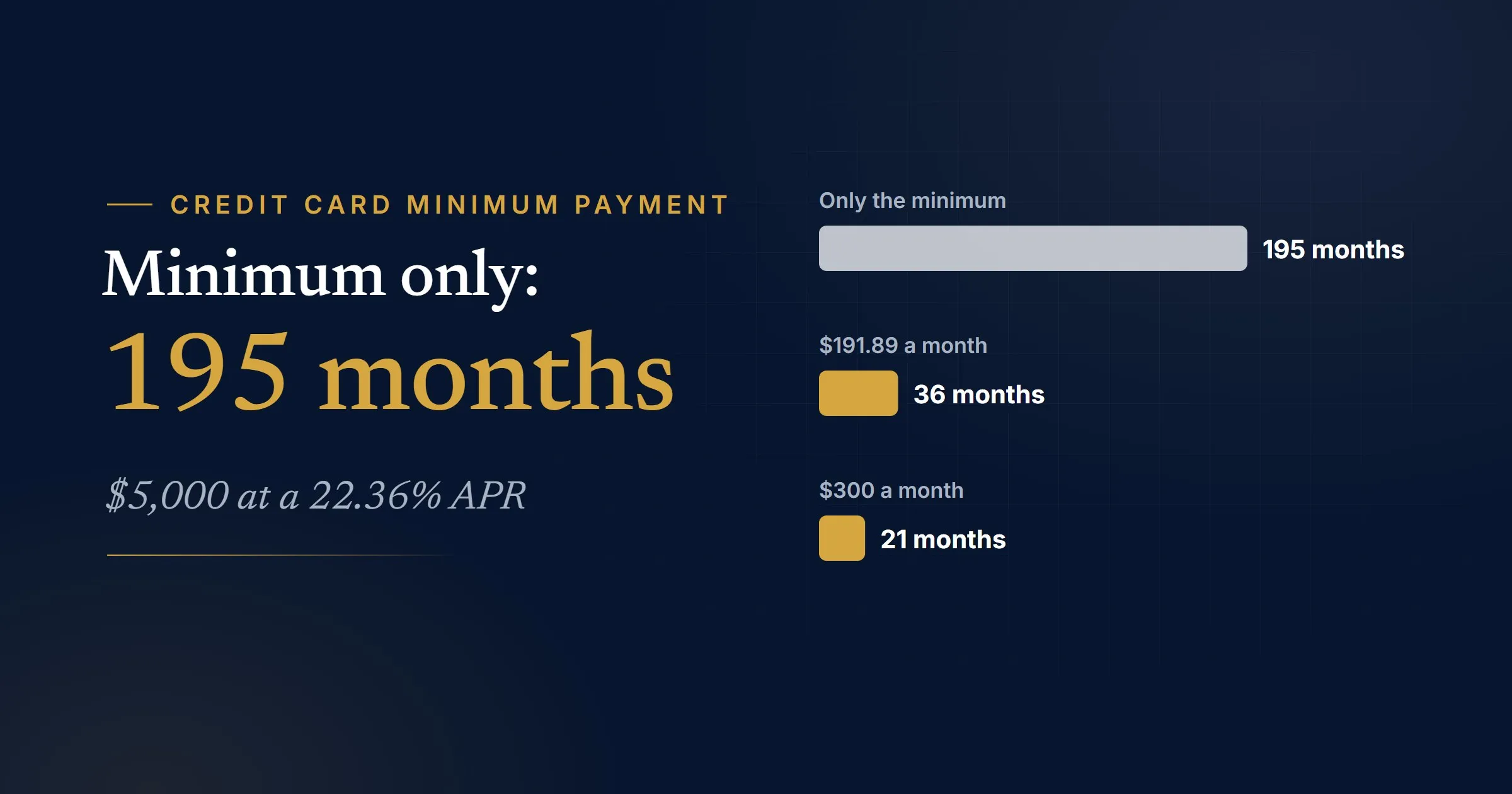
- If you carry a balance, pay early and pay more than the minimum. Our guide to credit card minimum payments shows what paying only the minimum costs, and our Credit Card Payoff Calculator shows how long your balance will take to pay off and how much interest it will cost at different payments.
- Stop adding new charges while you pay a balance down. Without a grace period, every new purchase costs interest from the day you make it.Source 5 Our guide to paying off credit card debt shows how much that can add.
- Avoid cash advances, which usually start costing interest right away.Source 5
- Read promotional offers closely. Note when the promotion ends and whether it’s 0% interest or deferred interest.Source 10
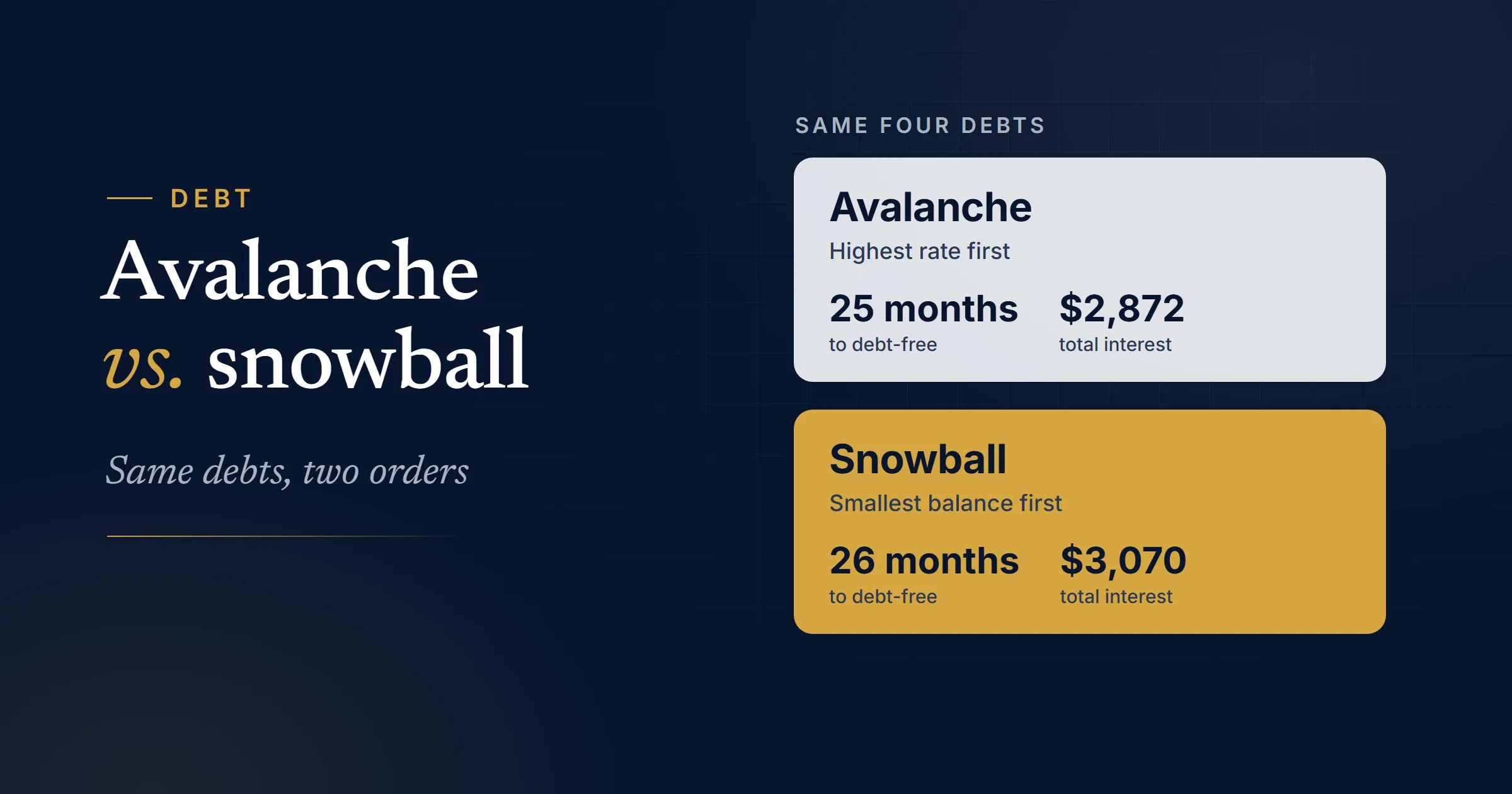
- Pay off the most expensive debt first. If you owe on several cards, our debt snowball vs. avalanche guide compares the two most popular payoff orders.
Common questions
How is credit card interest calculated?
Most issuers divide your APR by 365 (or 360) to get a daily rate, apply it to your balance at the end of each day, and add up the result for the billing cycle.Source 3 Over a cycle, that’s roughly your average daily balance × the daily rate × the days in the cycle.
Is credit card interest charged daily or monthly?
It’s usually calculated daily and charged once a month, on your statement. Many issuers calculate the interest you owe daily, based on your average daily balance.Source 2
Do you pay interest if you pay the statement balance in full?
Not on purchases, if your card has a grace period and you weren’t already carrying a balance.Source 5 If you were carrying one, you may see one last interest charge for the days before your payment arrived.Source 7
How much interest will I pay on $1,000?
At a 22.36% APR, a $1,000 balance that stays the same for a 30-day billing cycle costs about $18.38 in interest. The table above shows other balances.
Does credit card interest compound?
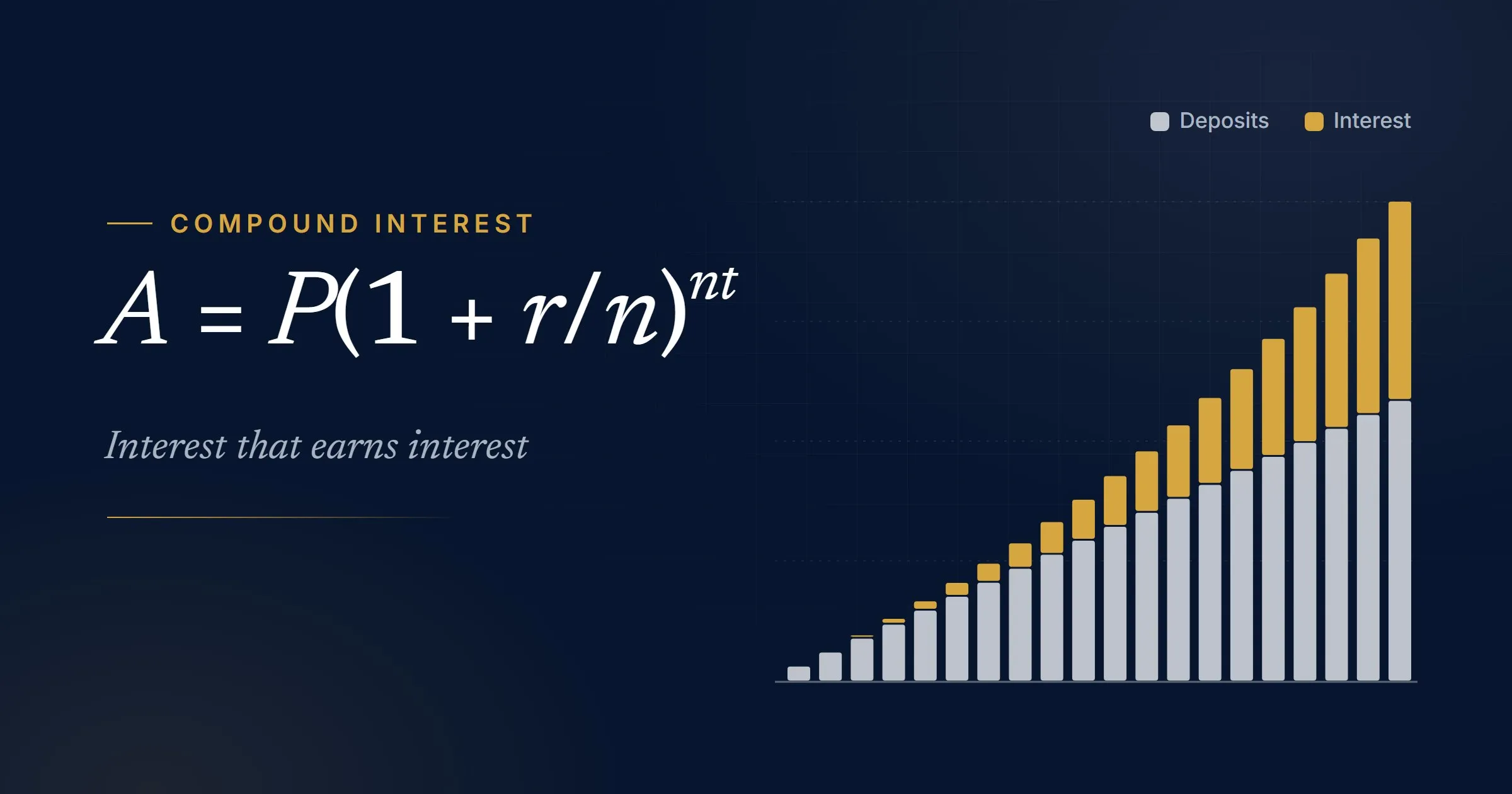
Often, yes. When interest is calculated with a daily rate, each day’s interest is added to the balance, so it compounds daily.Source 3 Compounded daily, a 22.36% APR works out to 25.05% a year. Our compound interest guide explains why, and our APR vs. APY guide shows how to convert between the two.
What’s a good credit card APR?
Lower is better, and you can compare your card with the averages: 21.19% across all card accounts and 22.36% on accounts charged interest in the third quarter of 2026.Source 1 If you pay your balance in full every month, though, your APR matters much less, because you won’t be charged interest on purchases.Source 5
Run your own numbers
Estimate your payoff date and the total interest you'd pay.
Open the calculator
Sources
Numbers in the text link to these sources. We check them whenever we update this page.
- 1
Consumer Credit - G.19(external site)
Board of Governors of the Federal Reserve System · Published November 6, 2026 · Accessed November 18, 2026 · Back to text for source 1
- 2
How does my credit card company calculate the amount of interest I owe?(external site)
Consumer Financial Protection Bureau · Last reviewed January 22, 2024 · Accessed November 18, 2026 · Back to text for source 2
- 3
What is a “daily periodic rate” on a credit card?(external site)
Consumer Financial Protection Bureau · Last reviewed September 23, 2024 · Accessed November 18, 2026 · Back to text for source 3
- 4
What is the difference between a fixed APR and a variable APR?(external site)
Consumer Financial Protection Bureau · Last reviewed August 28, 2020 · Accessed November 18, 2026 · Back to text for source 4
- 5
What is a grace period for a credit card?(external site)
Consumer Financial Protection Bureau · Last reviewed September 23, 2024 · Accessed November 18, 2026 · Back to text for source 5
- 6
Electronic Code of Federal Regulations · Accessed November 18, 2026 · Back to text for source 6
- 7
Consumer Financial Protection Bureau · Last reviewed October 19, 2023 · Accessed November 18, 2026 · Back to text for source 7
- 8
Electronic Code of Federal Regulations · Accessed November 18, 2026 · Back to text for source 8
- 9
12 CFR 1026.9, Subsequent disclosure requirements (Regulation Z, Truth in Lending)(external site)
Electronic Code of Federal Regulations · Accessed November 18, 2026 · Back to text for source 9
- 10
How to understand special promotional financing offers on credit cards(external site)
Consumer Financial Protection Bureau (archived blog post) · Published June 8, 2017 · Accessed November 18, 2026 · Back to text for source 10
About the author
Wealthistry Editorial Team
Research, writing and editing
The team that researches, writes, fact-checks and updates Wealthistry's guides and calculators, following our published editorial standards.
Author profileEditorial policyHow we researchReport an error