A certificate of deposit (CD) and a high-yield savings account both pay interest on money you keep at a bank or credit union. The difference is the trade-off. A CD locks in a rate until a set maturity date, but taking money out early usually costs a penalty. A high-yield savings account lets you withdraw when you need to, but its rate can change at any time.
This guide compares the two side by side, shows national average rates by CD term, works through an example with $10,000, and explains CD ladders.
CD vs. high-yield savings at a glance
| Feature | CD | High-yield savings |
|---|---|---|
| Rate | Usually fixed until the CD matures | Usually variable; the bank can change it without notice |
| Getting your money | Locked until the maturity date; early withdrawals usually cost a penalty | Withdraw any time, though the bank may set limits or fees |
| Adding money | Usually not, once it's open | Any time |
| Insurance | Insured as a deposit | Insured as a deposit |
| Best for | Money you won't need until a known date | An emergency fund and money you may need soon |
Before you open a CD, the bank must tell you its maturity date, whether a penalty will or may apply if you withdraw early, how the penalty is calculated, and whether the CD renews automatically at maturity.Source 1 A savings account’s disclosures must say that a variable rate may change, how it’s set and how often it can change,Source 1 and the bank doesn’t have to notify you before changing it.Source 2 Federal rules no longer limit savings withdrawals to six a month, but your bank may still set its own limit or charge for extra withdrawals.Source 3
Both are insured the same way. FDIC insurance covers savings accounts and CDs at FDIC-insured banks,Source 4 and the NCUA insures accounts at federally insured credit unions.Source 5 Our FDIC insurance guide explains the limits.
National average rates by term
Here’s what savings accounts and CDs paid on average in November 2026:Source 6
| Account | National average APY |
|---|---|
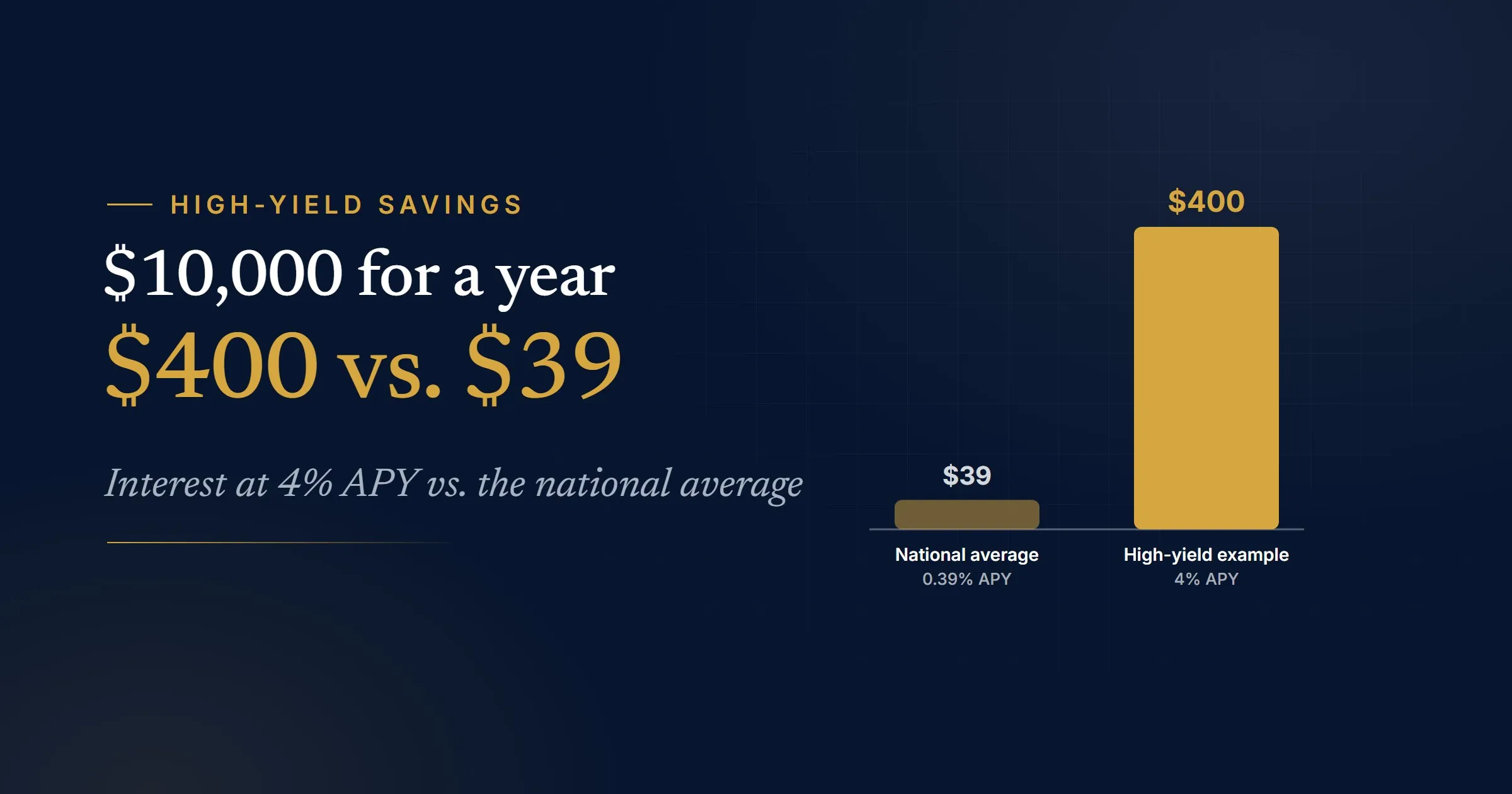
| Savings account | 0.39% |
| Money market account | 0.64% |
| 3-month CD | 1.14% |
| 6-month CD | 1.40% |
| 12-month CD | 1.81% |
| 24-month CD | 1.60% |
| 36-month CD | 1.42% |
| 48-month CD | 1.33% |
| 60-month CD | 1.44% |
FDIC national averages as of November 16, 2026. Many banks and credit unions pay more or less than the average.
Two things stand out. On average, every CD term from three months up paid more than savings accounts. And longer didn’t mean better: the 12-month CD paid the most, while 24- to 60-month CDs paid less. Locking money up for five years earned less, on average, than locking it up for one. Averages hide a wide range, so compare offers, including high-yield savings accounts, which our high-yield savings guide explains.
Which earns more? A $10,000 example
When a CD and a savings account start at the same rate, what happens next decides the winner.
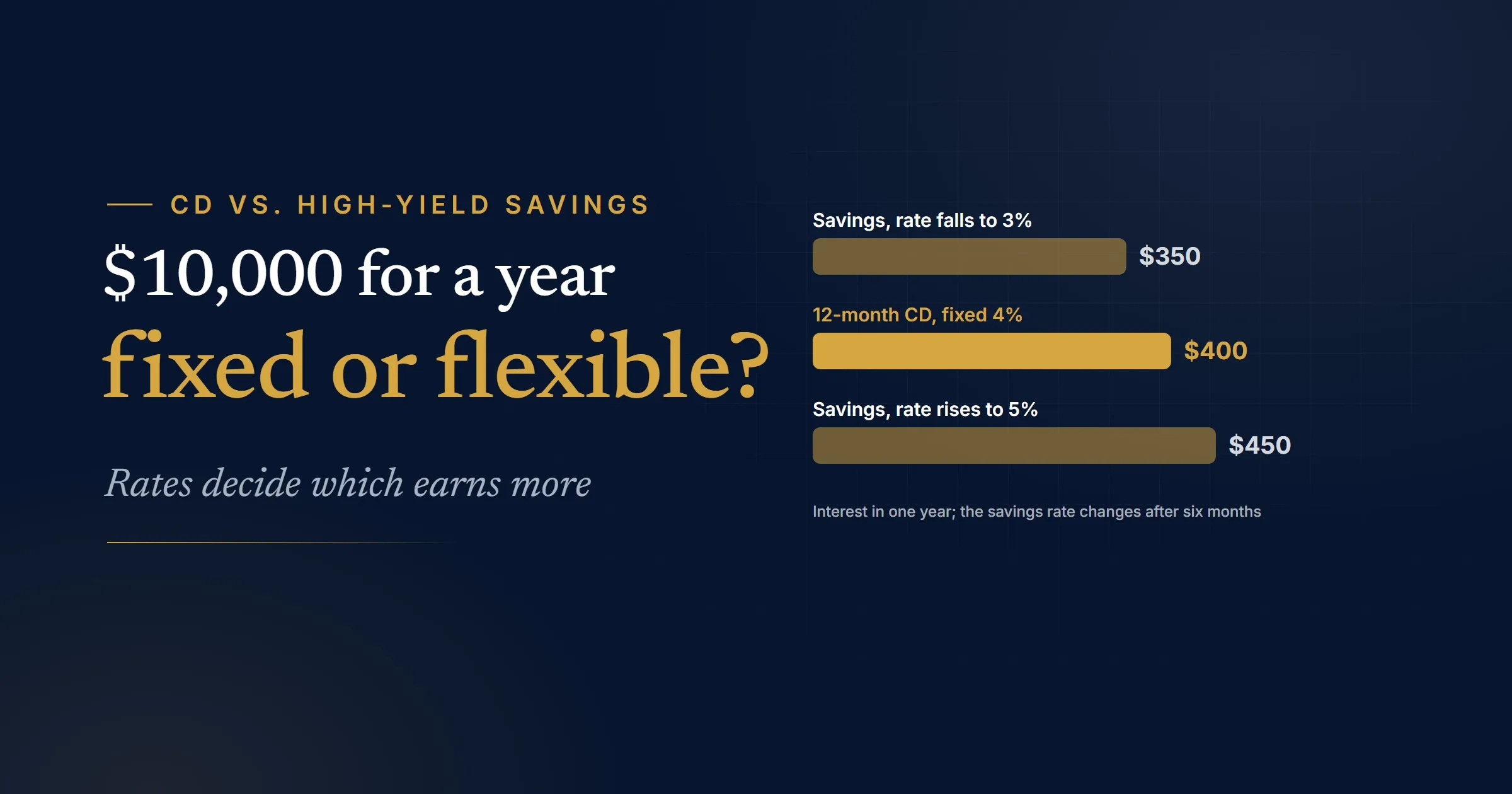
$10,000 for one year, both starting at 4% APY
- A 12-month CD at 4% APY earns $400, no matter what happens to rates.
- If the savings account’s rate falls to 3% after six months, it earns about $350, so the CD comes out $50 ahead.
- If the savings rate rises to 5% after six months, the savings account earns about $450, $50 more than the CD.
A CD protects you from falling rates; a savings account lets you benefit from rising ones. Our Savings Calculator compares any two rates.
The cost of cashing out a CD early
Early withdrawal penalties vary, so read the disclosure before you open a CD.Source 1 Here’s how one could work:
Cashing out a $10,000 CD after six months
- At 4% APY, the CD has earned about $198.04 in six months.
- Suppose the penalty is three months of interest, about $98.53.
- You keep $99.51. A savings account at the same 4% would have earned the full $198.04.
If there’s a real chance you’ll need the money before the CD matures, the penalty can wipe out the CD’s advantage.
What happens when a CD matures
Many CDs renew automatically into a new CD at whatever rate the bank offers then. For an automatically renewing CD longer than a month, the bank must send you a notice before it matures: at least 30 days before maturity, or at least 20 days before the end of a grace period of five days or more.Source 2 The original disclosures must say whether there’s a grace period, and how long it is.Source 1 Put the date on your calendar, so you can move the money if you find a better rate.
CD ladders
A CD ladder splits your money across CDs that mature at different times. When one matures, you either use the money or reinvest it in a new, longer CD. You get some money back regularly instead of locking it all up at once.
| CD | National average APY | Interest at maturity |
|---|---|---|
| 1 year | 1.81% | $36.20 |
| 2 years | 1.60% | $64.51 |
| 3 years | 1.42% | $86.42 |
| 4 years | 1.33% | $108.54 |
| 5 years | 1.44% | $148.21 |
FDIC national averages as of November 16, 2026.
In November 2026, the longer rungs paid lower average rates than the 12-month CD,Source 6 so a ladder of shorter terms, or a single 12-month CD, could have earned more. When longer CDs pay more, a ladder lets you capture those rates while still freeing up money every year.
Which should you choose?
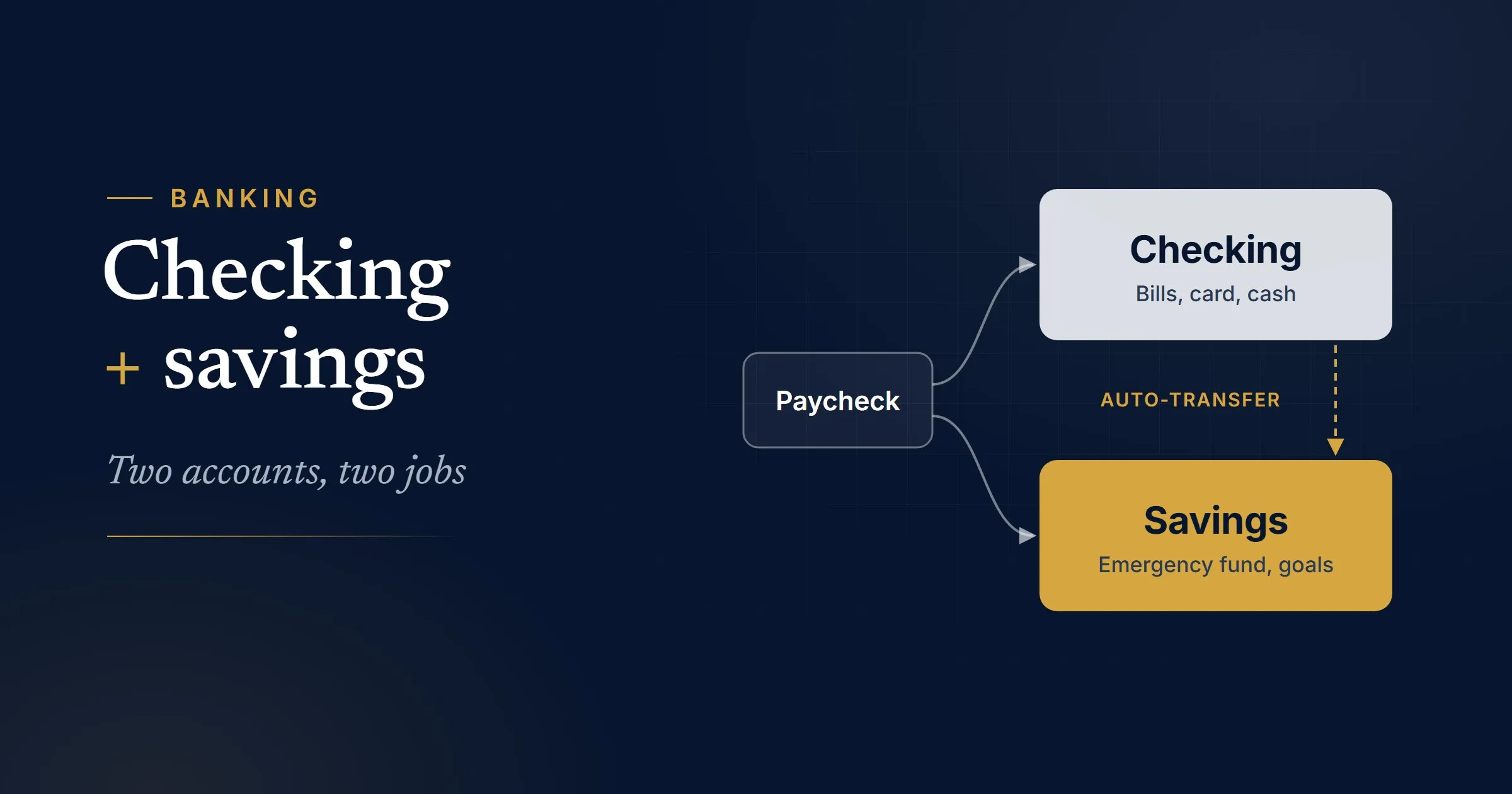
- Choose a high-yield savings account for your emergency fund and anything you might need on short notice. An emergency fund should be easy to reach when something goes wrong.Source 7
- Choose a CD for money you won’t touch until a known date, such as a down payment or tuition due next year, especially if you’d like to lock in today’s rate.
- Use both. Keep a cushion in savings and put money with a fixed date in a CD or a ladder.
Common questions
Is a CD better than a high-yield savings account?
Neither is better for everything. A CD locks in a rate but ties up your money; a high-yield savings account stays flexible, but its rate can drop.
Are CDs FDIC insured?
Yes. CDs at FDIC-insured banks are deposits, covered under the same limits as your other accounts in the same ownership category.Source 4
Can I lose money in a CD?
Your deposit doesn’t move with the stock market, but an early withdrawal penalty can eat into what you earn. Read how the penalty is calculated before you open one.Source 1
Should I put my emergency fund in a CD?
Usually not. You may need the money suddenly, and a penalty for early withdrawal defeats the purpose. A high-yield savings account fits better.
What happens to my CD if interest rates go up?
Your rate stays the same until the CD matures. That’s the trade-off: you’re protected if rates fall, but you miss out if they rise.
Run your own numbers
Project savings growth using an account's APY.
Open the calculator
Sources
Numbers in the text link to these sources. We check them whenever we update this page.
- 1
12 CFR 1030.4, Account disclosures (Regulation DD, Truth in Savings)(external site)
Electronic Code of Federal Regulations · Accessed November 19, 2026 · Back to text for source 1
- 2
12 CFR 1030.5, Subsequent disclosures (Regulation DD, Truth in Savings)(external site)
Electronic Code of Federal Regulations · Accessed November 19, 2026 · Back to text for source 2
- 3
Regulation D: Reserve Requirements of Depository Institutions (interim final rule)(external site)
Board of Governors of the Federal Reserve System · Published April 24, 2020 · Accessed November 18, 2026 · Back to text for source 3
- 4
Understanding Deposit Insurance(external site)
Federal Deposit Insurance Corporation · Updated April 1, 2024 · Accessed November 18, 2026 · Back to text for source 4
- 5
Share Insurance Coverage(external site)
National Credit Union Administration · Updated November 18, 2026 · Accessed November 18, 2026 · Back to text for source 5
- 6
National Rates and Rate Caps – November 2026(external site)
Federal Deposit Insurance Corporation · Updated November 16, 2026 · Accessed November 18, 2026 · Back to text for source 6
- 7
An essential guide to building an emergency fund(external site)
Consumer Financial Protection Bureau · Updated October 29, 2025 · Accessed November 18, 2026 · Back to text for source 7
About the author
Wealthistry Editorial Team
Research, writing and editing
The team that researches, writes, fact-checks and updates Wealthistry's guides and calculators, following our published editorial standards.
Author profileEditorial policyHow we researchReport an error