Saving for a house means saving for more than the down payment. You’ll also need cash for closing costs, the move and the first repairs, and you’ll want an emergency fund left over once you have the keys.Source 1
The numbers are big. The median price of a new house sold in October 2026 was $391,300,Source 2 and the average 30-year fixed mortgage rate was 7.21% in Freddie Mac’s November 25, 2026 survey.Source 3 First-time buyers who bought between July 2025 and June 2026 put down a median of 9%, and 62% drew on their own savings, according to the National Association of Realtors.Source 4 This guide shows what to aim for, how long it takes and how to get there sooner.
How much do you need to save for a house?
The CFPB suggests working out your budget for buying in this order:Source 1
- Add up the savings and investments you could put toward the purchase.
- Set aside money for your other goals, the move and any work the new home needs.
- Hold back an emergency reserve worth at least three to six months of expenses.
- What’s left is your cash for closing. Take out closing costs, and the rest is your down payment.
Work it backward and you have your savings target:
- The down payment, usually 3% to 20% of the price, depending on the loan and your credit.Source 5
- Closing costs, fees for the loan, appraisal, title, recording and more. Expect them to come to 2% to 5% of the price, or $7,826 to $19,565 on the median new home, though you may be able to get the seller to cover some of them.Source 6
- Earnest money, a deposit of typically 1% to 2% of the price that goes in with your offer. It’s held in escrow and counts toward your down payment or closing costs,Source 5 so it isn’t extra, but you need it early.
- Moving and setup money, for movers, utility setup fees, repairs and furniture.Source 1
- An emergency reserve covering three to six months of costs that stays in savings after you buy.Source 1
How much of a down payment do you need?
Less than many people think. In most cases, you need at least 3% of the price, though many loans and lenders ask for 5% or more.Source 1 The main options:
- Conventional loans: as little as 3% down. Fannie Mae accepts loans of up to 97% of the home’s value when at least one borrower is a first-time buyer, or through its HomeReady program for borrowers within its income limits.Source 7
- FHA loans: 3.5% down if your credit score is 580 or above, or at least 10% with a score from 500 to 579.Source 8
- VA loans: no down payment for buyers who qualify, as long as the price isn’t higher than the home’s appraised value, though you may owe a one-time funding fee.Source 9
- USDA loans: no down payment for eligible low- and moderate-income buyers in eligible rural areas.Source 10
So where does 20% come from? It’s the point where a conventional loan no longer needs private mortgage insurance.Source 11 A bigger down payment generally gets you a lower interest rate and better odds of approval,Source 12 and you save the most at 20% or more.Source 1
Here’s what each option means on the median new home:
| Down payment | Amount | Loan | Monthly payment |
|---|---|---|---|
| 3% | $11,739 | $379,561 | $2,579 |
| 3.5% (FHA) | $13,696 | $377,604 | $2,566 |
| 5% | $19,565 | $371,735 | $2,526 |
| 10% | $39,130 | $352,170 | $2,393 |
| 20% | $78,260 | $313,040 | $2,127 |
Monthly payment is principal and interest on a 30-year loan at 7.21% for every option; actual rates vary by loan type and down payment. Taxes, insurance and any mortgage insurance come on top.
Going from 3% to 20% down cuts the payment by about $452 a month before mortgage insurance, but it takes $66,521 more in savings.
Aim for the next 5% step. Lenders usually look at down payments in 5% steps when they set your rate and costs, so putting down almost the next step rarely saves anything. If you have 8% saved, for example, saving a little more to reach 10%, or picking a slightly cheaper home, can lower your costs.Source 1
What PMI costs, and when it goes away
Private mortgage insurance protects the lender, not you, if you stop paying. It’s usually required on a conventional loan with less than 20% down, and most people pay it as a monthly premium added to the mortgage payment.Source 11 Freddie Mac puts the cost at roughly $30 to $70 a month for every $100,000 borrowed,Source 13 or about $112–$260 a month on the 5%-down loan above.
PMI doesn’t last forever. On most loans for a primary home, you can ask your servicer to cancel it once your balance is scheduled to drop to 80% of the home’s original value. It has to end on its own at 78%, or halfway through the loan’s term at the latest, as long as your payments are current. To cancel at 80%, you’ll need a good payment history and no second mortgage, and you may have to show the home hasn’t lost value.Source 14
At today’s rates, getting there on scheduled payments alone takes years:
| Down payment | Can ask to cancel after | Ends on its own after |
|---|---|---|
| 3% | 11.8 years | 12.8 years |
| 5% | 11.1 years | 12.0 years |
| 10% | 8.6 years | 9.8 years |
30-year fixed loans with no extra payments. The original value is the purchase price.
Extra payments toward principal let you ask to cancel sooner,Source 14 and our loan amortization guide shows how much they speed up a payoff. Loan investors such as Fannie Mae and Freddie Mac often have their own, earlier cancellation standards, so ask your servicer. FHA and VA loans follow different rules.Source 14
How much to save each month
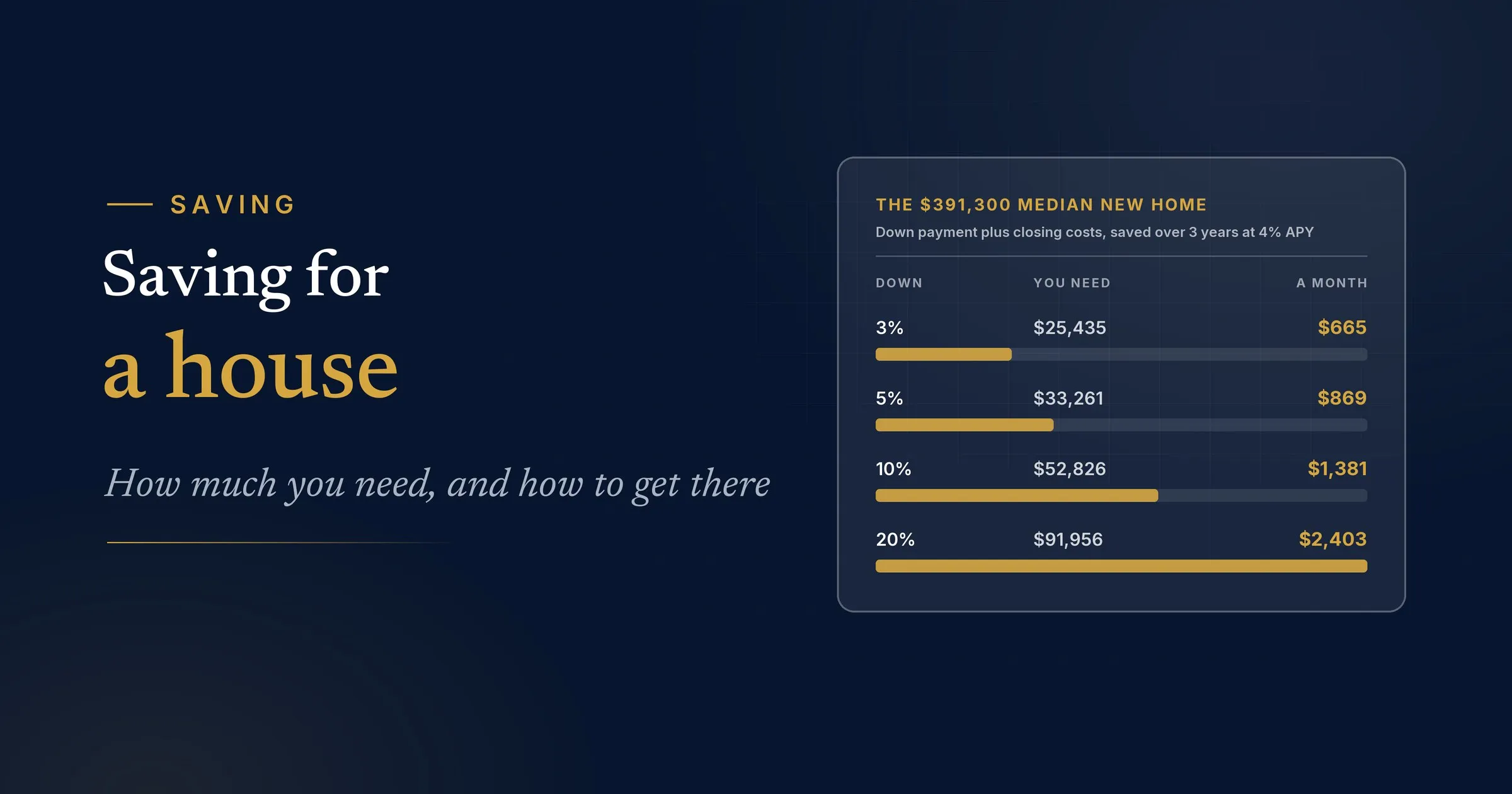
Divide your goal by the months you have, and let interest do some of the work. Here’s what it takes to reach the down payment plus closing costs on the median new home, saving at an example 4% APY:
| Down payment and closing costs | 2 years | 3 years | 5 years |
|---|---|---|---|
| 3% down: $25,435 | $1,017 | $665 | $383 |
| 5% down: $33,261 | $1,330 | $869 | $501 |
| 10% down: $52,826 | $2,112 | $1,381 | $796 |
| 20% down: $91,956 | $3,677 | $2,403 | $1,385 |
Goals include closing costs of 3.5% of the price, the middle of the usual 2% to 5% range. One deposit right away and one each month after, at an example 4% APY, rounded to the dollar.
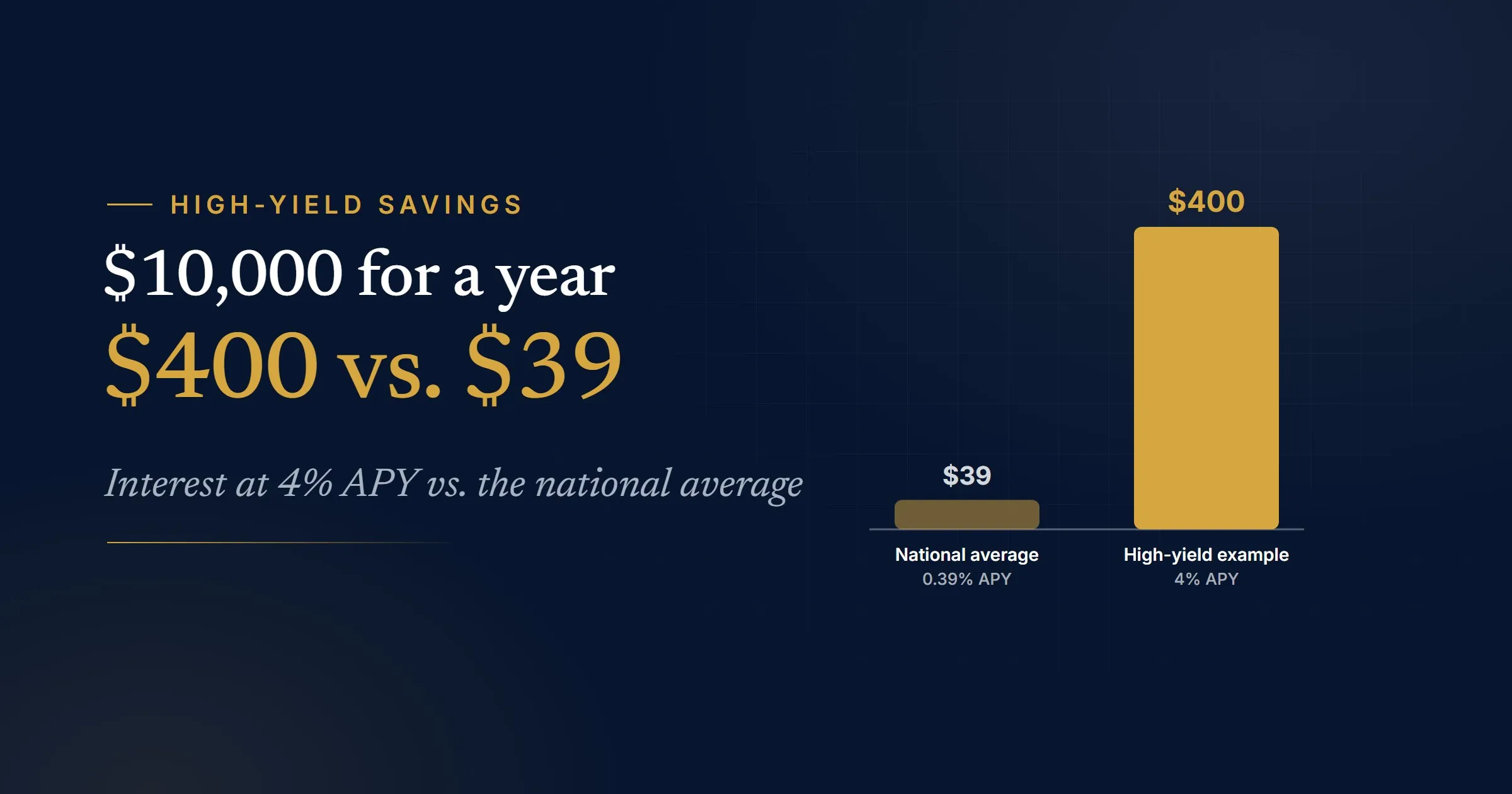
A 10% down payment plus closing costs, $52,826, takes $1,381 a month for three years. Try your own price, date and rate in our Savings Goal Calculator. The rate matters: the national average savings rate was just 0.39% in November 2026.Source 15
How to save for a house faster
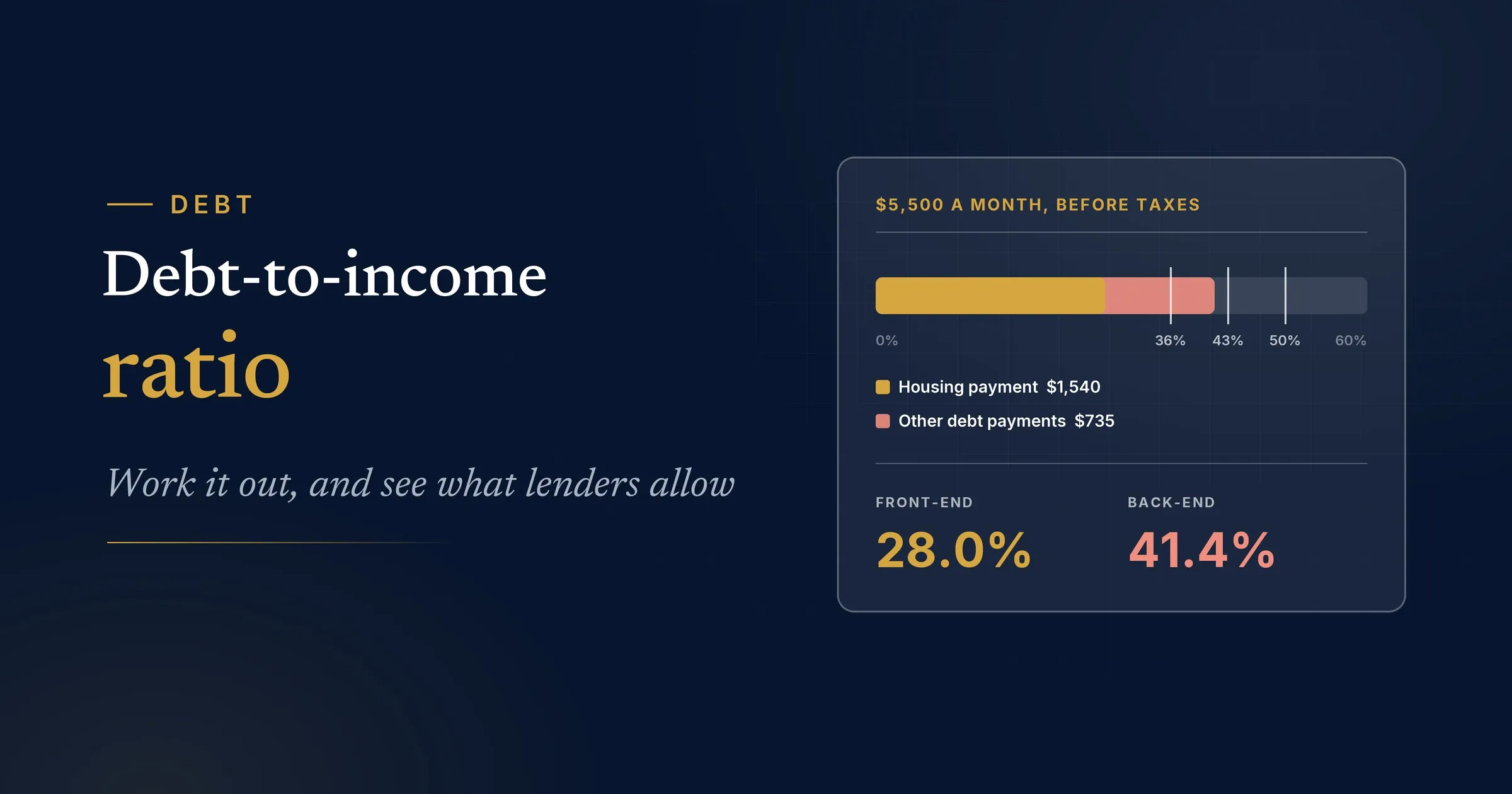
- Pick a price range and a date. Together they set your monthly target. Our debt-to-income ratio guide shows how lenders will judge the payment that comes with that price.
- Give the money its own account, and automate it. A transfer that goes out on payday saves the money before you can spend it. Our pay yourself first guide shows how to set one up.
- Go after one big cost. A cheaper apartment, a roommate or a paid-off car can free up more each month than a long list of small cuts. Our guide to saving money has more places to look.
- Send windfalls straight to the fund. Tax refunds, bonuses and the extra from a raise can go in before they’re absorbed into everyday spending.
- Pay down high-interest debt. Smaller debt payments leave more to save and improve the debt-to-income ratio lenders check when you apply.
- Ask about help. A HUD-certified housing counselor may know of down payment programs in your area.Source 1 Fannie Mae lets buyers use down payment and closing cost assistance from outside sources such as these programs.Source 7
Where to keep your house fund
Money for a home you plan to buy in the next few years should be safe and easy to reach:
- A high-yield savings account is the simplest choice. Our high-yield savings guide covers how to pick one.
- CDs can lock in a rate. Pick terms that end before you plan to buy, and read the early withdrawal penalty, which the bank must tell you about up front.Source 16
- Treasury bills come in terms of 4 to 52 weeks, and their interest is free from state and local income taxes.Source 17
- I bonds can’t be cashed in for 12 months, and cashing in before five years costs the last three months of interest,Source 18 so they suit only money you won’t need for at least a year. Our I bonds guide has the details.
Leave stocks out of it. All investments carry some risk,Source 19 and a drop shortly before closing could leave you short.
Retirement accounts and family help
- IRAs. Before age 59½, you can take up to $10,000 over your lifetime from an IRA for a first home without the 10% additional tax on early withdrawals. The money has to go toward buying, building or rebuilding a main home within 120 days, and you count as a first-time buyer if you haven’t owned a main home in the past two years. Regular income tax may still apply.Source 20
- 401(k) loans. If your plan offers loans, you can generally borrow up to half your vested balance, to a maximum of $50,000. Most plan loans must be repaid within five years, but one used to buy your main home can be paid back over a longer period.Source 21 While the money is out, it isn’t growing for retirement.
- Family. A quarter of recent first-time buyers used a gift or loan from family or friends toward the down payment.Source 4
Common questions
How much should I have saved before buying a house?
Enough for the down payment and closing costs, plus money for the move and repairs, with three to six months of expenses still in savings afterward.Source 1 On the median new home, the down payment and closing costs alone come to about $25,435 with 3% down and $91,956 with 20% down.
How much is a down payment on a $300,000 house?
$9,000 at 3%, $10,500 at 3.5%, $15,000 at 5%, $30,000 at 10% and $60,000 at 20%. Closing costs would add about $6,000 to $15,000.Source 6
Can I afford a $300,000 house on a $50,000 salary?
It’s a stretch at today’s rates. A $50,000 salary is about $4,167 a month before taxes, and the CFPB suggests keeping the mortgage payment to 28% to 35% of income before taxes, or $1,167 to $1,458.Source 22 With 3.5% down at 7.21%, principal and interest alone would be $1,967, before taxes and insurance. A bigger down payment, a cheaper home or a second income could close the gap.
How can I save $10,000 in 3 months?
You’d need about $3,333.33 a month, or $769 a week. That usually takes more than trimming: extra income, selling things you don’t use, a windfall such as a tax refund, and pausing spending you can do without for a while.
What is the 30-day rule for saving money?
It’s a rule of thumb, not an official rule: when you want something you don’t need, wait 30 days before buying it. If you still want it then and it fits your budget, go ahead. If not, the money can go to your house fund.
Is $15,000 enough for a down payment?
It can be, for a modest home. On a $300,000 house, 3% down is $9,000, and with closing costs at 2% the total comes to $15,000. If closing costs run 5%, you’d need $24,000, unless the seller agrees to cover some of them.Source 6
Run your own numbers
Work out how much to save, and by when.
Open the calculator
Sources
Numbers in the text link to these sources. We check them whenever we update this page.
- 1
Determine your down payment(external site)
Consumer Financial Protection Bureau · Updated October 1, 2025 · Accessed November 25, 2026 · Back to text for source 1
- 2
Monthly New Residential Sales, October 2026(external site)
U.S. Census Bureau and U.S. Department of Housing and Urban Development · Published November 25, 2026 · Accessed November 25, 2026 · Back to text for source 2
- 3
Primary Mortgage Market Survey(external site)
Freddie Mac · Published November 25, 2026 · Accessed November 25, 2026 · Back to text for source 3
- 4
First-Time Home Buyer Share Inches Up to 22%, Median Age Remains at Record High of 40(external site)
National Association of Realtors · Published November 5, 2026 · Accessed November 25, 2026 · Back to text for source 4
- 5
Understanding homebuying costs(external site)
Freddie Mac, My Home · Accessed November 25, 2026 · Back to text for source 5
- 6
What Are Closing Costs and How Much Will I Pay?(external site)
Freddie Mac, My Home · Last reviewed February 26, 2026 · Accessed November 25, 2026 · Back to text for source 6
- 7
97% Loan to Value Options(external site)
Fannie Mae · Accessed November 25, 2026 · Back to text for source 7
- 8
U.S. Department of Housing and Urban Development, Federal Register · Published September 3, 2010 · Accessed November 25, 2026 · Back to text for source 8
- 9
U.S. Department of Veterans Affairs · Updated January 8, 2026 · Accessed November 25, 2026 · Back to text for source 9
- 10
Single Family Housing Guaranteed Loan Program(external site)
U.S. Department of Agriculture, Rural Development · Accessed November 25, 2026 · Back to text for source 10
- 11
What is private mortgage insurance?(external site)
Consumer Financial Protection Bureau · Last reviewed November 9, 2026 · Accessed November 25, 2026 · Back to text for source 11
- 12
Consumer Financial Protection Bureau · Last reviewed September 11, 2024 · Accessed November 25, 2026 · Back to text for source 12
- 13
Breaking down PMI(external site)
Freddie Mac, My Home · Accessed November 25, 2026 · Back to text for source 13
- 14
When can I remove private mortgage insurance (PMI) from my loan?(external site)
Consumer Financial Protection Bureau · Last reviewed August 28, 2026 · Accessed November 25, 2026 · Back to text for source 14
- 15
National Rates and Rate Caps – November 2026(external site)
Federal Deposit Insurance Corporation · Updated November 16, 2026 · Accessed November 25, 2026 · Back to text for source 15
- 16
12 CFR 1030.4, Account disclosures (Regulation DD, Truth in Savings)(external site)
Electronic Code of Federal Regulations · Accessed November 25, 2026 · Back to text for source 16
- 17
U.S. Department of the Treasury, TreasuryDirect · Accessed November 25, 2026 · Back to text for source 17
- 18
U.S. Department of the Treasury, TreasuryDirect · Accessed November 25, 2026 · Back to text for source 18
- 19
Investor.gov, U.S. Securities and Exchange Commission · Accessed November 25, 2026 · Back to text for source 19
- 20
Internal Revenue Service · Accessed November 25, 2026 · Back to text for source 20
- 21
Retirement plans FAQs regarding loans(external site)
Internal Revenue Service · Updated February 26, 2026 · Accessed November 25, 2026 · Back to text for source 21
- 22
Your Money, Your Goals: A financial empowerment toolkit (Debt-to-income calculator)(external site)
Consumer Financial Protection Bureau · Accessed November 25, 2026 · Back to text for source 22
About the author
Wealthistry Editorial Team
Research, writing and editing
The team that researches, writes, fact-checks and updates Wealthistry's guides and calculators, following our published editorial standards.
Author profileEditorial policyHow we researchReport an error