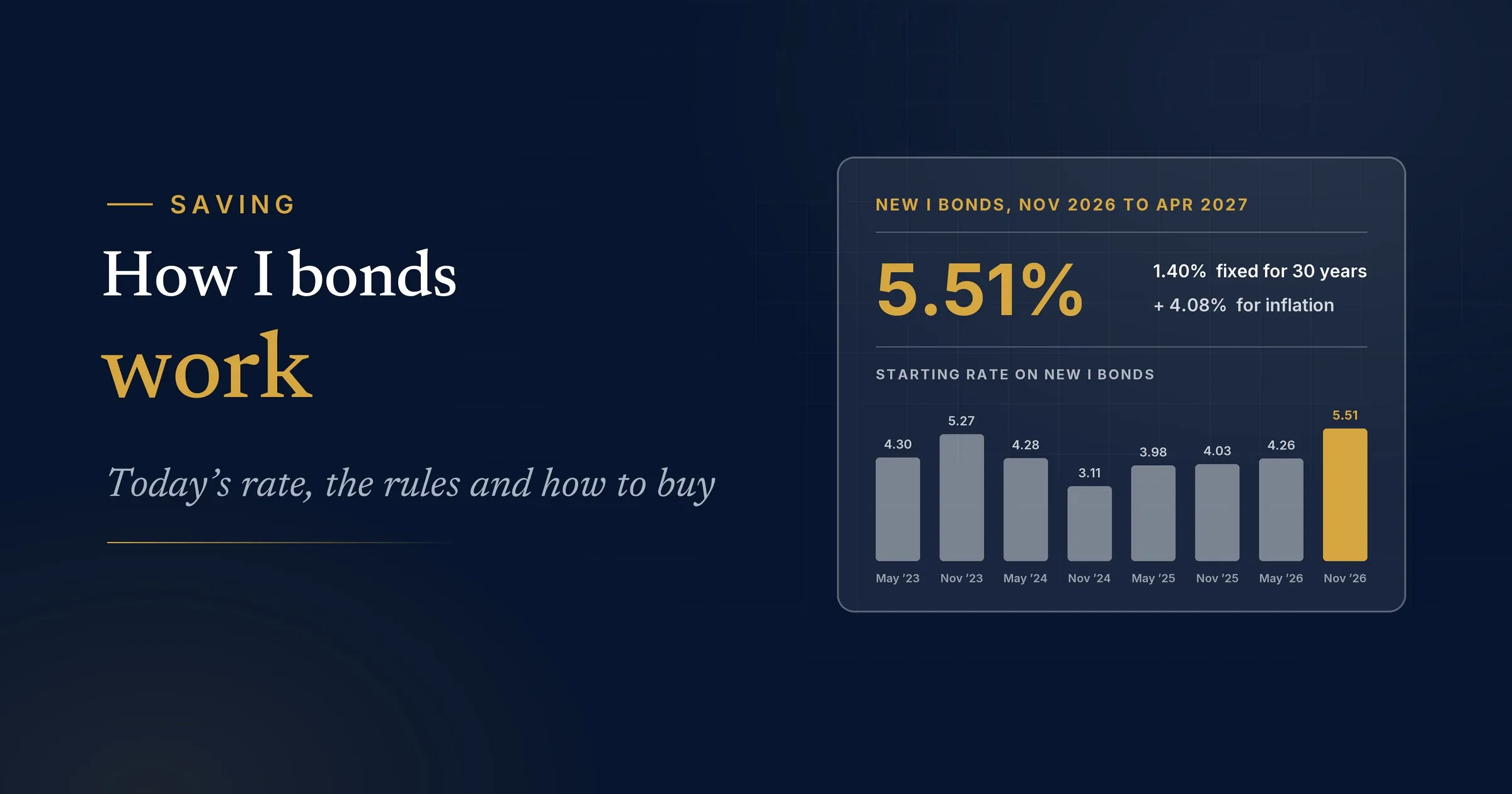
An I bond is a U.S. savings bond that earns interest tied to inflation. You buy it from the Treasury, its value never goes down, and the interest rate changes every six months as prices change.Source 1 Bonds issued between November 1, 2026 and April 30, 2027 start at 5.51%, a figure that includes a 1.40% fixed rate.Source 2 That fixed rate is the highest the Treasury has set since November 2006.Source 3
This guide explains how the rate works, the rules for buying and cashing in, how I bonds are taxed and how they compare with other safe places for your money.
How I bonds work
An I bond’s rate has two parts. The fixed rate is set when you buy the bond and never changes. The inflation rate is reset every May 1 and November 1, based on how much consumer prices rose over the previous six months, as measured by the CPI-U.Source 3 The Treasury combines them like this:
Combined rate equals the fixed rate, plus two times the inflation rate, plus the fixed rate times the inflation rate.
- fixed rate is the annual rate locked in when you buy, for the life of the bond
- inflation rate is the six-month change in prices, so it’s doubled to make it a yearly rate
For bonds bought from November 2026 through April 2027, the fixed rate is 1.40% and the inflation rate is 2.04%, after the CPI-U rose from 330.213 in March 2026 to 336.94 in September 2026.Source 2 Put together, that’s 5.51%.Source 3 Our guide to inflation explains how the CPI is measured.
A few more rules shape what you earn:Source 3Source 1
- The rate can’t go below zero. If prices fall, the inflation rate can pull the combined rate below the fixed rate, but never below zero, so the bond never loses value.
- Your rate changes every six months from the month you bought the bond, not on May 1 and November 1. A bond bought in January gets its new rate each July and January.
- Interest is added every month and compounds every six months. Twice a year, the interest from the previous six months becomes part of the bond’s value, and the new rate applies to the larger amount.
- Interest starts on the first day of the month you buy, so a bond bought late in a month still earns that whole month.
- I bonds keep earning interest for up to 30 years.
Because interest compounds twice a year, 5.51% works out to an annual percentage yield of about 5.59%, the measure savings accounts use. Our guide to APR vs. APY explains the difference.
What I bonds pay now
The rate a bond starts with depends on when it was bought, and every bond then moves to a new rate as each inflation reading comes in. Here’s what new I bonds have paid at the start, and what each one earns for its six-month period that begins between November 2026 and April 2027:
| Bought | Fixed rate | First 6 months | Rate now |
|---|---|---|---|
| Nov 2026 to Apr 2027 | 1.40% | 5.51% | 5.51% |
| May 2026 to Oct 2026 | 0.90% | 4.26% | 5.00% |
| Nov 2025 to Apr 2026 | 0.90% | 4.03% | 5.00% |
| May 2025 to Oct 2025 | 1.10% | 3.98% | 5.20% |
| Nov 2024 to Apr 2025 | 1.20% | 3.11% | 5.30% |
| May 2024 to Oct 2024 | 1.30% | 4.28% | 5.41% |
| Nov 2023 to Apr 2024 | 1.30% | 5.27% | 5.41% |
| May 2023 to Oct 2023 | 0.90% | 4.30% | 5.00% |
Calculated with the Treasury's formula from the fixed and inflation rates TreasuryDirect publishes. Rate now applies to each bond's six-month period starting November 2026 through April 2027.
The fixed rate is why two I bonds can pay different rates at the same time. A bond bought between May 2020 and October 2022 has a fixed rate of 0%, so right now it earns only the inflation part, 4.08%.Source 3 New bonds bought by April 30, 2027 lock in the 1.40% fixed rate for 30 years. Bonds bought in May 2026 through October 2026 started at 4.26%, with a 0.90% fixed rate.
How much you can buy
Each Social Security number can buy $10,000 of electronic I bonds a calendar year, at most, and each employer identification number, such as a business’s or a trust’s, has its own $10,000 limit. A few details stretch that:Source 4
- Couples get two limits. Each spouse can buy $10,000 a year in their own name.
- Co-owned bonds count for the person named first. Being the second-named owner doesn’t use up your limit.
- Gifts count toward the recipient’s limit, not the giver’s.
- There’s no cap on how much you can own in total.
Electronic bonds can be bought for any amount from $25 to $10,000, to the penny.Source 5 As of January 1, 2025, I bonds are sold only electronically,Source 1 and the IRS no longer lets you take part of a tax refund as paper I bonds.Source 6
When you can cash in, and what it costs
You can cash in an I bond after 12 months. Do it before the bond turns five and you give up the final three months of interest. Cash it in after 18 months, for example, and you get the first 15 months of interest.Source 1 After five years, there’s no penalty. You don’t have to cash in all at once: you can take out any amount of $25 or more, as long as at least $25 stays in your account.Source 7
$10,000 of I bonds bought in November 2026
- For the first six months, the bond earns 5.51%, so it’s worth $10,275.50, or $275.50 in interest.
- If the rate stayed at 5.51% for the second six months, the bond would be worth $10,558.59 after a year.
- Cash it in right at one year, though, and you’d get its value from three months earlier, about $10,416.08. The penalty is about $142.51.
- Hold it five years at the same rate and it would be worth about $13,122.89, with no penalty.
The rate after the first six months isn’t known yet. It depends on the inflation rate the Treasury sets on May 1, 2027, so treat these figures as an illustration rather than a forecast.Source 3
How to buy I bonds
TreasuryDirect, the Treasury’s website, is the only place to buy and cash electronic savings bonds.Source 8 Since paper I bonds are no longer sold, that makes it the only place to buy I bonds at all. The Treasury also warns against buying savings bonds from someone else or through an online auction site.Source 7
- Open a TreasuryDirect account. Since October 28, 2026, you sign in through ID.me, a government-verified identity service, instead of the old TreasuryDirect login.Source 8
- Buy the bond in your account, for any amount from $25 to $10,000.Source 5
- Keep track of it there. Your account shows what each electronic bond is worth, and when a bond reaches 30 years, it’s paid out automatically.Source 1
To buy for a child under 18, set up a linked account for the child inside your own account.Source 9 To give an I bond as a gift, you and the recipient both need TreasuryDirect accounts, and you’ll need the recipient’s full name, Social Security number and account number. The bond has to stay in your account for at least five business days before you can deliver it.Source 9
Expect delays on anything you mail in. TreasuryDirect says mailed requests to cash paper bonds can take three months or longer, and unlocking an account can take two weeks or more.Source 8
How I bonds are taxed
You owe federal income tax on I bond interest, but no state or local income tax. You can report the interest every year, or wait and report it all in the year you cash the bond in or it stops earning interest. Most people wait, and you’ll get a Form 1099-INT for that year.Source 10
The interest can be tax-free if you use it for college. To qualify, the bond must be in your name, or yours and your spouse’s, and you must have been at least 24 years old before the bond’s issue date. The money has to go to qualified expenses such as tuition and required fees for you, your spouse or a dependent, and room and board don’t count.Source 11 The break shrinks as income rises. For 2026, it starts to phase out at modified adjusted gross income above $101,800, or $152,650 on a joint return, and disappears at $116,800, or $182,650 on a joint return.Source 12 You claim it on Form 8815.Source 11
I bonds vs. other safe places for cash
| Option | Rate in late November 2026 | Getting your money |
|---|---|---|
| I bonds | 5.51% for the first six months, then resets | Locked for 12 months; last three months of interest lost before five years |
| EE bonds | 2.90% fixed, and worth double after 20 years | Locked for 12 months; last three months of interest lost before five years |
| 1-year Treasury bill | 4.57% yield | Paid at maturity, or sold early at the market price |
| Savings account | 0.39% national average | Any time |
The Treasury bill yield is the 1-year constant maturity yield for November 23, 2026. The savings rate is the FDIC national average as of November 16, 2026.
The rates come from the Treasury,Source 2 the Federal ReserveSource 13 and the FDIC.Source 14 A Treasury bill can be held until it matures or sold before then, and like I bonds, its interest is free of state and local income tax.Source 15
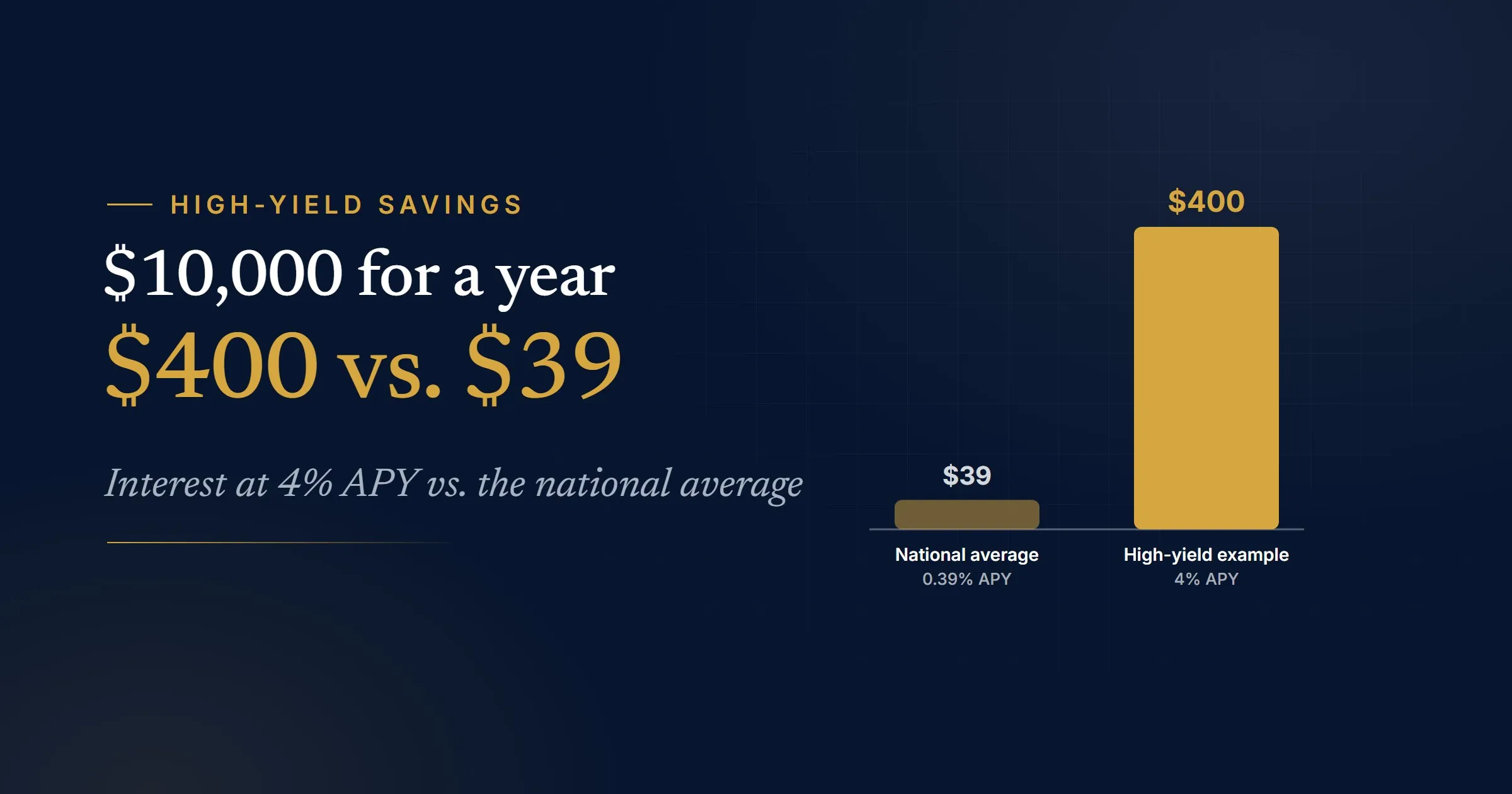
The penalty matters most if your time frame is short. Put $10,000 in I bonds and cash in right at one year, and if the rate held at 5.51%, you’d keep only about $416 of interest. A 1-year Treasury yielding 4.57% would pay about $457, and a savings account at the national average 0.39% about $39. The longer you hold an I bond, the less the three-month penalty costs, and after five years there’s none.
EE bonds are the other savings bond. They pay a fixed 2.90%, and the Treasury guarantees they’ll be worth double their price after 20 years.Source 16 That guarantee works out to about 3.53% a year, but only if you hold the bond the full 20 years.
When I bonds make sense
I bonds can be a good fit for:
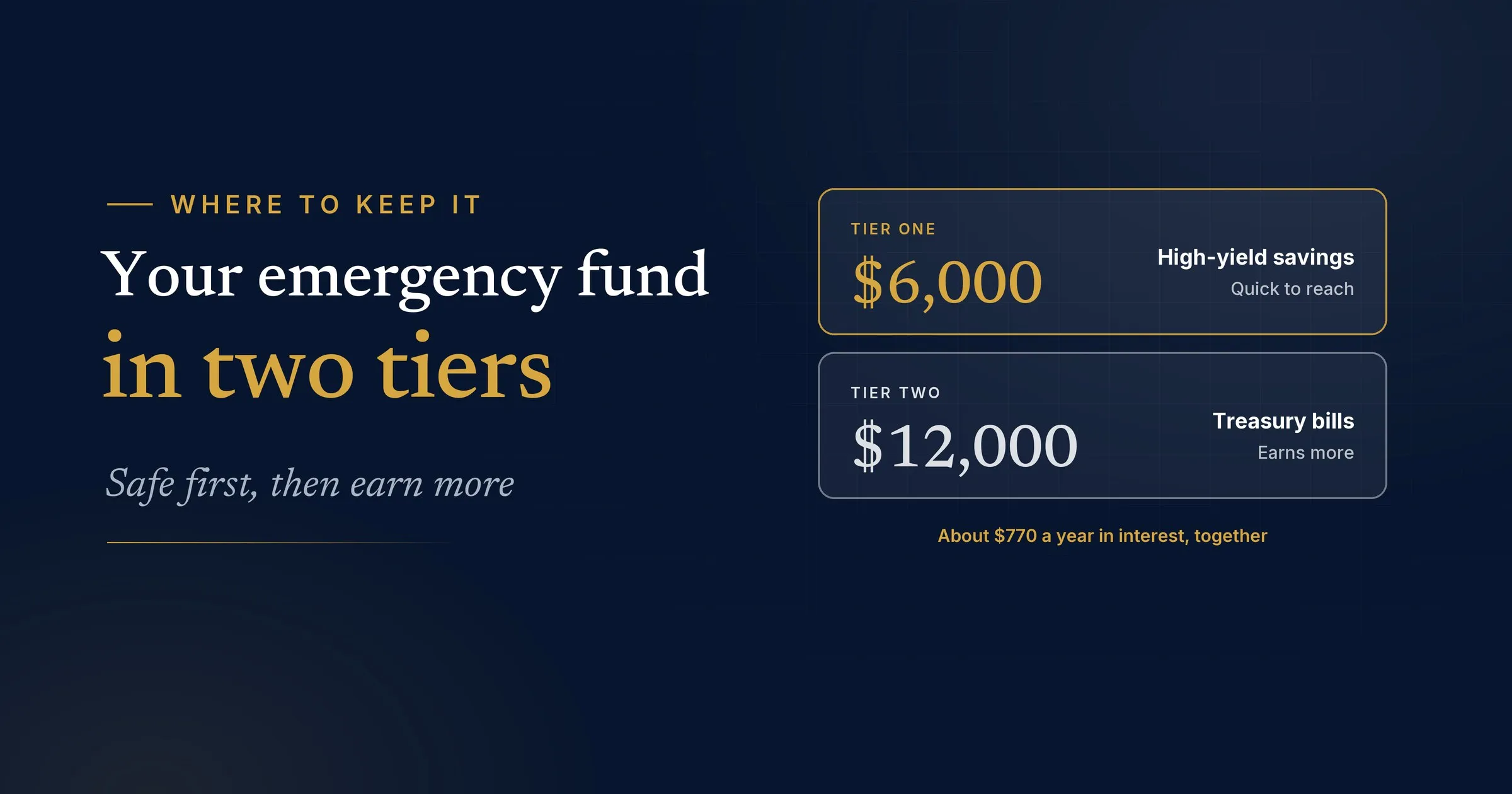
- Money you won’t touch for at least a year, such as the part of an emergency fund you’re unlikely to need. Our guide to where to keep an emergency fund shows how to split one into tiers.
- Savings you want protected from inflation, since the rate rises when prices do.
- Medium-term goals, such as a down payment a few years away. Our savings goals guide matches goals to accounts by time frame.
They’re a poor fit for:
- Cash you may need within 12 months. A high-yield savings account or a CD with a short term is easier to reach.
- Large sums, since $10,000 a year per person is the most you can buy.
- A guaranteed long-term return, because the inflation part of the rate changes every six months.
Common questions
What is the I bond rate right now?
5.51% for new I bonds issued November 2026 through April 2027, including a 1.40% fixed rate.Source 2 New rates are set every May 1 and November 1, so the next change for new bonds comes on May 1, 2027.Source 3
Can you lose money on I bonds?
Not on the bond itself. The combined rate can’t go below zero, so the bond’s value never falls.Source 3 The only cost of cashing in early is the last three months of interest, before five years.Source 1
What happens to an I bond after 30 years?
It stops earning interest. TreasuryDirect pays electronic bonds automatically when they mature, while paper bonds have to be sent in to be cashed.Source 1
Can I buy more than $10,000 in I bonds a year?
Only through separate limits: a spouse’s own $10,000, a business or trust with its own employer identification number, or bonds you receive as gifts, which count toward your limit rather than the giver’s.Source 4
When is the best time to buy I bonds?
Interest starts on the first day of the month you buy,Source 1 so buying late in a month costs you nothing. Bonds bought by April 30, 2027 keep the 1.40% fixed rate for life. The fixed rate for bonds bought after that will be set on May 1, 2027, and it could be higher or lower.Source 3
How do I find old paper savings bonds?
The Treasury Hunt search tool closed on September 30, 2025. If you think you have a lost, stolen or destroyed savings bond, TreasuryDirect’s forms page explains how to file a claim.Source 17
Run your own numbers
Project savings growth using an account's APY.
Open the calculator
Sources
Numbers in the text link to these sources. We check them whenever we update this page.
- 1
U.S. Department of the Treasury, TreasuryDirect · Accessed November 25, 2026 · Back to text for source 1
- 2
Bureau of the Fiscal Service, U.S. Department of the Treasury · Published November 2, 2026 · Accessed November 25, 2026 · Back to text for source 2
- 3
I bonds interest rates(external site)
U.S. Department of the Treasury, TreasuryDirect · Accessed November 25, 2026 · Back to text for source 3
- 4
How much can I spend/own?(external site)
U.S. Department of the Treasury, TreasuryDirect · Accessed November 25, 2026 · Back to text for source 4
- 5
Buying savings bonds(external site)
U.S. Department of the Treasury, TreasuryDirect · Accessed November 25, 2026 · Back to text for source 5
- 6
Internal Revenue Service · Updated May 18, 2026 · Accessed November 25, 2026 · Back to text for source 6
- 7
Cash EE or I savings bonds(external site)
U.S. Department of the Treasury, TreasuryDirect · Accessed November 25, 2026 · Back to text for source 7
- 8
U.S. Department of the Treasury, TreasuryDirect · Accessed November 25, 2026 · Back to text for source 8
- 9
Giving savings bonds as gifts(external site)
U.S. Department of the Treasury, TreasuryDirect · Accessed November 25, 2026 · Back to text for source 9
- 10
Tax information for EE and I bonds(external site)
U.S. Department of the Treasury, TreasuryDirect · Accessed November 25, 2026 · Back to text for source 10
- 11
Publication 970 (2025), Tax Benefits for Education(external site)
Internal Revenue Service · Last reviewed April 30, 2026 · Accessed November 25, 2026 · Back to text for source 11
- 12
Revenue Procedure 2025-32 (2026 inflation adjustments)(external site)
Internal Revenue Service · Accessed November 25, 2026 · Back to text for source 12
- 13
Selected Interest Rates (Daily) - H.15, November 24, 2026(external site)
Board of Governors of the Federal Reserve System · Published November 24, 2026 · Accessed November 25, 2026 · Back to text for source 13
- 14
National Rates and Rate Caps – November 2026(external site)
Federal Deposit Insurance Corporation · Updated November 16, 2026 · Accessed November 25, 2026 · Back to text for source 14
- 15
U.S. Department of the Treasury, TreasuryDirect · Accessed November 25, 2026 · Back to text for source 15
- 16
U.S. Department of the Treasury, TreasuryDirect · Accessed November 25, 2026 · Back to text for source 16
- 17
U.S. Department of the Treasury, TreasuryDirect · Accessed November 25, 2026 · Back to text for source 17
About the author
Wealthistry Editorial Team
Research, writing and editing
The team that researches, writes, fact-checks and updates Wealthistry's guides and calculators, following our published editorial standards.
Author profileEditorial policyHow we researchReport an error