Inflation is the increase in the prices of goods and services over time. It isn’t one product getting more expensive; it’s a general rise in the overall price level of the goods and services in the economy.Source 1 When prices rise, each dollar buys less.
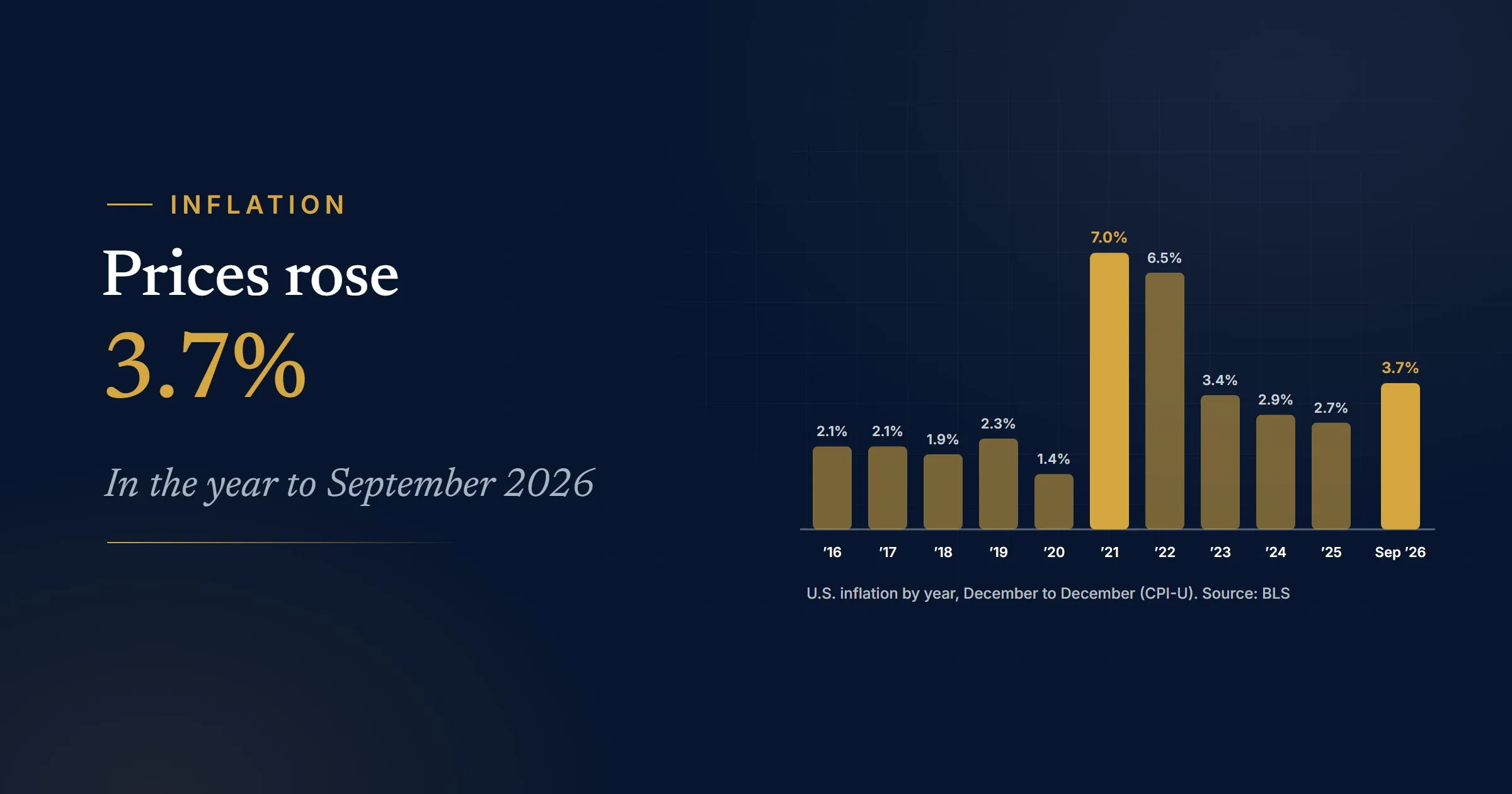
The most watched U.S. measure, the Consumer Price Index, rose 3.7% in the 12 months to September 2026.Source 2 That’s the latest 12-month figure there is. The Bureau of Labor Statistics (BLS) couldn’t collect October 2025 price data during the lapse in federal funding that fall, so it can’t publish 12-month changes for October 2026. Over the month of October 2026, prices rose 0.4% after seasonal adjustment.Source 3
How inflation is measured
The Consumer Price Index (CPI) measures the average change over time in the prices paid by urban consumers for a market basket of consumer goods and services.Source 4 BLS publishes it every month. Two other measures come up often:
- Core inflation leaves out food and energy, whose prices tend to jump around, to help show the underlying trend.Source 1 Energy can move a lot: gasoline prices were 37.4% higher in October 2026 than a year earlier.Source 3
- The PCE price index, from the Department of Commerce, is the measure the Federal Reserve targets, largely because it covers a wide range of household spending.Source 1
The Federal Reserve aims for inflation of 2% over the longer run, measured by the annual change in the PCE price index. When people can expect inflation to stay low and stable, they can make sound decisions about saving, borrowing and investing.Source 5
The inflation rate formula
Inflation rate equals CPI now minus CPI before, divided by CPI before, times 100.
- CPI now is the index for the later month
- CPI before is the index for the earlier month
Inflation from September 2025 to September 2026
- The CPI-U was 324.800 in September 2025 and 336.940 in September 2026.Source 2
- The index rose by 12.140.
- 12.140 ÷ 324.800 × 100 = 3.7%.
For 12-month changes, BLS uses the index that isn’t seasonally adjusted, as in this example.Source 3 The index itself has no units; only the change between two months matters.
U.S. inflation by year
Here’s how much consumer prices rose each year, from December to December:Source 2
| Year | Inflation, December to December |
|---|---|
| 2016 | 2.1% |
| 2017 | 2.1% |
| 2018 | 1.9% |
| 2019 | 2.3% |
| 2020 | 1.4% |
| 2021 | 7.0% |
| 2022 | 6.5% |
| 2023 | 3.4% |
| 2024 | 2.9% |
| 2025 | 2.7% |
CPI-U, U.S. city average, all items, not seasonally adjusted. Computed from BLS index values.
Inflation peaked at 7.0% in 2021 and was lowest at 1.4% in 2020. From January 2020 to September 2026, prices rose 30.6% in all.
Purchasing power: what a dollar buys
Purchasing power is what your money can buy. To see what a past price means today, scale it by the change in the CPI:
Today's price equals past price times CPI now, divided by CPI then.
$100 from September 2016
- The CPI-U was 241.428 in September 2016 and 336.940 in September 2026.
- What cost $100 then cost about $100 × 336.940 ÷ 241.428 = $139.56 ten years later.
- Put the other way, $100 kept in cash since September 2016 buys about what $71.65 bought then.
Inflation vs. wages
Rising prices hurt less when pay rises as fast. From September 2025 to September 2026, average hourly earnings for private-sector workers rose 3.2%, from $36.70 to $37.86,Source 6 while prices rose 3.7%, both seasonally adjusted.Source 2 After inflation, real hourly pay fell 0.5%. The September 2026 earnings figure is still preliminary.
What inflation means for your savings
Money that earns less than inflation loses buying power, even as the balance grows. The national average savings account rate was 0.39% in November 2026.Source 7 If prices kept rising 3.7% a year, savings at that rate would lose about 3.2% of their buying power each year, and prices would double in about 19 years, as the Rule of 72 shows.
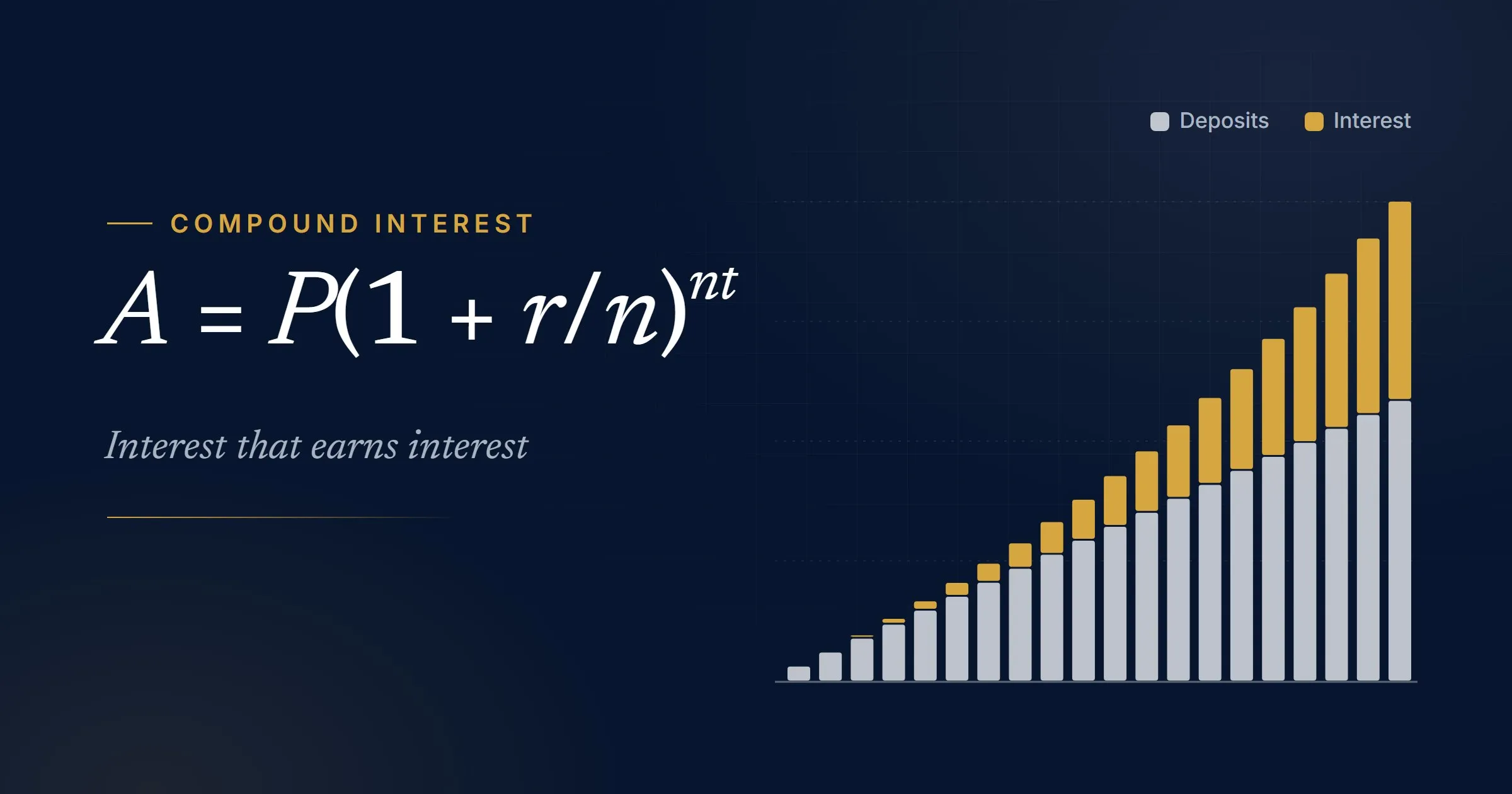
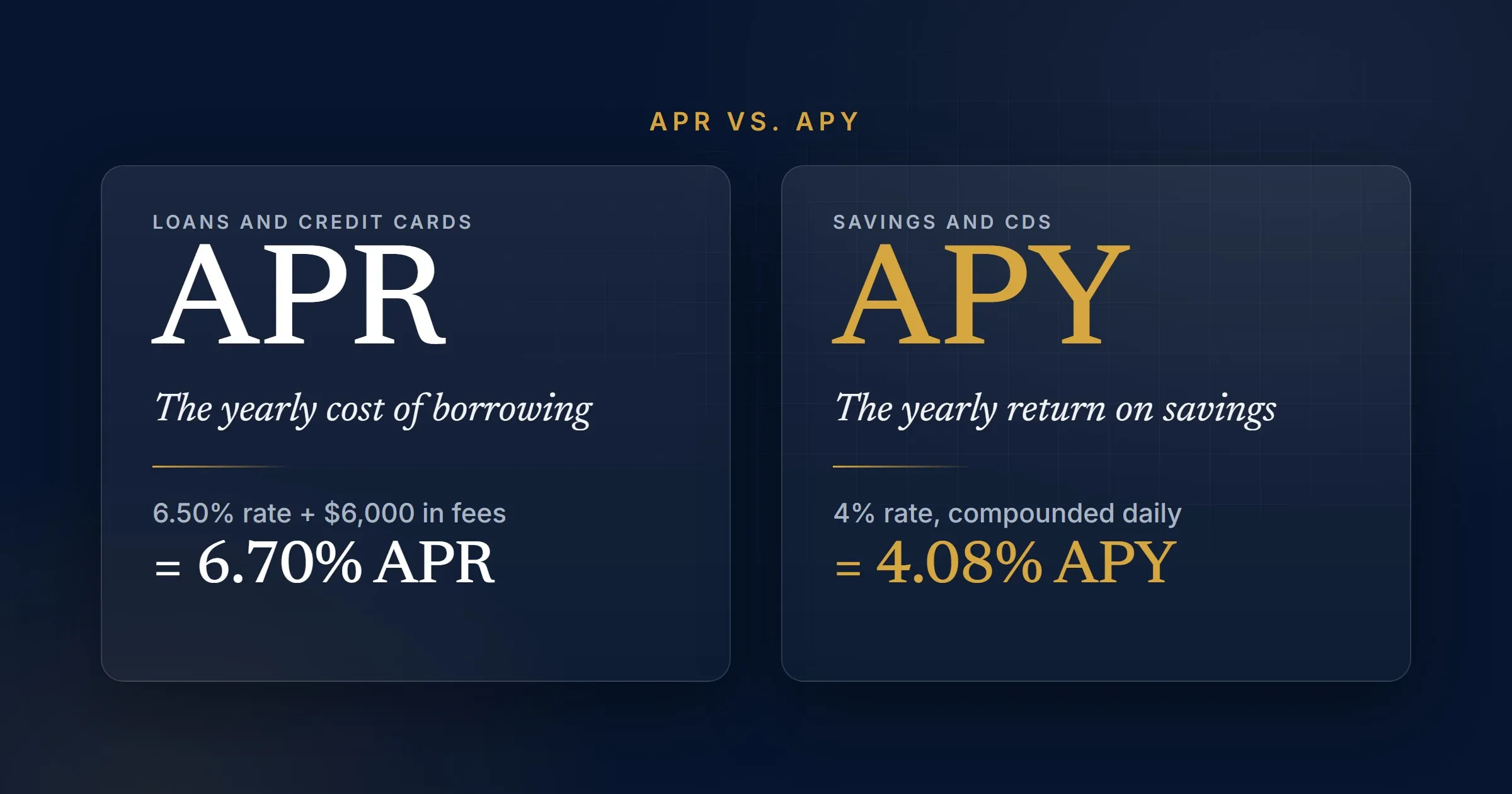
Our APR vs. APY guide explains how to compare savings rates, and our compound interest guide shows how inflation slows real growth over time.
Ways to protect your money from inflation
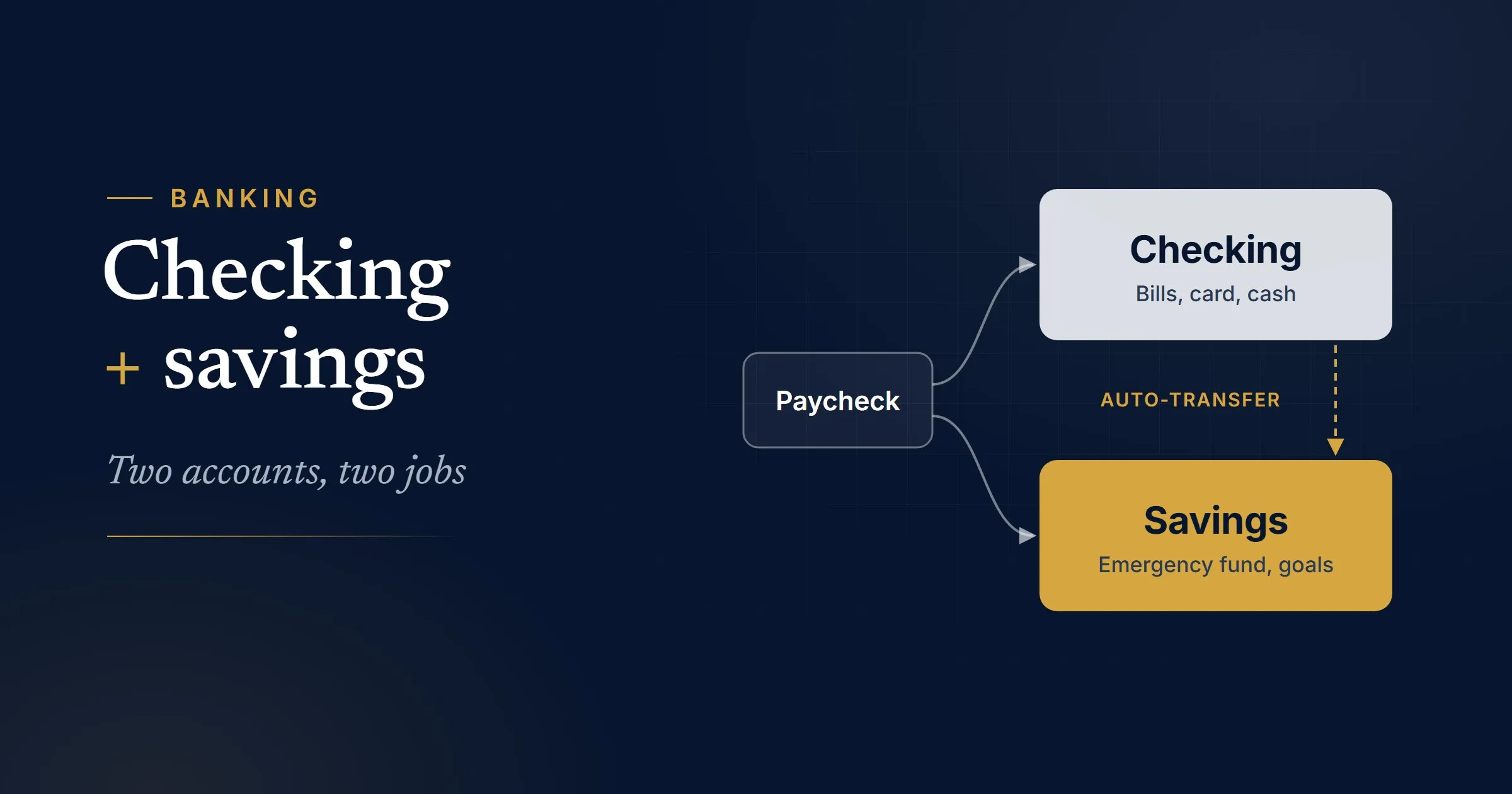
- Compare savings rates. In November 2026, the national averages were 0.39% for savings accounts, 0.64% for money market accounts and 1.81% for 12-month CDs.Source 7 Those are averages, so check what your own bank pays and compare offers; our high-yield savings guide shows what to look for.
- Consider I bonds. Series I savings bonds from the U.S. Treasury pay a rate that changes every six months, based on inflation. Bonds issued from November 1, 2026, to April 30, 2027, earn 5.51%, including a fixed rate of 1.40%. You can buy up to $10,000 in electronic I bonds a year, you must keep them at least 12 months, and you lose the last three months of interest if you cash them in before five years. The interest is subject to federal income tax but not state or local income tax.Source 8
- Revisit your budget. Prices don’t all rise at the same pace. Check which of your categories are climbing fastest, such as gas or groceries, and adjust the plan; our budgeting guide shows how.
Common questions
What is inflation in simple terms?
Prices going up across the economy over time, so the same money buys less.
What is the current inflation rate?
Consumer prices rose 3.7% in the 12 months to September 2026, the latest 12-month figure available. In October 2026, prices rose 0.4% over the month.Source 3
What is core inflation?
Inflation without food and energy prices, which swing up and down a lot. It helps show the underlying trend.Source 1
What is a good inflation rate?
The Federal Reserve aims for 2% a year over the longer run, measured with the PCE price index.Source 5
How do you calculate inflation?
Subtract the earlier CPI from the later one, divide by the earlier CPI and multiply by 100.
Is inflation the same as the cost of living?
Not quite. Your cost of living is what you actually pay for the things you buy. Inflation is how fast prices are rising on average, so your own experience can differ if you spend more on things whose prices are rising faster.
Run your own numbers
See how money can grow over time, year by year.
Open the calculator
Sources
Numbers in the text link to these sources. We check them whenever we update this page.
- 1
Board of Governors of the Federal Reserve System · Updated August 22, 2025 · Accessed November 19, 2026 · Back to text for source 1
- 2
Consumer Price Index for All Urban Consumers (CPI-U), U.S. city average, all items(external site)
U.S. Bureau of Labor Statistics · Accessed November 19, 2026 · Back to text for source 2
- 3
Consumer Price Index – October 2026(external site)
U.S. Bureau of Labor Statistics · Published November 10, 2026 · Accessed November 19, 2026 · Back to text for source 3
- 4
Consumer Price Index(external site)
U.S. Bureau of Labor Statistics · Accessed November 19, 2026 · Back to text for source 4
- 5
Why does the Federal Reserve aim for inflation of 2 percent over the longer run?(external site)
Board of Governors of the Federal Reserve System · Updated August 22, 2025 · Accessed November 19, 2026 · Back to text for source 5
- 6
Average hourly earnings of all employees, total private(external site)
U.S. Bureau of Labor Statistics · Accessed November 19, 2026 · Back to text for source 6
- 7
National Rates and Rate Caps – November 2026(external site)
Federal Deposit Insurance Corporation · Updated November 16, 2026 · Accessed November 18, 2026 · Back to text for source 7
- 8
U.S. Department of the Treasury, TreasuryDirect · Accessed November 19, 2026 · Back to text for source 8
About the author
Wealthistry Editorial Team
Research, writing and editing
The team that researches, writes, fact-checks and updates Wealthistry's guides and calculators, following our published editorial standards.
Author profileEditorial policyHow we researchReport an error