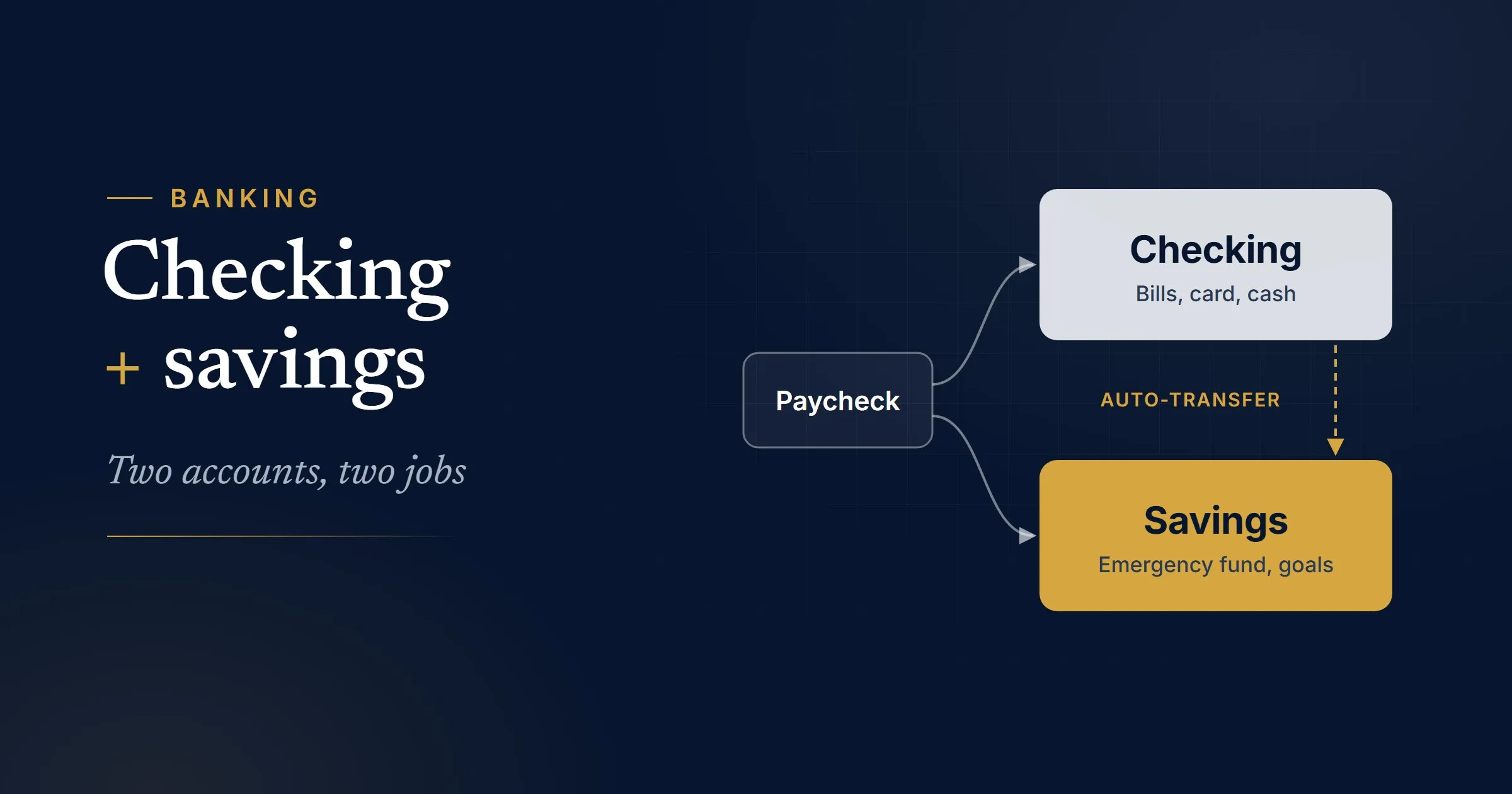
An account at a bank or credit union helps keep your money safe. A checking account lets you pay with a debit card or check, get cash from an ATM and pay bills online, and a savings account keeps money for emergencies or goals separate from what you spend.Source 1 Opening one takes a few pieces of information, a few decisions and, usually, a first deposit. Here’s what to have ready and what to decide.
What you need to open a bank account
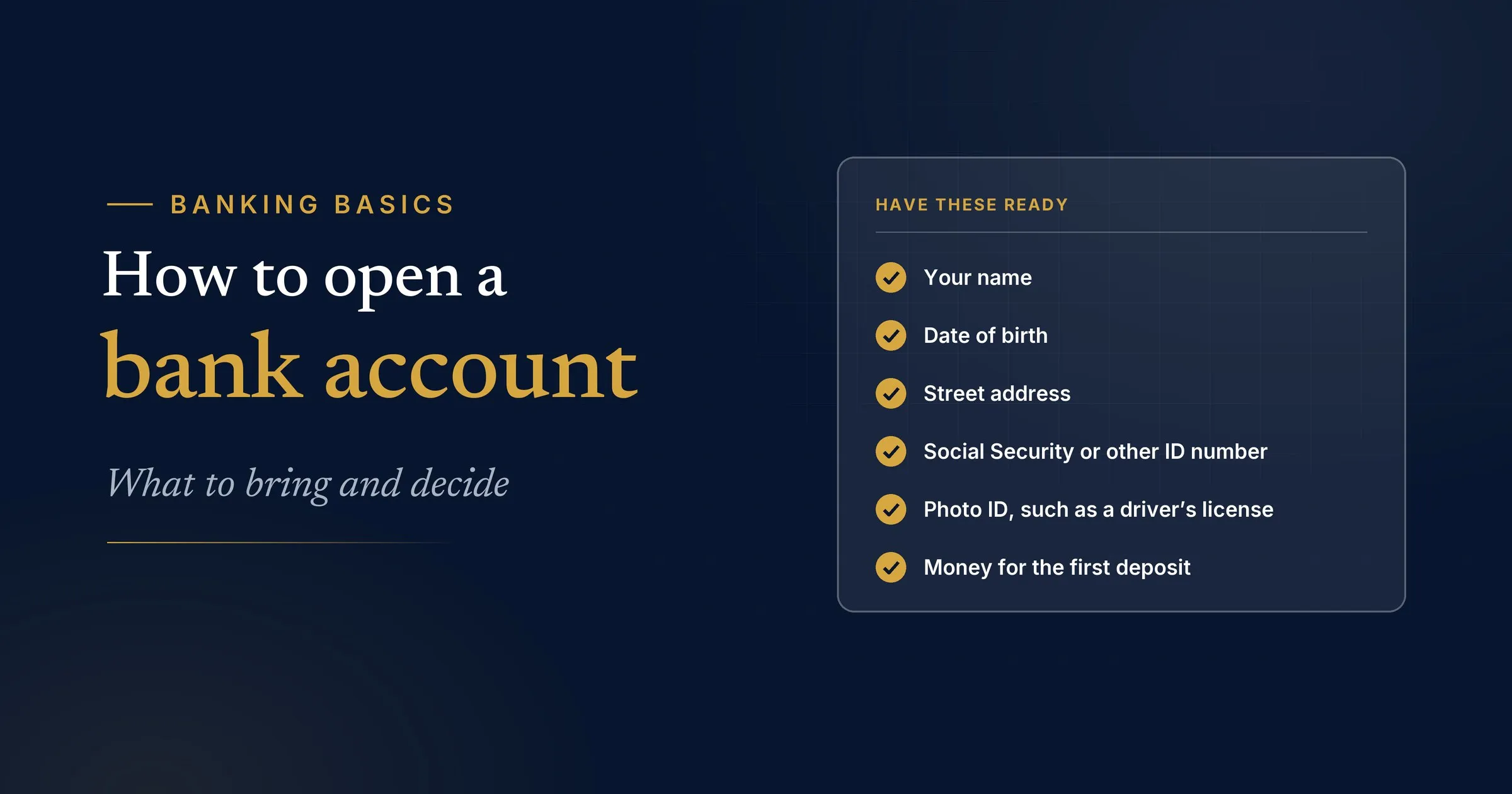
Before opening an account, a bank must collect, at a minimum:Source 2
- Your name
- Your date of birth
- Your address: a home or business street address. If you don’t have one, the bank can use an Army or Fleet Post Office (APO or FPO) box number, or the street address of a relative or another contact person.
- An identification number: for a U.S. person, a taxpayer identification number
For most people, that number is a Social Security number, which is one kind of taxpayer identification number.Source 3
The bank must then verify who you are. It can use documents, such as an unexpired government-issued photo ID like a driver’s license or passport, or check the details you give against other sources, such as a consumer reporting agency or public database.Source 2 Have money ready for the first deposit, too. The account disclosures list any minimum balance you need to open the account.Source 4
If you don’t have a Social Security number
If you’re not a U.S. person, the identification number can be a taxpayer identification number; a passport number and country of issuance; an alien identification card number; or the number and country of issuance of another government-issued photo ID that shows your nationality or residence.Source 2 One taxpayer identification number is the Individual Taxpayer Identification Number (ITIN), which the IRS issues to certain people who can’t get a Social Security number.Source 3
If you’ve applied for a taxpayer identification number but haven’t received it, a bank may be able to open the account once it confirms you’ve applied, and collect the number within a reasonable time afterward.Source 2 Each bank sets out in its own procedures which documents it uses, so ask what it accepts.
Step 1: Choose the kind of account
- Checking is for money you spend: paying bills, using a debit card and getting cash.
- Savings is for money you’re setting aside for emergencies or goals, kept apart from what you spend each month, and it may earn interest.Source 1
It often makes sense to have both. Our checking vs. savings guide explains how they work together.
Step 2: Compare banks and credit unions
Compare a few before you open any account, on their websites or in person.Source 1 Look at:
- Fees, and how to avoid them. Some checking accounts are free only if you keep a minimum balance, and direct deposit can sometimes help you avoid fees.Source 1 Our guide to avoiding bank fees explains the common ones.
- ATMs. Using your own bank’s or credit union’s ATMs avoids the fees you might pay at another institution’s ATM.Source 1
- The interest rate on savings, shown as an annual percentage yield (APY). Our APY guide explains how to compare.
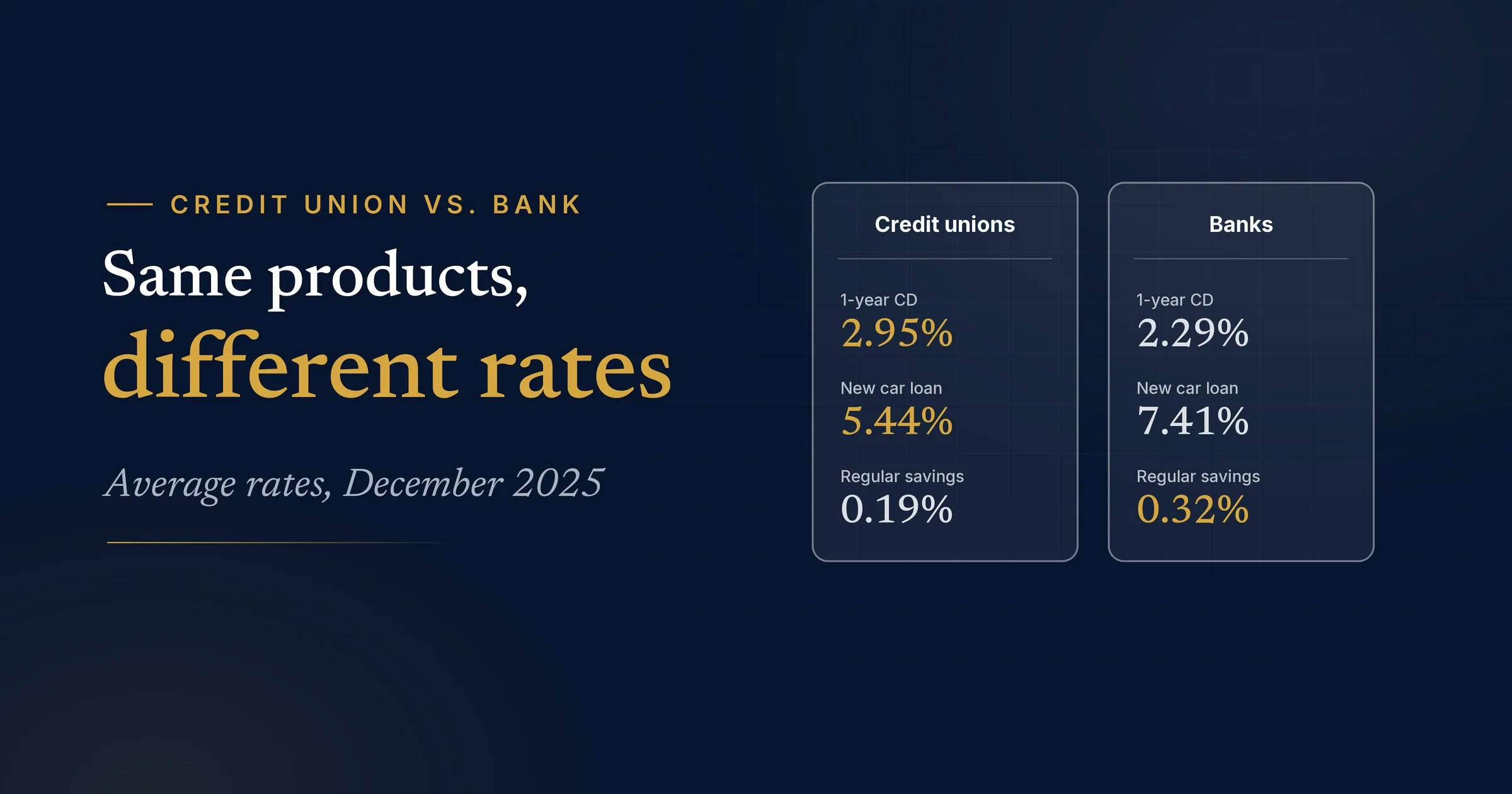
- Membership, for a credit union: you have to be part of a group that’s allowed to join.Source 1 Our credit union vs. bank guide explains how membership works and compares their rates.
Ask for each account’s disclosures. Banks and credit unions must give them to you on request, and they list the fees and when they apply, any minimum balance to open the account or avoid a fee, and any limits on withdrawals or deposits.Source 4Source 5
Step 3: Make sure it’s insured
To check a bank, ask it, look for the FDIC sign at a branch or search the FDIC’s BankFind tool.Source 6Source 7 Federally insured credit unions must display the official NCUA sign at teller stations, on their websites and where they open accounts. Some state-chartered credit unions are covered by private insurers instead, which aren’t backed by the full faith and credit of the United States, so you can confirm with the NCUA’s Credit Union Locator.Source 8
FDIC insurance covers deposits up to $250,000 per depositor, per ownership category, at each insured bank, and the NCUA gives the same basic coverage at federally insured credit unions.Source 7Source 8 Our FDIC insurance guide explains how the limit works.
Step 4: Apply online or in person
Fill in the application with the information above and verify your identity. You’ll get the account disclosures before the account is opened, including when you apply online.Source 4Source 5 Read the fees before you agree.
Step 5: Decide about overdraft coverage
A bank can’t charge you a fee for paying an ATM withdrawal or a one-time debit card purchase that overdraws your account unless you’ve opted in to its overdraft service.Source 9 If you don’t opt in, your card is generally declined when you don’t have enough money, but you won’t pay an overdraft fee.Source 10 Many banks and credit unions charge $30 or more per overdraft, and you can change your decision at any time.Source 10
The opt-in rule covers only ATM withdrawals and one-time debit card purchases, so checks and automatic bill payments can still lead to overdraft fees.Source 9 You can also link a savings account, so money moves over to cover a shortfall. You may pay a transfer fee, but it’s less than an overdraft fee.Source 10
Step 6: Fund the account and set it up
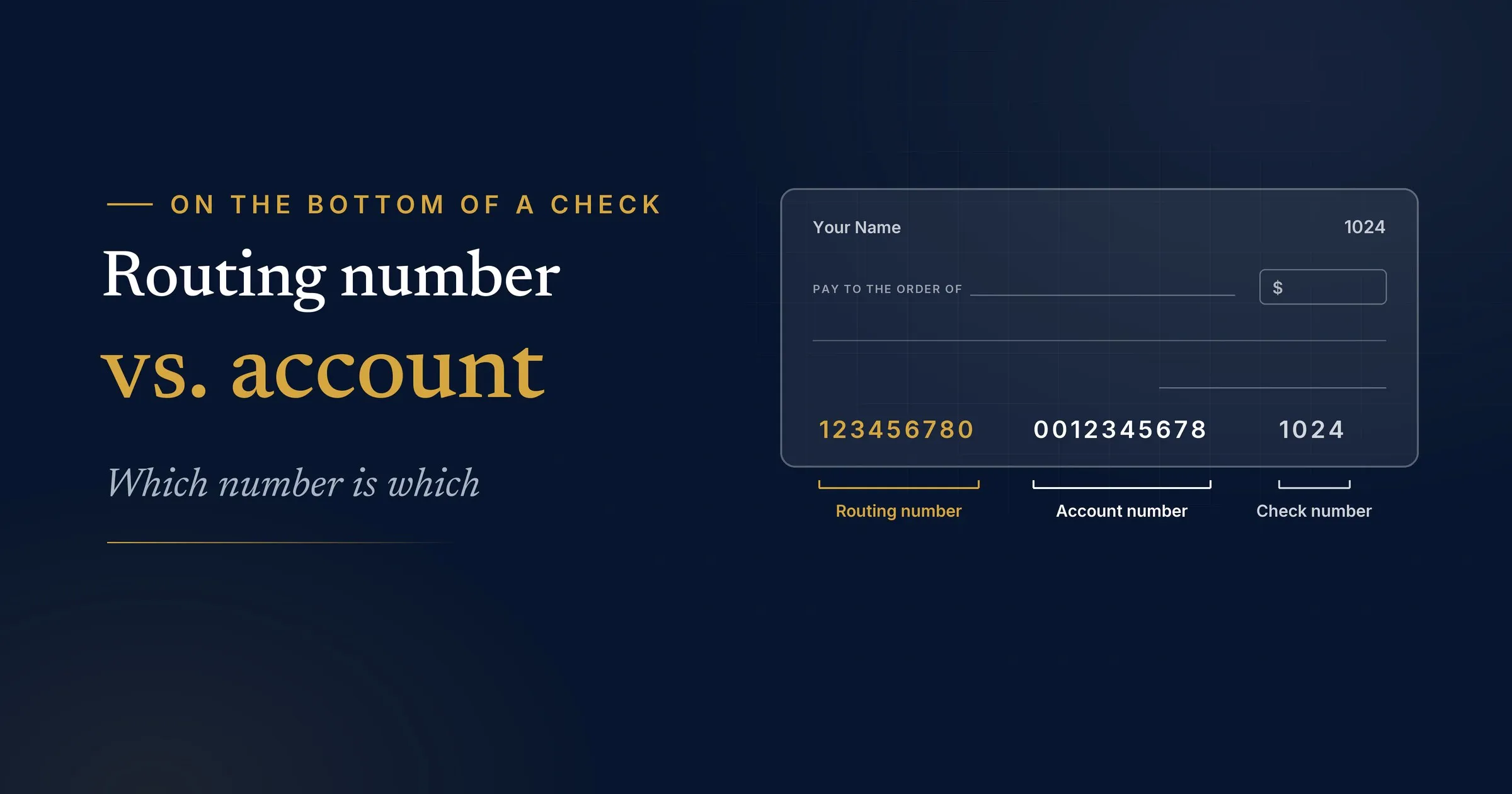
Make your opening deposit. Then ask your employer whether it offers direct deposit, which puts your paycheck straight into your account and can sometimes help you avoid fees.Source 1 You’ll need your routing and account numbers; our routing number guide shows where to find them. Finally, set up online banking and low-balance alerts so you can track your balance.Source 10
If you’re turned down
Banks and credit unions use checking account reports, from companies such as Chex Systems and Early Warning Services, to help decide whether to offer you an account, and some also use your credit reports. Negative information can come from an unpaid negative balance on an account a bank closed, suspected fraud or bad checks, or a joint account with someone who had those problems.Source 11
- Get your report. If a bank turns you down because of a report, it must give you a notice naming the company that provided it, and you can ask that company for a free copy. Nationwide checking account reporting companies must also give you one free report a year on request.Source 11
- Dispute errors. The companies must investigate disputes and correct inaccurate information, and they can’t include most negative information that’s more than seven years old.Source 11
- Ask about lower-risk accounts. Many banks and credit unions offer checking accounts designed to prevent overdrafts and overdraft fees, and you may qualify even if you were recently denied another account. Some require you to pay old, unpaid fees first, and a prepaid card is another option.Source 11
Common questions
What do I need to open a bank account?
Your name, date of birth, street address and an identification number, usually your Social Security number. The bank also verifies your identity, for example with a driver’s license or passport.Source 2 Bring money for the opening deposit, too.
Can I open a bank account without a Social Security number?
You may be able to. If you’re not a U.S. person, a bank may accept an ITIN or another taxpayer identification number, a passport number, an alien identification card number or the number of another government-issued photo ID.Source 2 Ask the bank which it accepts.
Can I open a bank account online?
Many banks and credit unions let you apply online. You give the same information, and the bank may verify your identity by checking your details against a consumer reporting agency or public database, or by asking for ID.Source 2 You’ll get the account disclosures before the account is opened.Source 4
How much money do I need to open a bank account?
It depends on the account. The account disclosures must list any minimum balance needed to open the account, avoid a fee or earn the APY shown, so compare them before you choose.Source 4Source 5
Can I open a bank account with bad credit?
You may be able to. Banks and credit unions use checking account reports to decide, and some also check your credit reports. If you’re turned down, ask about lower-risk accounts, which you may qualify for even after a recent denial.Source 11
Sources
Numbers in the text link to these sources. We check them whenever we update this page.
- 1
Opening a Bank Account(external site)
Federal Trade Commission, consumer.gov · Accessed November 18, 2026 · Back to text for source 1
- 2
31 CFR 1020.220, Customer identification program requirements for banks(external site)
Electronic Code of Federal Regulations · Accessed November 23, 2026 · Back to text for source 2
- 3
Taxpayer Identification Numbers (TIN)(external site)
Internal Revenue Service · Last reviewed June 11, 2026 · Accessed November 23, 2026 · Back to text for source 3
- 4
12 CFR 1030.4, Account disclosures (Regulation DD, Truth in Savings)(external site)
Electronic Code of Federal Regulations · Accessed November 23, 2026 · Back to text for source 4
- 5
12 CFR 707.4, Account disclosures (NCUA Truth in Savings)(external site)
Electronic Code of Federal Regulations · Accessed November 23, 2026 · Back to text for source 5
- 6
Deposit Insurance FAQs(external site)
Federal Deposit Insurance Corporation · Updated April 1, 2024 · Accessed November 19, 2026 · Back to text for source 6
- 7
Understanding Deposit Insurance(external site)
Federal Deposit Insurance Corporation · Updated April 1, 2024 · Accessed November 23, 2026 · Back to text for source 7
- 8
Share Insurance Coverage(external site)
National Credit Union Administration · Updated November 18, 2026 · Accessed November 23, 2026 · Back to text for source 8
- 9
12 CFR 1005.17, Requirements for overdraft services (Regulation E)(external site)
Electronic Code of Federal Regulations · Accessed November 23, 2026 · Back to text for source 9
- 10
Know your overdraft options(external site)
Consumer Financial Protection Bureau · Updated June 4, 2025 · Accessed November 23, 2026 · Back to text for source 10
- 11
Why was I denied a checking account?(external site)
Consumer Financial Protection Bureau · Last reviewed December 18, 2024 · Accessed November 23, 2026 · Back to text for source 11
About the author
Wealthistry Editorial Team
Research, writing and editing
The team that researches, writes, fact-checks and updates Wealthistry's guides and calculators, following our published editorial standards.
Author profileEditorial policyHow we researchReport an error