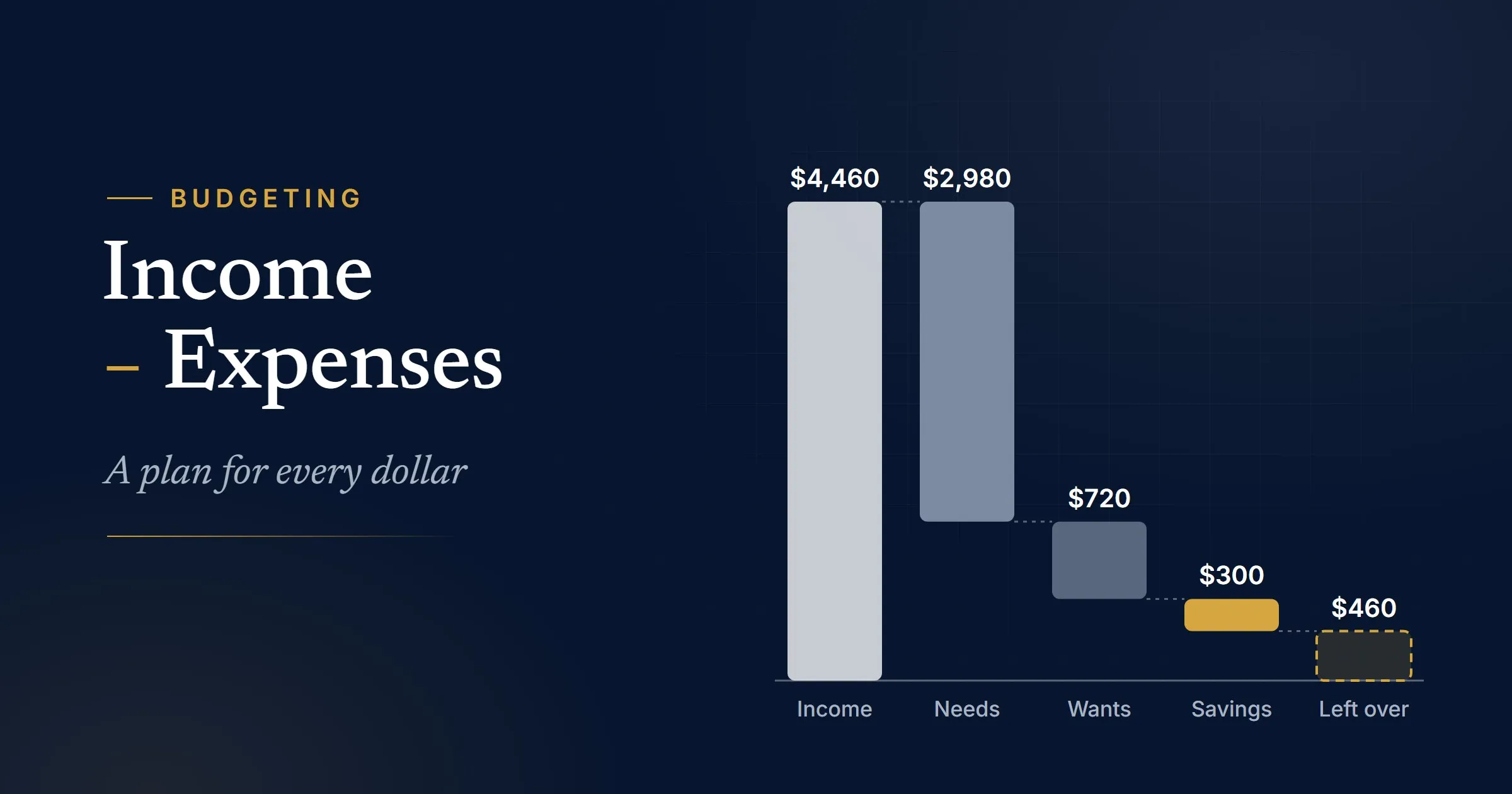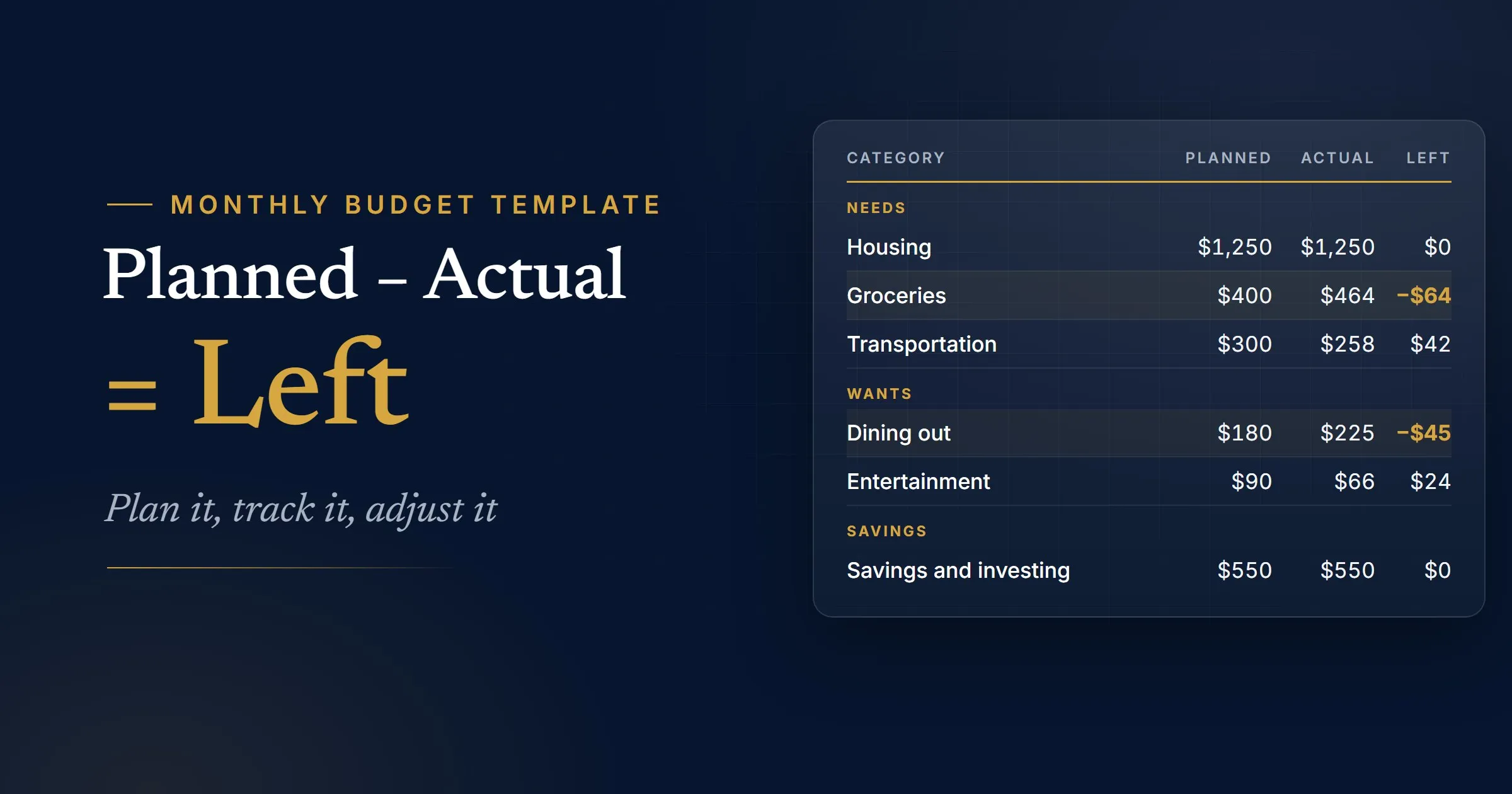
Budget categories are the groups you sort your money into: housing, groceries, transportation, savings and so on. They turn a long list of transactions into a plan you can actually follow. Making a budget starts with a list of your bills, such as rent, electricity, water and phone service, and your other expenses, such as food, gas, clothes and entertainment.Source 1 Categories are how you organize that list.
This guide gives a complete list of budget categories and what goes in each, shows what U.S. households actually spend by category, and covers the costs people most often forget.
The three main budget categories
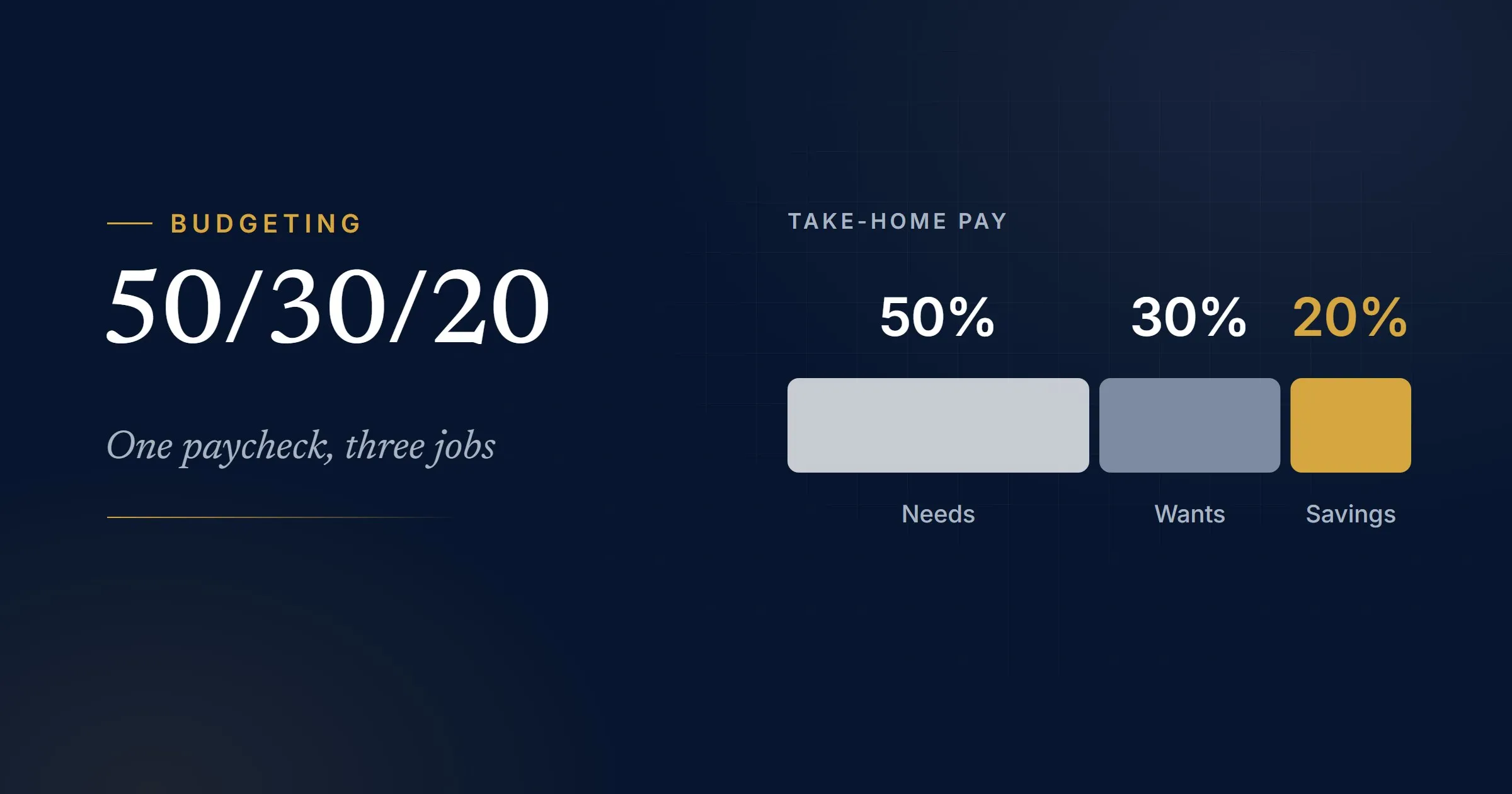
Most budgets sort their categories into three groups, the same ones the 50/30/20 rule uses:
- Needs: bills and essentials you’d have to pay, such as housing, utilities, groceries, insurance and the minimum payments on your debts.
- Wants: spending you could cut back on, such as dining out, entertainment and travel.
- Savings and extra debt payments: money for your future, such as an emergency fund, retirement savings and anything you pay above the minimums.
The line between needs and wants isn’t always sharp. Groceries are a need, but a pricier store or brand may be partly a want. Sort each category by its main purpose and move on.
A complete list of budget categories
Here are the 15 categories our Monthly Budget Calculator uses, with the group each one belongs to:
| Category | Group | What it includes |
|---|---|---|
| Housing | Needs | Rent or mortgage, property taxes, HOA dues, renters or homeowners insurance |
| Utilities and phone | Needs | Electricity, gas, water, trash, internet and phone |
| Groceries | Needs | Food and household supplies |
| Transportation | Needs | Car payment, gas, maintenance, parking, tolls and transit |
| Insurance | Needs | Car, health, life and disability insurance not paid elsewhere |
| Health care | Needs | Copays, prescriptions, dental and vision care |
| Childcare and school | Needs | Daycare, babysitting, tuition, school supplies and activities |
| Minimum debt payments | Needs | The minimum payment on every card and loan |
| Dining out | Wants | Restaurants, takeout, coffee and delivery |
| Entertainment | Wants | Streaming, hobbies, events and memberships |
| Shopping and personal | Wants | Clothes, haircuts, personal care and household items |
| Travel and gifts | Wants | Vacations, holidays, birthdays and gifts |
| Other wants | Wants | Anything that doesn't fit elsewhere |
| Savings and investing | Savings and extra debt payments | Emergency fund, sinking funds, retirement and other goals |
| Extra debt payments | Savings and extra debt payments | Anything above the minimums on your debts |
You don’t need all of them. Skip the ones that don’t apply, and rename the rest to fit your life.
What households spend in each category
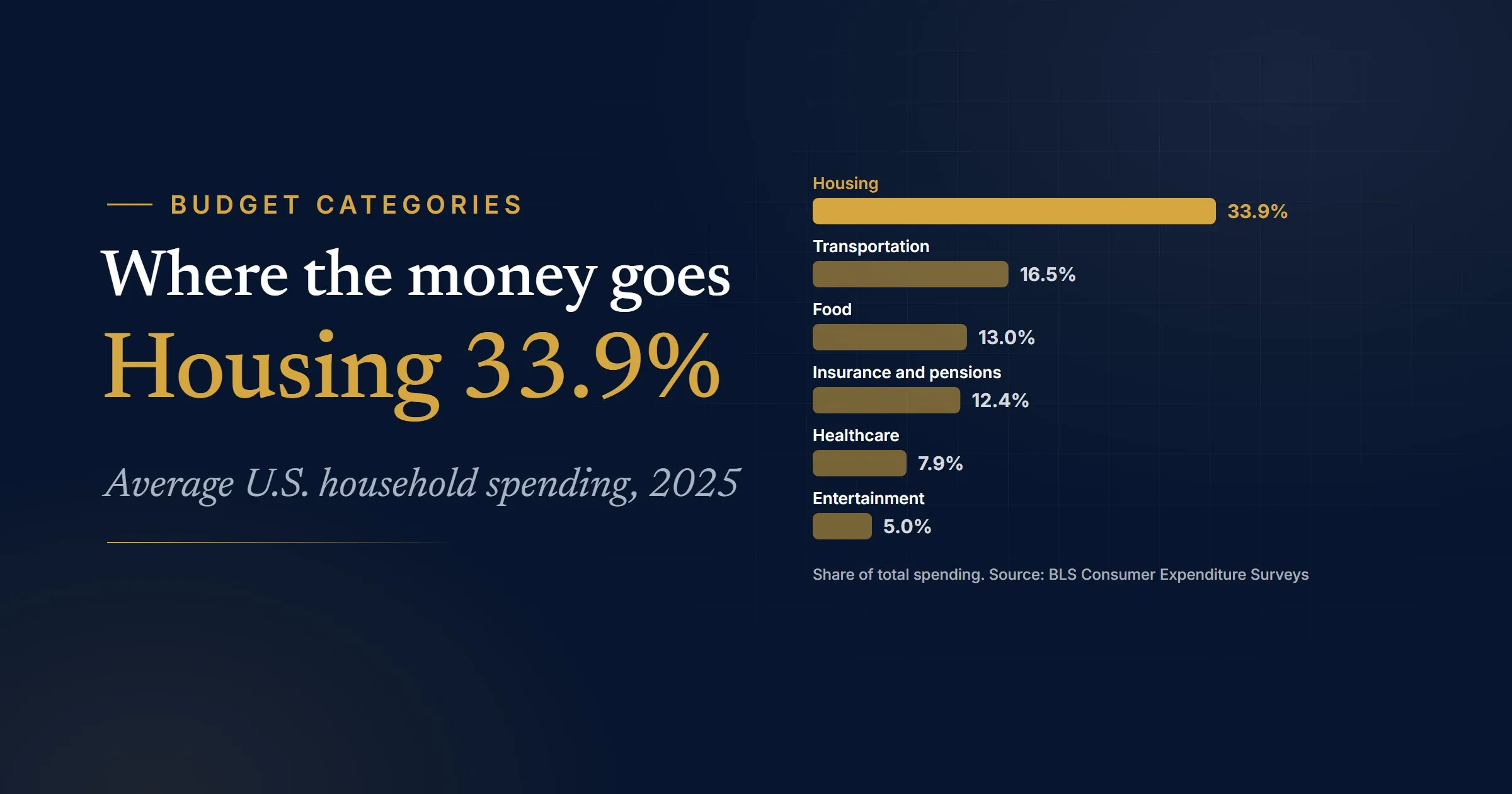
In 2025, the average U.S. household spent $81,905, about $6,825 a month. Housing was the largest share, at 33.9%, followed by transportation at 16.5%, food at 13.0%, and personal insurance and pensions at 12.4%.Source 2
| Category | Per year | Per month | Share |
|---|---|---|---|
| Housing | $27,790 | $2,316 | 33.9% |
| Transportation | $13,492 | $1,124 | 16.5% |
| Food | $10,633 | $886 | 13.0% |
| Personal insurance and pensions | $10,175 | $848 | 12.4% |
| Healthcare | $6,470 | $539 | 7.9% |
| Entertainment | $4,084 | $340 | 5.0% |
| Cash contributions | $2,237 | $186 | 2.7% |
| Apparel and services | $2,010 | $168 | 2.5% |
| Education | $1,583 | $132 | 1.9% |
| Everything else | $3,430 | $286 | 4.2% |
| Total | $81,905 | $6,825 | 100% |
Average yearly spending per consumer unit; monthly figures are the yearly amounts divided by 12. Everything else covers personal care, alcohol, tobacco, reading and miscellaneous spending.
Together, housing, transportation and food made up 63.4% of spending. A few things to know about these numbers:
- They’re counted per consumer unit, which is roughly a household: a family, a person who lives alone or shares a home but is financially independent, or people who live together and share major expenses.Source 3
- Personal insurance and pensions isn’t health insurance. It covers life and other personal insurance, plus Social Security contributions and retirement contributions paid by employees.Source 3 Much of it comes out of your paycheck before you see it, because employers must withhold Social Security and Medicare taxes and also deduct for benefits such as a retirement savings account.Source 4 If you budget from take-home pay, those amounts are already gone.
- They’re averages, across households with very different incomes and costs, and they’re shares of spending, not of income. Use them as a reference, not a target. For housing, policy has long used 30% of income as the line for affordable housing; households that spend more than that are considered cost burdened.Source 5
Subcategories: when to split a category
Broad categories are easier to track, but splitting one can show you where the money really goes:
- Food. BLS splits food at home, about $541 a month for the average household in 2025, from food away from home, about $345.Source 2 Separate lines for groceries and dining out make it clear where cutting back is easiest.
- Housing. Shelter averaged about $1,469 a month and utilities about $411, with smaller amounts for household operations, supplies and furnishings.Source 2
- Transportation. A car payment, gas, insurance, repairs and parking behave very differently. Splitting them shows which costs are fixed and which you can change.
A good rule: split a category when it keeps running over and you want to know why, and merge two when both are always small.
Budget categories people forget
The easiest costs to miss are the ones that don’t come every month:
- Car registration, and insurance paid once or twice a year
- Holidays, birthdays and other gifts
- Yearly subscriptions and memberships
- Back-to-school costs
- Medical and dental costs, such as copays and deductibles
- Home and car repairs, and replacing things that wear out
- Pet care
Turn each into a monthly amount: divide the yearly cost by 12 and set that much aside each month. Our sinking funds guide shows how, and the second page of our free budget template is built for listing these bills.
How many budget categories should you have?
As few as you can while still seeing where your money goes. The CFPB’s spending tracker sorts spending into categories from utilities and housing to eating out and entertainment.Source 6 If tracking every category feels overwhelming, start small and look at your expenses one week at a time, using your receipts or your checking account.Source 6 The tracker is part of the CFPB’s free Your Money, Your Goals toolkit.Source 7
Budget categories for your situation
- Young adults and college students. Rent or housing, groceries or a meal plan, phone, transportation, and school costs such as books and fees. Add student loan payments and a small savings line, even if it starts at a few dollars.
- Families. Give childcare and school costs their own line, since they can be large, and expect groceries, health care and insurance to grow with the household.
- Irregular income. Put essentials first and plan around a lower, safer monthly income. Our irregular income guide shows how.
- Paid every week or two. Use the same categories, then decide which paycheck covers each bill. Our budget by paycheck guide walks through it.
When your categories are set, our step-by-step budgeting guide shows how to fill in the amounts, and a zero-based budget gives every dollar a category.
Common questions
What are the main budget categories?
Needs, wants, and savings and extra debt payments. Within those, most budgets include housing, utilities, groceries, transportation, insurance, health care, debt payments, dining out, entertainment, shopping, travel and gifts, and savings.
What are the biggest budget categories?
Housing, transportation and food. In 2025, they made up 63.4% of the average U.S. household’s spending.Source 2
What percentage of my budget should go to each category?
There’s no single right split. The 50/30/20 rule suggests about 50% of take-home pay for needs, 30% for wants and 20% for savings and extra debt payments. For housing, spending more than 30% of income has long been treated as a burden.Source 5
Should savings be a budget category?
Yes. You can make savings one of the expenses in your budget,Source 1 so it’s planned like any other bill instead of coming from whatever is left at the end of the month.
How do I budget for expenses that don’t come every month?
Add up what each one costs in a year, divide by 12, and set that amount aside each month in a separate savings account, often called a sinking fund.
Run your own numbers
See where your take-home pay goes each month.
Open the calculator
Sources
Numbers in the text link to these sources. We check them whenever we update this page.
- 1
Making a Budget(external site)
Federal Trade Commission, consumer.gov · Accessed November 18, 2026 · Back to text for source 1
- 2
Consumer Expenditures--2025(external site)
U.S. Bureau of Labor Statistics · Published October 29, 2026 · Accessed November 18, 2026 · Back to text for source 2
- 3
Consumer Expenditure Surveys: Glossary(external site)
U.S. Bureau of Labor Statistics · Accessed November 19, 2026 · Back to text for source 3
- 4
Your Paycheck Explained(external site)
Federal Trade Commission, consumer.gov · Accessed November 18, 2026 · Back to text for source 4
- 5
Defining Housing Affordability(external site)
HUD User, U.S. Department of Housing and Urban Development · Published August 14, 2017 · Accessed November 18, 2026 · Back to text for source 5
- 6
Budgeting: How to create a budget and stick with it(external site)
Consumer Financial Protection Bureau (archived blog post) · Published June 5, 2019 · Accessed November 18, 2026 · Back to text for source 6
- 7
Your Money, Your Goals toolkit(external site)
Consumer Financial Protection Bureau · Updated April 24, 2026 · Accessed November 18, 2026 · Back to text for source 7
About the author
Wealthistry Editorial Team
Research, writing and editing
The team that researches, writes, fact-checks and updates Wealthistry's guides and calculators, following our published editorial standards.
Author profileEditorial policyHow we researchReport an error