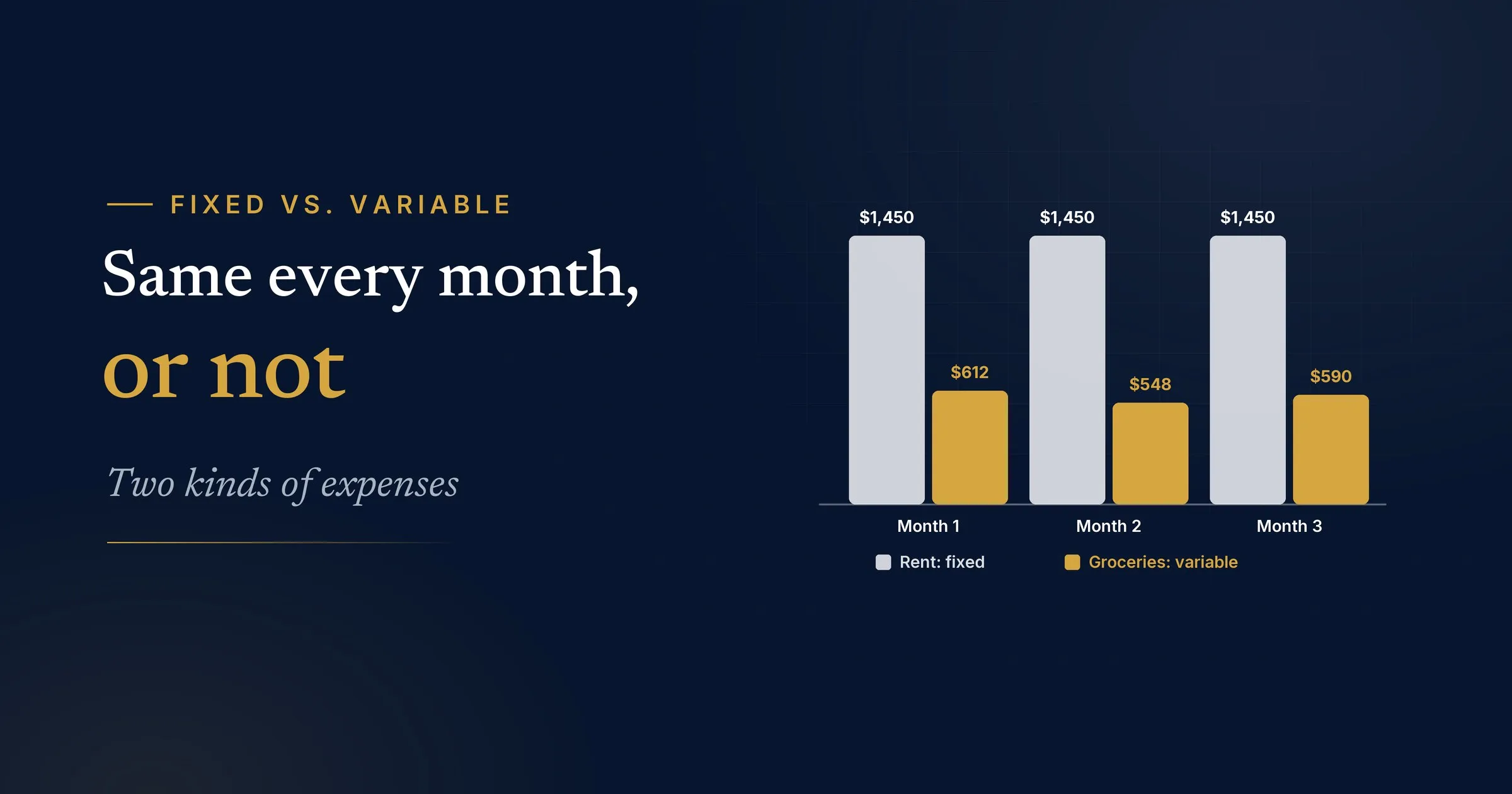
Fixed expenses are the ones that don’t change from month to month, such as rent. They can change over a longer stretch, say when a lease ends and you move somewhere cheaper, but not from one month to the next. Variable expenses are the ones that can change each month depending on your habits, such as gas, which you’d save on in a month you bike to work instead of driving.Source 1 Knowing which is which tells you how to budget for each, and where to look when you need to cut back.
Fixed vs. variable expenses at a glance
| Type | What it means | Examples |
|---|---|---|
| Fixed | About the same amount every month | Rent or mortgage, car payment, loan payments, phone plan, subscriptions |
| Variable | Changes month to month with how you live | Groceries, gas, electricity, dining out, entertainment, clothing |
| Periodic | Due once or a few times a year | Car insurance, annual memberships, car registration, holiday gifts |
Fixed expenses
Fixed expenses are usually set by a contract or a plan: a lease, a loan, a phone plan or a subscription. Because they’re predictable, they’re the easiest part of a budget to plan. They’re also the hardest to change quickly, because you often have to wait for a lease to end, refinance a loan or switch plans.
Some bills are fixed in practice even if the amount moves a little, such as an internet plan whose price is set until a promotion ends. Budget for the amount on the bill.
Variable expenses
Variable expenses depend on what you do: how much you drive, eat out or run the heat. They’re harder to predict, but they’re also where you have the most control from one month to the next.
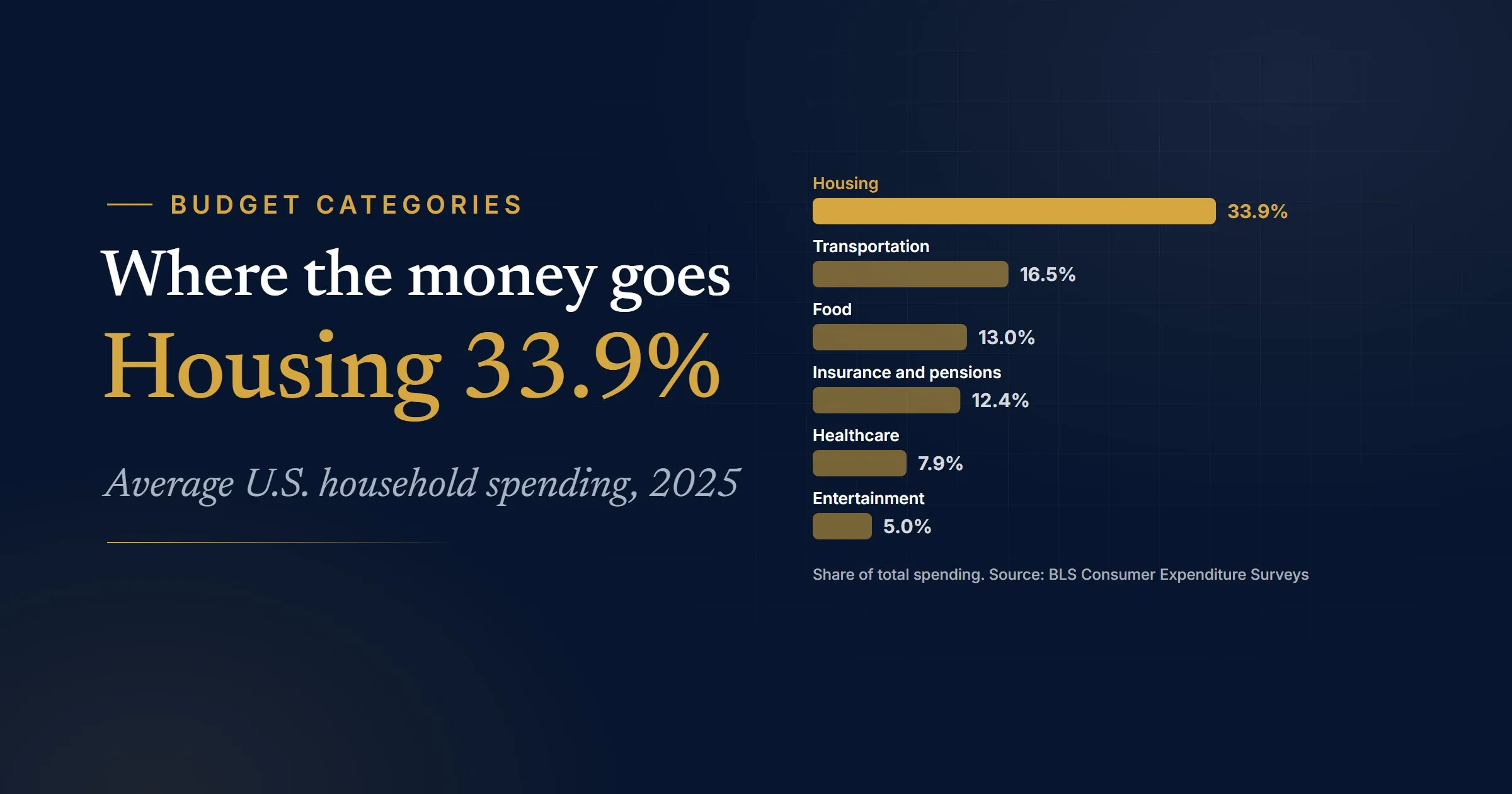
Here’s what the average U.S. household spent on some common variable expenses in 2025:Source 2
| Category | A year | A month |
|---|---|---|
| Groceries (food at home) | $6,491 | $541 |
| Utilities, fuels and public services | $4,931 | $411 |
| Eating out (food away from home) | $4,142 | $345 |
| Entertainment | $4,084 | $340 |
| Gasoline and other fuels | $2,503 | $209 |
Average yearly spending per consumer unit, divided by 12 for the monthly figure and rounded to the dollar.
Your own numbers depend on your household, where you live and the season. Utility bills, for example, often run higher in the hottest or coldest months, when heating and cooling use the most electricity.
Periodic expenses: the ones in between
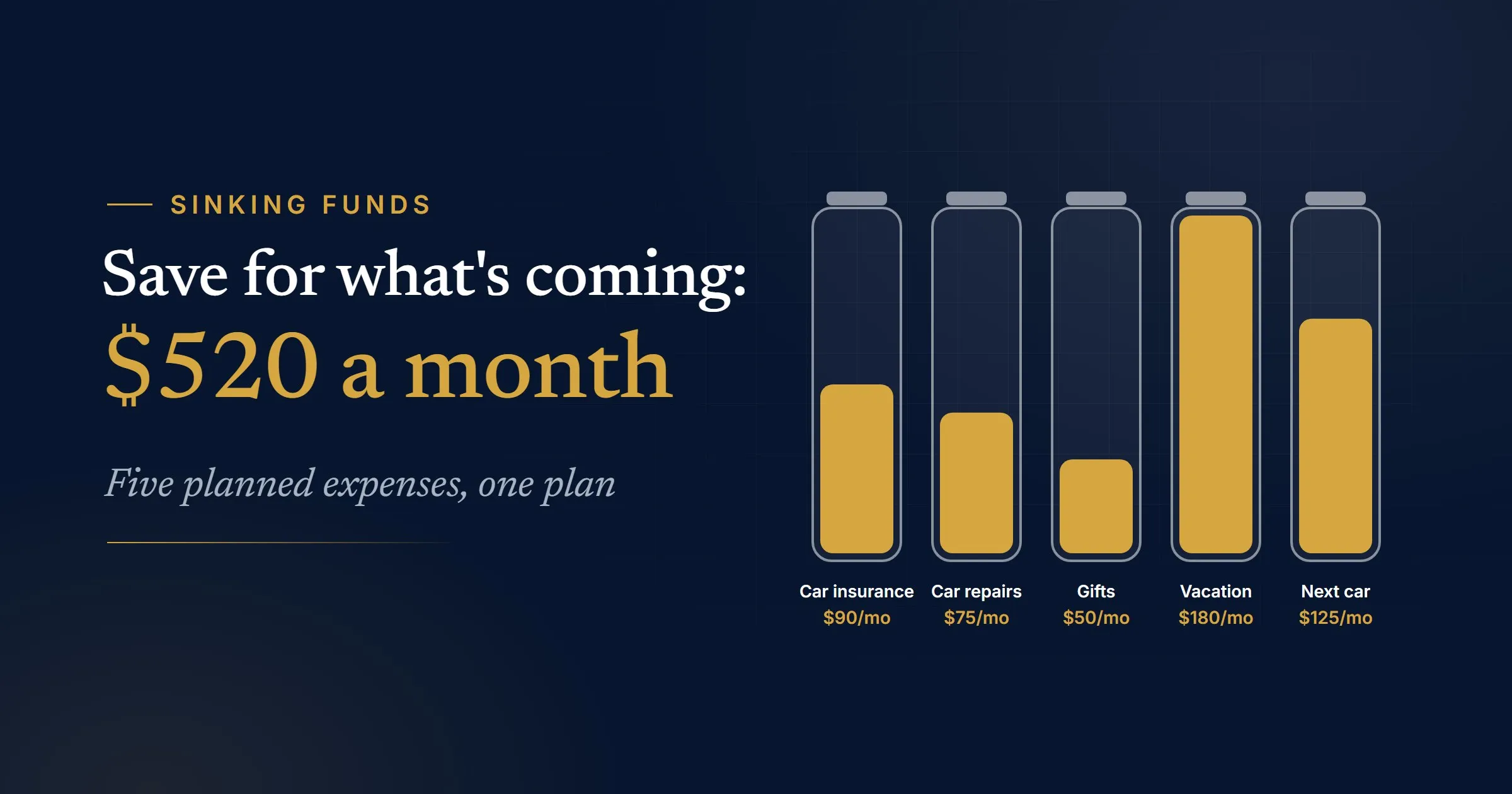
Some expenses, such as car insurance, are paid only once or twice a year,Source 1 so they’re easy to leave out of a monthly budget until the bill arrives. Others include annual memberships, car registration, school costs and holiday gifts.
The fix is to divide each one by the number of months until it’s due and set that amount aside every month, in a sinking fund. A bill calendar helps you see when each one comes up.Source 3
Fixed and variable vs. needs and wants
Fixed and variable describe how a cost behaves, not whether you need it. Both kinds can be needs or wants:
| Need | Want | |
|---|---|---|
| Fixed | Rent, a phone plan, a loan payment | A streaming plan, a gym membership |
| Variable | Groceries, gas, electricity | Dining out, entertainment, hobbies |
That matters when you cut back: a fixed want, such as an unused subscription, can be one of the easiest cuts of all. Our 50/30/20 guide explains how to sort needs from wants.
How to budget for each
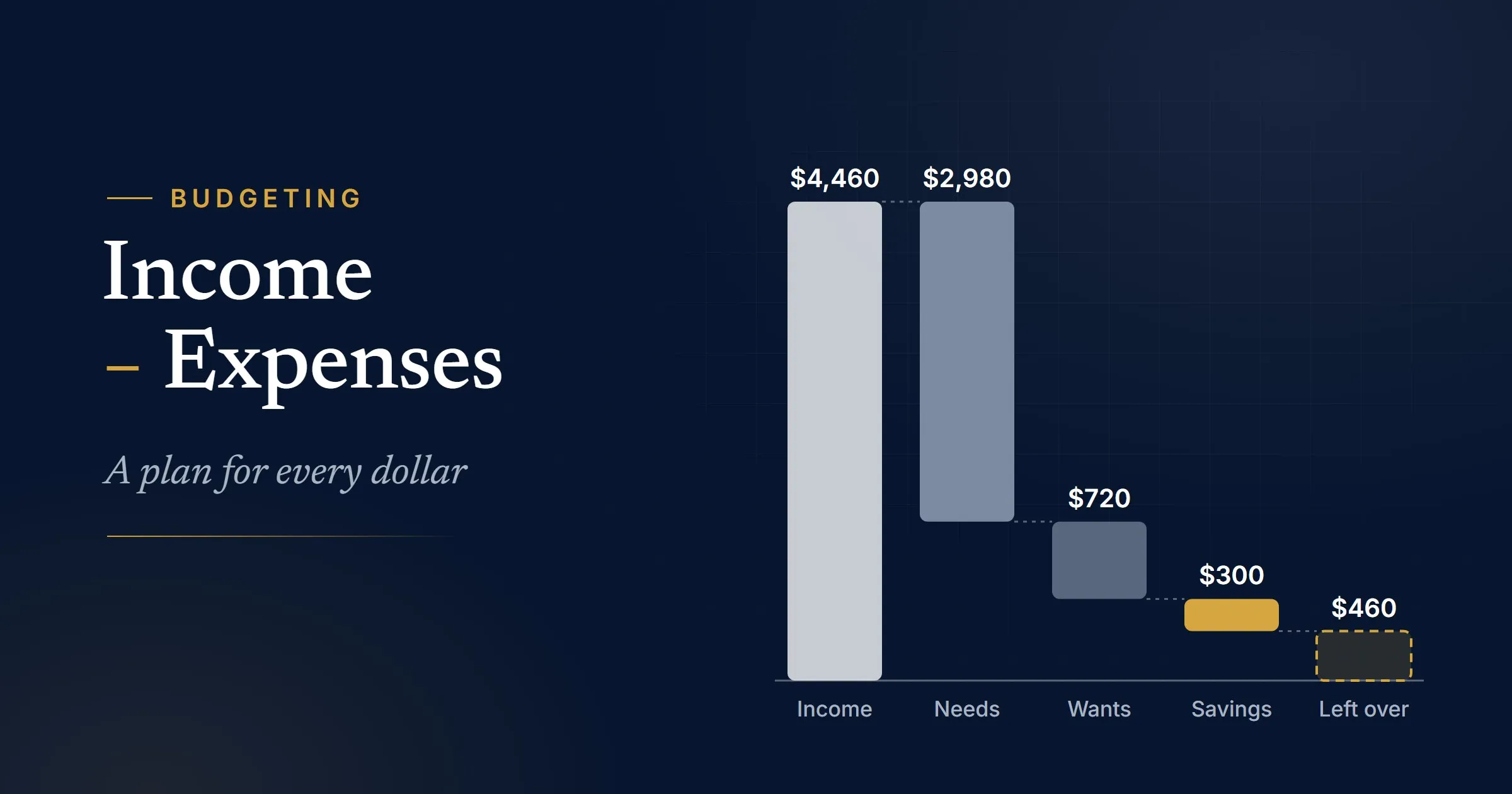
A month's budget on $4,000 of take-home pay
- Fixed: rent of $1,450, a $375 car payment, $125 for phone and internet and $35 of subscriptions come to $1,985. Use the exact amounts on the bills.
- Variable: groceries were $612, $548 and $590 over the last three months, or $1,750 in all, so the household budgets the average, $583.33. With $190 for gas, $135 for utilities and $250 for dining out and fun, variable spending comes to $1,158.33.
- Periodic: a $900 car insurance bill due every six months means setting aside $150 a month, and $600 of holiday gifts a year means $50 a month: $200 in all.
- Altogether, that’s $3,343.33, leaving $656.67 a month for savings and extra debt payments.
For variable costs, a few months of history beats a guess. Track your spending in whatever way is easiest for you, whether that’s a journal or a folder of receipts,Source 4 or use the CFPB’s free spending tracker.Source 3 Our Monthly Budget Calculator adds it all up for you.
How to lower each kind
- Variable expenses respond fastest. Set a limit for the categories where you overspend, or try envelope budgeting for them. A cut shows up this month.
- Fixed expenses take more effort, but a cut repeats every month. Cancel subscriptions you don’t use, compare insurance quotes before your policy renews, and look at cheaper phone and internet plans.
- Periodic expenses are worth shopping around before each renewal, since you’ll pay the new price for the year ahead.
Our guide to how to save money has more ideas for both kinds.
Common questions
Is rent a fixed or variable expense?
Fixed. Your rent stays the same from month to month, though it can change when your lease ends.Source 1
Are utilities fixed or variable?
Mostly variable, because what you pay depends on how much you use. Some, such as an internet plan, cost the same each month and act like fixed expenses. Our guide to lowering your electric bill shows where the biggest savings are.
Are groceries a fixed or variable expense?
Variable. What you spend depends on your habits and changes from month to month. The average household spent $6,491 on food at home in 2025.Source 2
Is a car payment fixed or variable?
A car payment is fixed. The costs of running the car, such as gas and repairs, are variable, and car insurance is often periodic.
Which expenses are easiest to cut?
Variable expenses, because you can change them this month. Fixed expenses take longer to change, but the savings repeat every month.
What are periodic expenses?
Bills that come once or a few times a year, such as car insurance.Source 1 Set money aside for them every month so they don’t catch you off guard.
Run your own numbers
See where your take-home pay goes each month.
Open the calculator
Sources
Numbers in the text link to these sources. We check them whenever we update this page.
- 1
Money Smart for Young People, Grades 6-8, Lesson 5: Go With the Flow (Educator Guide)(external site)
Federal Deposit Insurance Corporation · Accessed November 23, 2026 · Back to text for source 1
- 2
Consumer Expenditures--2025(external site)
U.S. Bureau of Labor Statistics · Published October 29, 2026 · Accessed November 18, 2026 · Back to text for source 2
- 3
Your Money, Your Goals toolkit(external site)
Consumer Financial Protection Bureau · Updated April 24, 2026 · Accessed November 18, 2026 · Back to text for source 3
- 4
Budgeting: How to create a budget and stick with it(external site)
Consumer Financial Protection Bureau (archived blog post) · Published June 5, 2019 · Accessed November 18, 2026 · Back to text for source 4
About the author
Wealthistry Editorial Team
Research, writing and editing
The team that researches, writes, fact-checks and updates Wealthistry's guides and calculators, following our published editorial standards.
Author profileEditorial policyHow we researchReport an error